

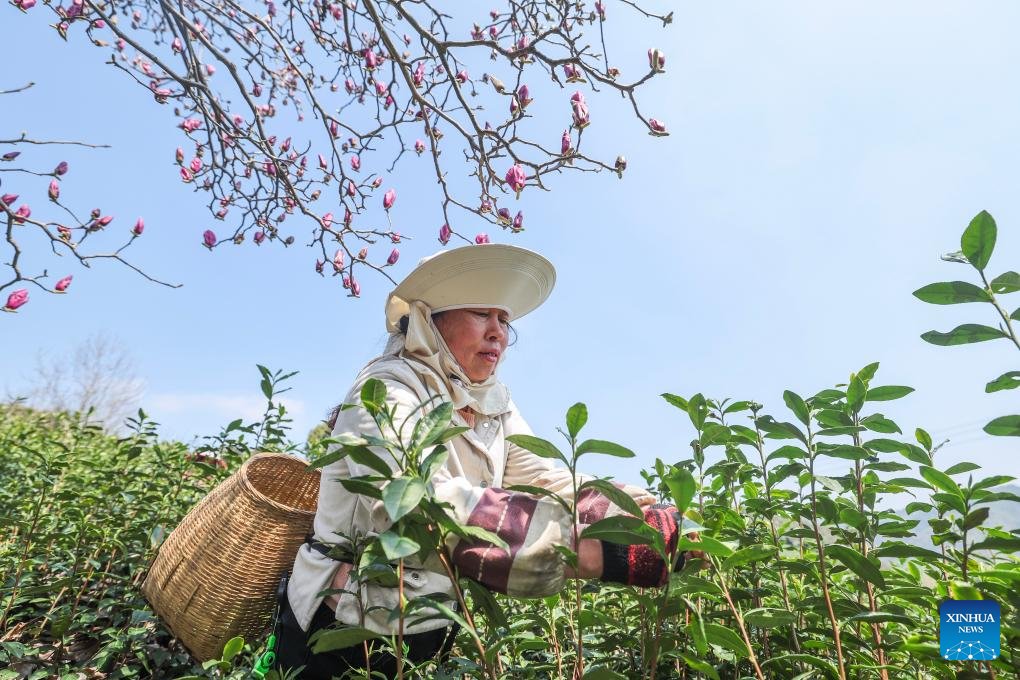
Increased policy and financial support should be directed toward China's 120 million rural elderly, who make up about a quarter of the rural population, lawmakers said during the ongoing two sessions.
"The plight of elderly people in rural areas is that they often have limited pensions and have to rely on their children for support. However, with many children migrating to urban areas for work and those who remain struggling with low-wage jobs and farming, elderly care services are often unaffordable," said Ma Jinlian, a deputy to the National People's Congress from Shanxi province.
Substantial national support for rural elderly care is therefore crucial, said Ma, who oversees three local elderly care institutions in Lyuliang city.
While China has made significant efforts in recent years to improve the supply and quality of rural elderly care services, more effective implementation is needed to ensure that policies translate into tangible benefits for seniors, she said.
ALSO READ: China's national legislature holds closing meeting of annual session
Ma cited a policy launched by the Ministry of Civil Affairs and the Ministry of Finance that provides a monthly subsidy of up to 800 yuan ($116) for elderly care services to seniors with moderate or severe disabilities.
However, applying for and redeeming the subsidy through online platforms poses challenges for many rural seniors, she said.
"Many elderly people in rural areas are not adept at using smartphones, and some are reluctant to trust others with their phones, making it cumbersome to claim the subsidy," Ma said.
She suggested streamlining the process, such as distributing subsidies directly to seniors or applying them to offset costs at elderly care institutions, to reduce the burden on both seniors and staff at rural care facilities.
Since being elected as an NPC deputy in 2023, Ma has consistently submitted suggestions related to rural elderly care during the annual two sessions.
READ MORE: Beef up policy support for chip materials
"Each of my suggestions has received a response from the government, and many have been implemented," she said.
Xu Lianhong, another NPC deputy from Shanxi, echoed Ma's view.
"The development of rural elderly care requires collaboration among the government, care institutions, families and society," said Xu, who works at an elderly care institution in Zhongyang county in Lyuliang city.
The county is home to more than 6,500 seniors aged 70 and above, many of whom live alone or have been left behind.
The county government launched an elder assistance project in 2023, allocating 10 million yuan annually to fund public services for seniors and provide operational subsidies to local elderly care institutions.
The county currently has more than 100 elderly care facilities, including nursing homes, community dining centers, daycare centers and elderly assistance courtyards managed by local villagers.
READ MORE: Smart economy gateway to immense potential
These facilities serve nearly 5,000 elderly and vulnerable individuals, providing services such as meals, cleaning, bathing and medical assistance.
Xu's institution, a medical-care integrated nursing home with 200 beds, charges between 2,000 and 4,000 yuan depending on residents' needs. The county government supports the facility by subsidizing each bed with 200 yuan and covering rental costs.
While the nursing home is currently just breaking even, Xu said it is expected to become profitable in the long run.
"Elderly care is a long-term commitment, not an immediate profit-maker. Building a good reputation and attracting more residents is key to achieving profitability," Xu said, emphasizing the government's role in ensuring the sustainability of care institutions.
Xu also called for eliminating occupational bias and discrimination against workers in the elderly care sector. She stressed the need to attract skilled professionals to build a comprehensive talent pool.
The goal, Xu said, is to allow seniors to enjoy their later years in a "dignified, warm and happy manner."
