

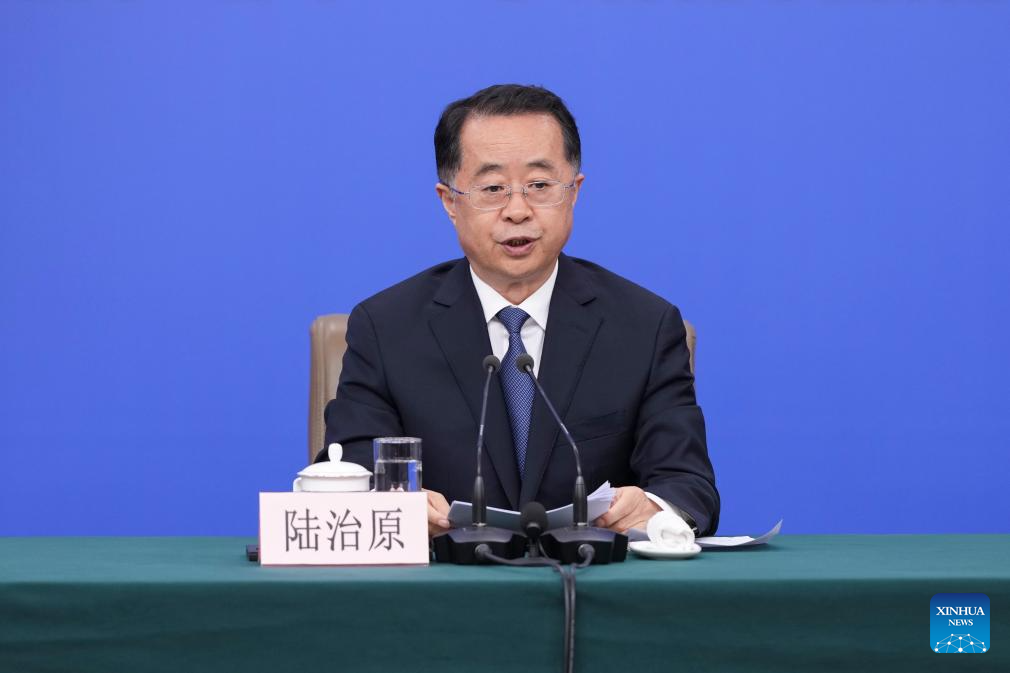
China has distributed 1.72 billion yuan ($249 million) in care vouchers to nearly 900,000 disabled seniors so far this year, Civil Affairs Minister Lu Zhiyuan said on Saturday.
The consumption subsidies, which will continue to be rolled out through the end of the year, target seniors with moderate to severe disabilities, helping them afford professional services such as personal care and rehabilitation.
They are part of a broader strategy as China accelerates efforts to build a home-based care network for its rapidly aging population, to enable older people to remain in their own homes rather than move into institutions — a preference for most Chinese families.
"We are focusing on the urgent concerns of the elderly and have stepped up efforts to develop home-based care services," Lu told a news conference on the sidelines of the annual two sessions — the meetings of the National People's Congress, the nation's top legislature, and the National Committee of the Chinese People's Political Consultative Conference, the top political advisory body.
Beyond the voucher program, the minister detailed a wider infrastructure push to support the home-based care model. Nationwide, authorities have built nearly 80,000 community canteens and meal delivery points, serving more than 3 million elderly people daily, according to Lu.
To bridge the gap between home living and institutional care, China has introduced 495,000 "family care beds" — private homes retrofitted with professional nursing equipment and linked to regular caregiver visits.
In addition, safety renovations have been completed in 2.24 million households occupied by seniors living alone or in poverty, including the installation of grab bars and the removal of floor barriers.
