

WASHINGTON - Democratic and Republican lawmakers are deeply divided over US President Donald Trump's attack on Iran, as Congress is expected to vote on war powers in the coming week.
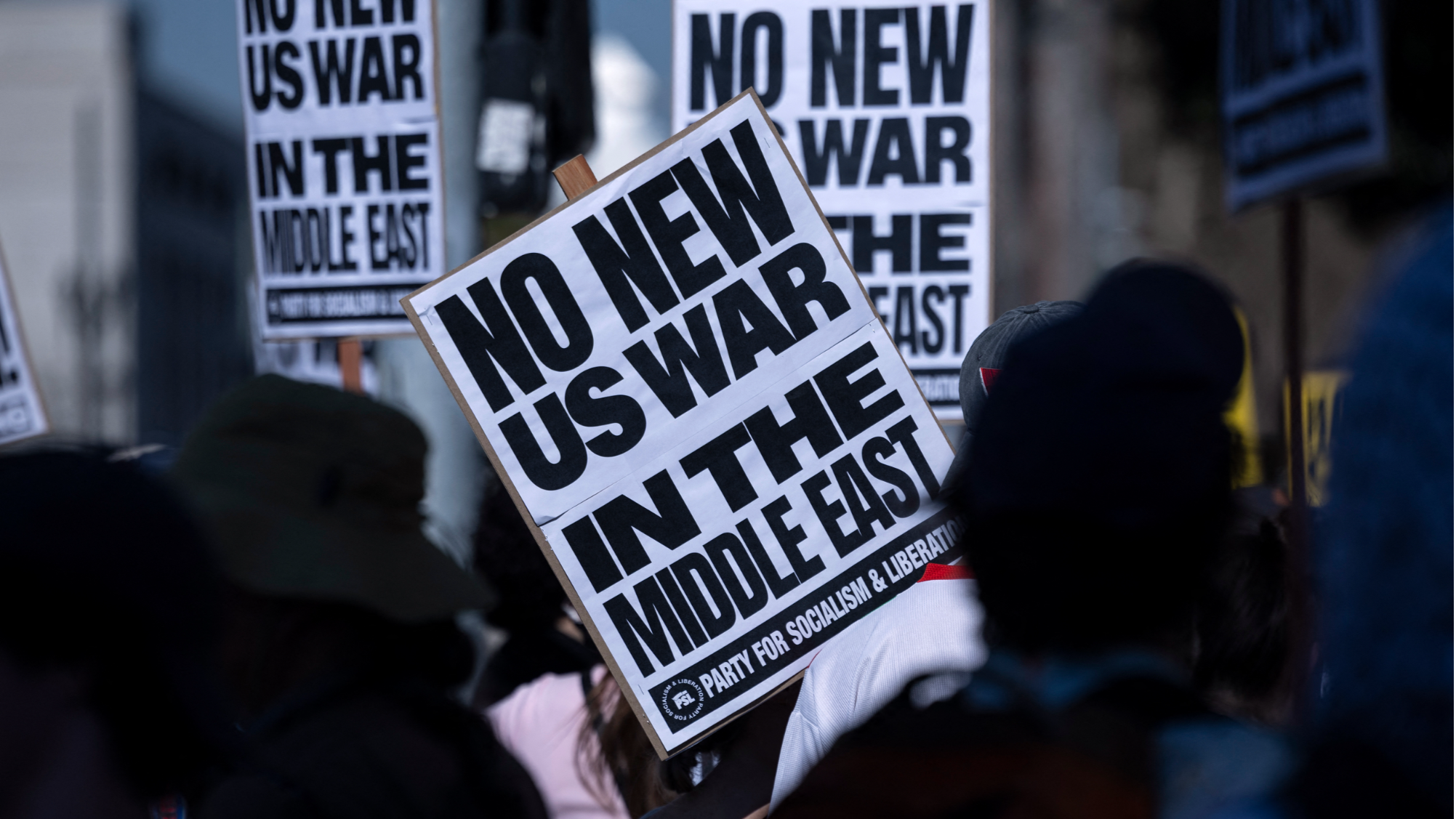
Democrats lashed out at the action, which killed Iran's Supreme Leader Ayatollah Ali Khamenei and dozens of senior Iranian officials, arguing that it was not authorized by Congress and warning that Trump was potentially dragging the United States into another protracted Middle Eastern conflict.
Republicans mostly lauded the action, deeming it necessary to attack the Middle Eastern country, which had long been seen as a threat to the United States and its allies.
READ MORE: UNSC convenes emergency meeting after strikes on Iran
Democratic Senator Mark Warner, vice-chairman of the Senate Select Committee on Intelligence, told CNN on Sunday that he had not received any indication that "Iran was on the verge of launching any kind of pre-emptive strike against the United States of America."
"When the president commits American forces to a war of choice, he needs to come before Congress and the American people and ask for a declaration of war," said Warner.
Veteran Democratic Senator Tim Kaine condemned the president's operation against Iran on Fox News Sunday, describing the US military action as "an illegal war."
Dismissing Trump's claim that an Iranian threat was imminent, Kaine said that current intelligence indicates that Iran is about "a decade" away from building missiles that could reach the United States.
Democratic Senator Adam Schiff, former chair of the House Intelligence Committee, told ABC News on Sunday that "there is no imminent threat to the United States that would justify exposing US troops to that kind of risk."
"The concern here is that we have unleashed factors in the region now that we cannot control," said Schiff, warning that it risks dragging the United States into another conflict in the Middle East.
In a post on X Sunday, Hakeem Jeffries, the top Democrat in the US House of Representatives, said that he was "heartbroken by the loss of life of multiple service members in the Middle East."
"No more American heroes need to die because of a reckless decision to go to war. Congress must act this week to restrain this president," said Jeffries.
In a statement Saturday, the House Democratic leader also noted that the ongoing operation "has left American troops vulnerable to Iran's retaliatory actions."
Three US service members have been killed and five others seriously wounded during the ongoing US military operation against Iran, according to the US Central Command.
In a video posted on Truth Social Sunday afternoon, Trump said that there will "likely be more" service members killed before the conflict ends.
As Democrats voiced strong opposition to the move, some prominent Republicans applauded the move, demonstrating a deeply divided picture in Congress.
"President Trump and the administration have made every effort to pursue peaceful and diplomatic solutions" for the Iranian issues, House Speaker Mike Johnson said on the social platform X on Saturday.
Republican Senator Ted Cruz told CBS News on Sunday that recent US and Iranian diplomacy "was an abject failure," calling Trump's decision to strike Iran "the single most important decision of his presidency."
Lindsey Graham, a senior Republican US senator representing South Carolina and a close ally of Trump, fiercely defended the president on Sunday.
"This operation makes America safer, puts our enemies on notice, and restores our standing on the world stage," Graham said in a post on X, arguing on NBC News that it was in the United States' interest to ensure that Iran's supreme leader was dead.
Not all Republicans believe the attack on Iran truly puts "America First." Former Congresswoman Marjorie Taylor Greene, who in recent months broke with Trump and resigned from her seat in January, said in a post on X that "War with Iran is AMERICA LAST and we voted against it."
Congressman Thomas Massie said in a post on Saturday that "I am opposed to this war. This is not 'America First'. When Congress reconvenes, I will work with (Democratic) Representative Ro Khanna to force a Congressional vote on war with Iran."
The War Powers Act is a 1973 US federal law designed to limit the president's ability to commit US forces to armed conflicts without Congressional approval. The law restricted military action without congressional approval to a narrow circumstance: "a national emergency created by attack upon the United States, its territories or possessions, or its armed forces."
While the law gives Congress a fast track to curb the president through a war powers resolution, it remains unclear whether such a resolution concerning Iran could secure the necessary support to clear both chambers, given that Republicans are mostly supportive of the US and Israeli strikes on Iran.
Democrats have demanded an immediate vote to restrain Trump's war powers on Iran, which has garnered the support of just a few Republicans, including Massie and Senator Rand Paul.
Kaine, one of the lawmakers leading a push to limit the Trump administration's attacks on Iran, was quoted by The Washington Post as saying that the Senate would likely vote on his war powers resolution Tuesday. The House is expected to vote on a similar measure in the coming week.
READ MORE: Beijing condemns strikes on Iran, killing of Khamenei
The congressional debate over war powers would be largely symbolic, the Associated Press reported. Even if a resolution were to pass the narrowly divided Congress, Trump would almost certainly veto it, and lawmakers would lack the two-thirds majority needed to override him.
Despite bipartisan support for limiting executive war powers, the US Senate failed to pass a war powers resolution related to Venezuela in January, highlighting the challenge Congress faces in limiting presidential authority.
According to a Reuters/Ipsos poll released Sunday, 27 percent of Americans approved of the strikes on Iran, while 43 percent opposed and 29 percent were not sure.
