

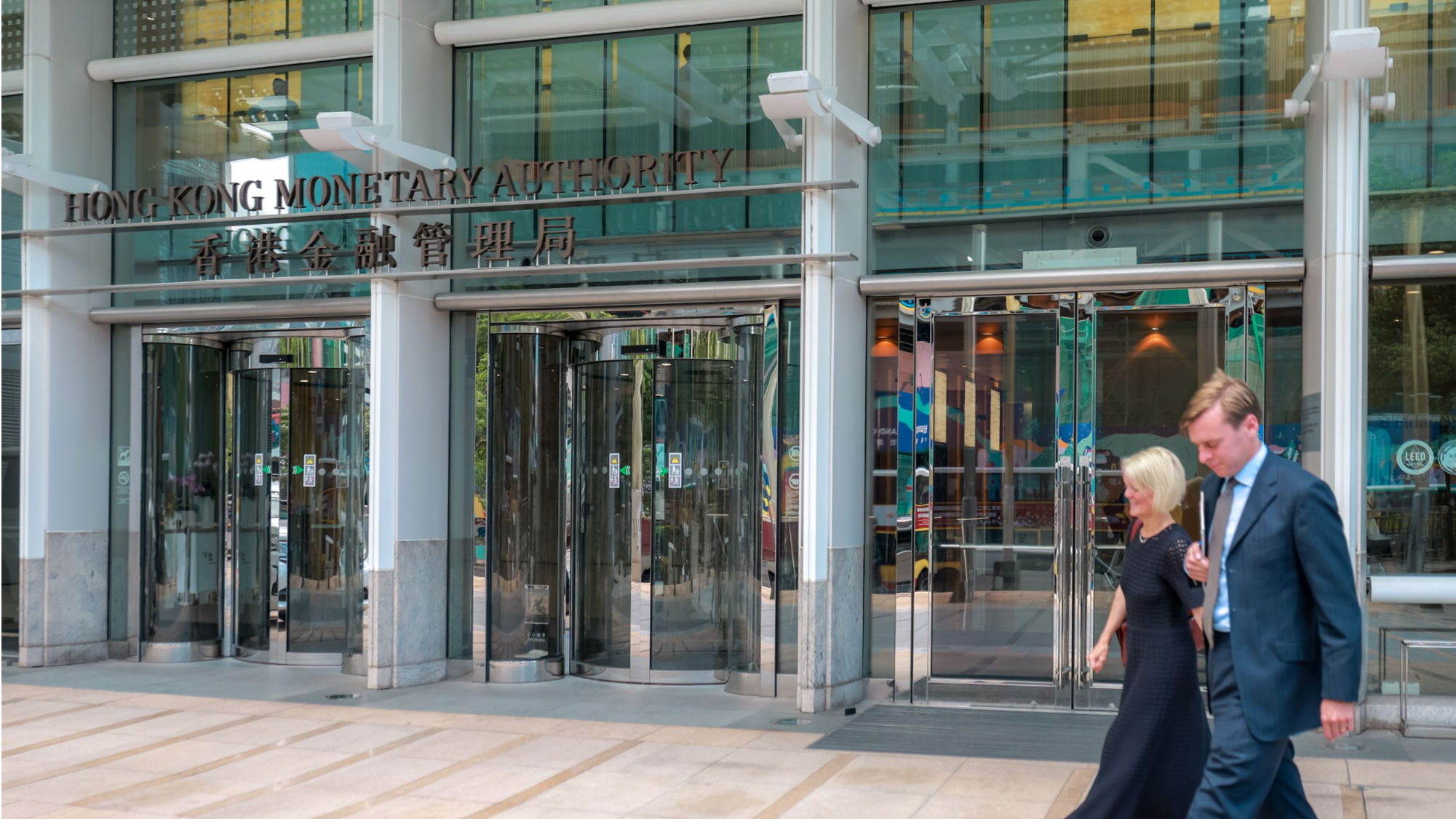
Hong Kong’s retail banks showed resilience in 2025, posting 7.3 percent year-on-year growth in pretax operating profits as asset quality stayed manageable despite a modest rise in bad loans, the Hong Kong Monetary Authority said on Thursday.
The pace of profit growth slowed from 8.4 percent in 2024, with the bad-debt ratio edging up to 2.01 percent by the end of 2025, up 0.05 percentage point from the previous year.
The figure has been rising gradually since 2024, mainly due to stress in the city’s commercial-property sector. By comparison, it peaked at 7.43 percent during the 1999 Asian financial crisis and stood at 1.61 percent amid the 2009 global financial crisis.
Commercial real estate loans currently account for about 14 percent of total lending, said Carmen Chu Lap-kiu, HKMA’s executive director for banking supervision, adding that there’s no concentration risk, and banks maintain adequate assets.
HKMA Deputy Chief Executive Arthur Yuen Kwok-hang said the increase in bad loans was modest. The banking sector’s provision coverage ratio is about 65 percent, excluding collateral, which he said is sufficient.
With profitability remaining solid, overall credit quality is manageable, Yuen said. The HKMA will keep closely monitoring banks’ exposures to local commercial property projects, he added.
Total loans in Hong Kong grew 2.3 percent year on year in 2025, ending three consecutive years of decline. Growth in residential mortgage lending accelerated to 2.5 percent.
The data were released at a briefing on Hong Kong banks’ performance in 2025, at which the HKMA also outlined the sector’s priorities for this year.
ALSO READ: HKMA, UAE central bank deepen financial cooperation, connectivity
Besides strengthening the banking system, the HKMA is deepening cross-border market connectivity as part of its efforts to enhance Hong Kong’s role as an international financial hub.
On the same day, the HKMA announced the Central Bank of the United Arab Emirates (CBUAE) has joined Hong Kong’s Central Moneymarkets Unit (CMU), the city’s core central securities depository for debt securities.
The move will give the UAE central bank and investors direct and cost-effective access to Chinese mainland’s capital markets through Hong Kong’s financial infrastructure, the HKMA said.
The agreement was reached during the third HKMA-CBUAE meeting, held in Abu Dhabi on Wednesday, building on a memorandum of understanding signed in Hong Kong during their second meeting in December 2024 to enhance connectivity in debt capital markets and related infrastructure.
CBUAE Governor Khaled Mohamed Balama said, “Our membership in the CMU enables access to Asian capital markets and deeper engagement with other global financial centers, which supports diversifying investment opportunities for market participants in the UAE.”
HKMA Chief Executive Eddie Yue Wai-man said the collaboration underscores Hong Kong’s role as a leading offshore renminbi hub and a gateway for global investors to tap into the mainland and broader Asia markets.
According to CMU OmniClear — which operates CMU — through the platform, the UAE central bank and local investors will be able to participate directly and efficiently in Hong Kong’s debt capital markets and access the mainland market via Bond Connect — a mutual market access program launched in 2017 that links mainland’s bond market with Hong Kong and global investors.
Stanley Chan Tat-keung, CMU OmniClear’s CEO, said the two sides also plan to explore an outbound linkage that would allow CMU members, now numbering 212, to invest in Middle Eastern capital market products, including Islamic bonds.
