

Stronger ties seen yielding positive results in various fields on both sides
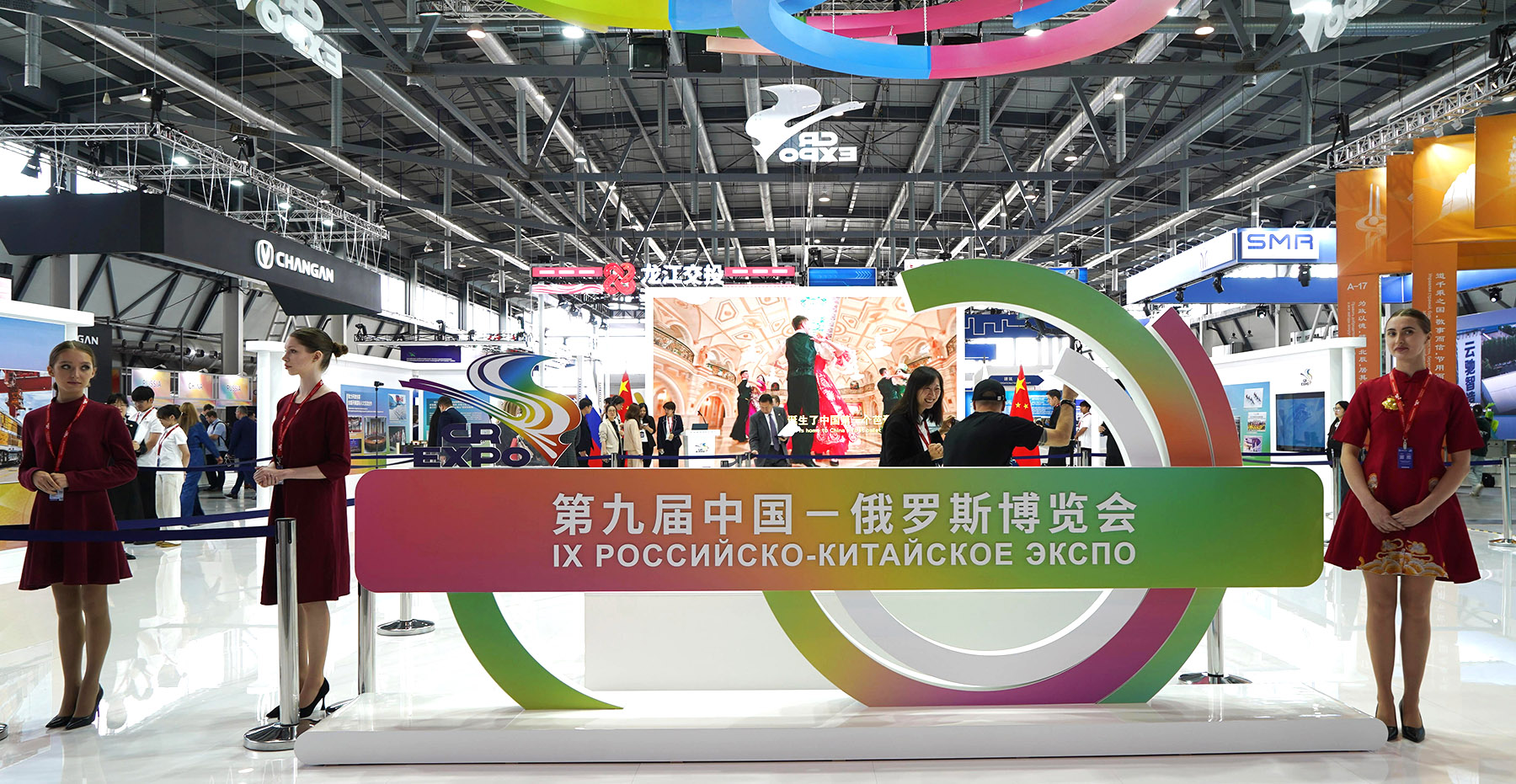
Trade volume between Russia and China has exceeded the $200 billion level for three consecutive years, injecting strong momentum into economic and trade cooperation and demonstrating the deep foundation and broad prospects of bilateral ties, officials and experts said.
According to the General Administration of Customs, trade volume between the two countries reached $228.11 billion in 2025. Despite a slight decline compared with the previous year, the total volume remained significantly above the cooperation target of $200 billion set by the two nations. Russia has maintained its stable position as China's fifth-largest trading partner, a testament to the resilience of the economic ties amidst a fluctuating global environment.
As both countries vowed to strengthen cooperation across various fields, the partnership is moving beyond simple commodity exchange to more comprehensive integration.
READ MORE: China and Russia deepen trade links
Achieving these results was particularly notable given the global headwinds. Ivan Melnikov, first deputy chairman of the State Duma, emphasized that 2025 was an "extraordinary year" for the business communities of both countries.
"Logistics and financial challenges became more complex, and global markets were more unpredictable,"Melnikov said. However, he added that enterprises from both nations upheld strategic thinking to continuously expand cooperation networks, finding innovative solutions to overcome payment hurdles and supply chain disruptions.
This resilience was echoed by Maria Zakharova, spokeswoman for the Russian Foreign Ministry.
"In 2025, the bilateral trade volume once again broke the $200 billion mark, fully demonstrating the sustainable development of the economic and trade partnership between the two countries," Zakharova said.
She said that while energy cooperation remains the bedrock of the relationship, the portfolio is diversifying. Russian agricultural products — ranging from soybeans and peas to seafood and beef — are becoming increasingly popular on Chinese dining tables. Conversely, Chinese mechanical and electrical products, particularly electric vehicles and consumer electronics, have secured a strong foothold in Russia.
Zhang Hanhui, China's ambassador to Russia, said the trade structure is constantly evolving, with rapid growth seen in emerging sectors such as biotechnology and aerospace. Market entities have become more diverse, with more than 3,300 new Chinese enterprises registering in Russia from January to October.
Zhang also highlighted progress in infrastructure projects. The China-Russia east-route natural gas pipeline has reached full transmission capacity, and the first China-Europe Arctic container shipping route has been successfully launched, significantly reducing shipping times.
While physical connectivity improves, the flow of people has also seen historic breakthroughs, fueled by new policies.
In September, China launched a one-year pilot program granting visa-free entry to individual Russian tourists for the first time. In a reciprocal move, Russia implemented a visa-free policy for Chinese citizens starting Dec 1.
These measures have ignited a tourism boom. According to the Association of Tour Operators of Russia (ATOR), China was poised to become the third-largest outbound destination for Russian tourists in 2025, with the number of Russian visitors to China expected to grow by 30 percent year-on-year.
Looking ahead, the Russian Ministry of Economic Development projects that by 2030, the number of mutual visits will double pre-pandemic levels. Alexander Musikhin, vice-president of ATOR, said Russia has already undertaken extensive work to enhance the experience for Chinese visitors.
ALSO READ: Chinese, Russian finance ministers agree to expand fiscal cooperation
Alongside tourism and trade, financial integration is deepening to support these activities.
Zhou Chengyang, a Chinese political commentator, said the share of the US dollar and the euro in bilateral trade has dropped significantly.
"Adopting local currency settlement facilitates the deep integration of China-Russia relations," Zhou said, adding that the trade relationship goes beyond market choices and serves to stabilize international politics.
However, he emphasized that while local currency settlement optimizes investment channels, further efforts are needed to strengthen the rule of law in the business environment to better safeguard investors from both sides.
Contact the writers at renqi@chinadaily.com.cn
