

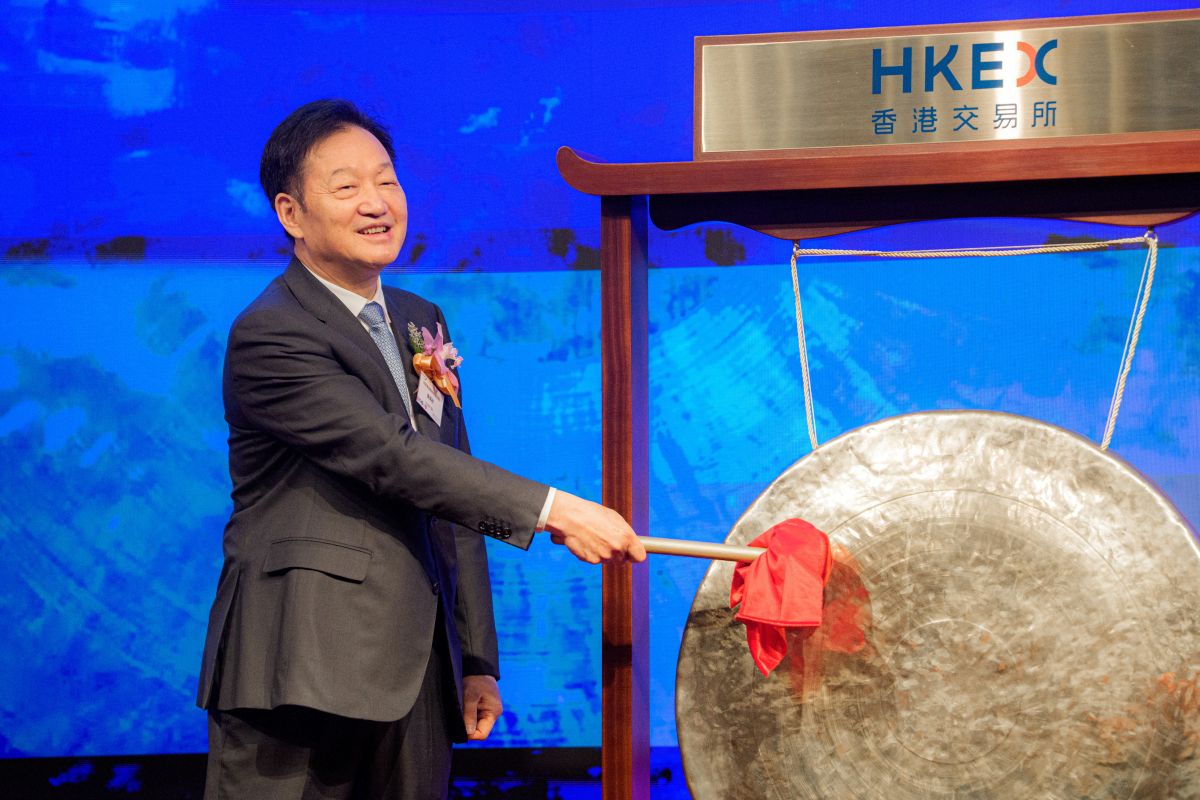
Muyuan Foods Co plans to partner with Asian pig farmers and enhance its global feed-grain supply network after raising HK$10.7 billion ($1.4 billion) in Hong Kong’s biggest listing of the year so far.
China’s largest hog breeder is looking to expand in Southeast Asia over the next three to five years, its chief financial officer said, in a move that will bolster regional biosecurity and help the company to diversify beyond an oversupplied domestic market.
Muyuan also aims to build procurement teams in major grain- and oilseed-exporting nations like Brazil to ensure a steady supply of feed ingredients, Gao Tong told Bloomberg News in an interview.
“We hope to improve our globalized supply chain through this Hong Kong listing,” the 31-year-old CFO said.
The IPO market in Hong Kong has had a busy start to the year, with maiden share sales fetching about $5 billion last month alone — the highest total for any January on record, according to data compiled by Bloomberg.
RELATED ARTICLES
- CP Group, Fidelity are said to plan investing in Muyuan's HK listing
- HK's IPO market starts year on strong note
- Hui: HK best place for investors seeking to diversify
Muyuan’s shares rose as much as 5.1 percent in their Hong Kong trading debut Friday, after pricing the deal at HK$39 per share, the top end of its range. The move came against the backrdrop of broadly negative market sentiment as the Hang Seng Index traded in the red. Muyuan’s mainland-listed stock has fallen about 8 percent this year, lagging behind the benchmark CSI 300 Index.
The proceeds will enable the company to expand overseas. Farmers have also faced increased volatility in the global supply chain, with soybeans – a key ingredient in pig feed.
Muyuan is keen to expand its presence in exporting nations to ensure stable supply of feed ingredients and reduce risks, Gao said.
Based in Henan province, the company started as a backyard farm with just 22 piglets in the 1990s. Last year, it sold around 78 million head of commercial pigs, according to a sales report issued by the company, which is already listed in Shenzhen.
Muyuan’s ascent over the past three decades has tracked rapid growth in Chinese pork consumption, which has more than doubled alongside economic expansion. As that growth has slowed, however, so too has demand for the country’s favorite meat. Beijing summoned its biggest pig breeders last year to discuss measures to cut production.
By then, Muyuan had already made its first foray overseas. It worked with a Vietnamese company in 2024 and is looking to build on its presence in the neighboring country by constructing a multistory pig farm capable of producing 1.6 million head per year, Gao said.
This will be a focus for the company as it partners with farmers across the region, including in the Philippines, to bolster biosecurity systems against African swine fever, a viral disease that slashed China’s own pig herd after it was first detected in 2018.
“While pork consumption in Southeast Asia has big growth potential, there is also an urgent need for many things like African swine fever prevention and control,” Gao said, adding that pig farms across the region were also in need of renovation and upgrades.
The company’s experience in fighting the disease, as well as intelligent farming systems developed in China, would be transferable to operations around the region, he said.
Muyuan plans to spend about 30 percent of the proceeds from the listing on technological innovation, including breeding, biosecurity and nutrition management, a company spokesperson said. Around 60 percent will go to international development, including the Southeast Asian and global supply-chain expansions, while 10 percent will be used for regular operations.
