

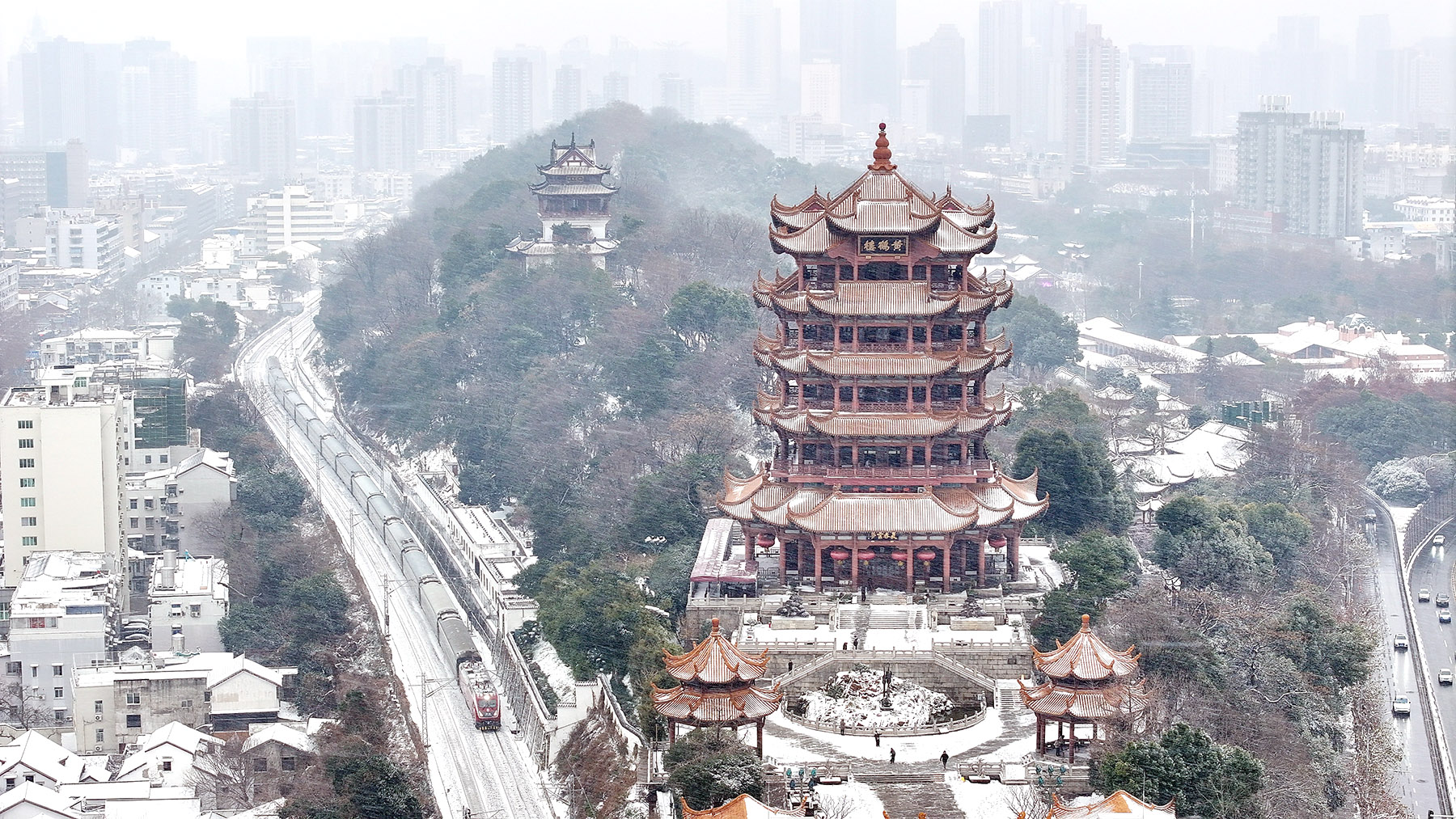
As a cold snap sweeps the nation, dusting even southern cities such as Shanghai and Wuhan, the capital of Hubei province, with snow, the tradition of braving the chill to search for wintersweet blossoms has captured the imagination of many this season.
Known for its sweet-smelling yellow flowers, the hardy bloom thrives from December through March annually, providing a fragrant respite from the harshness of winter.
At the Summer Palace in Beijing, golden-glazed roofs crowned with snow create a majestic backdrop as clusters of wintersweet burst forth in brilliant yellow against the iconic vermilion walls. The contrast created is striking — a living painting of imperial red, pure white and vibrant floral gold, embodying elegance and endurance.
READ MORE: A time to celebrate tradition
Classical Chinese gardens in the south also offer exquisite settings. The Humble Administrator's Garden in Suzhou, Jiangsu province, features delicate pavilions and winding corridors that frame the blossoms, while Shanghai's Guyi Garden boasts ancient architecture with ornate towers and terraces that reflect the blooms' subtle beauty.
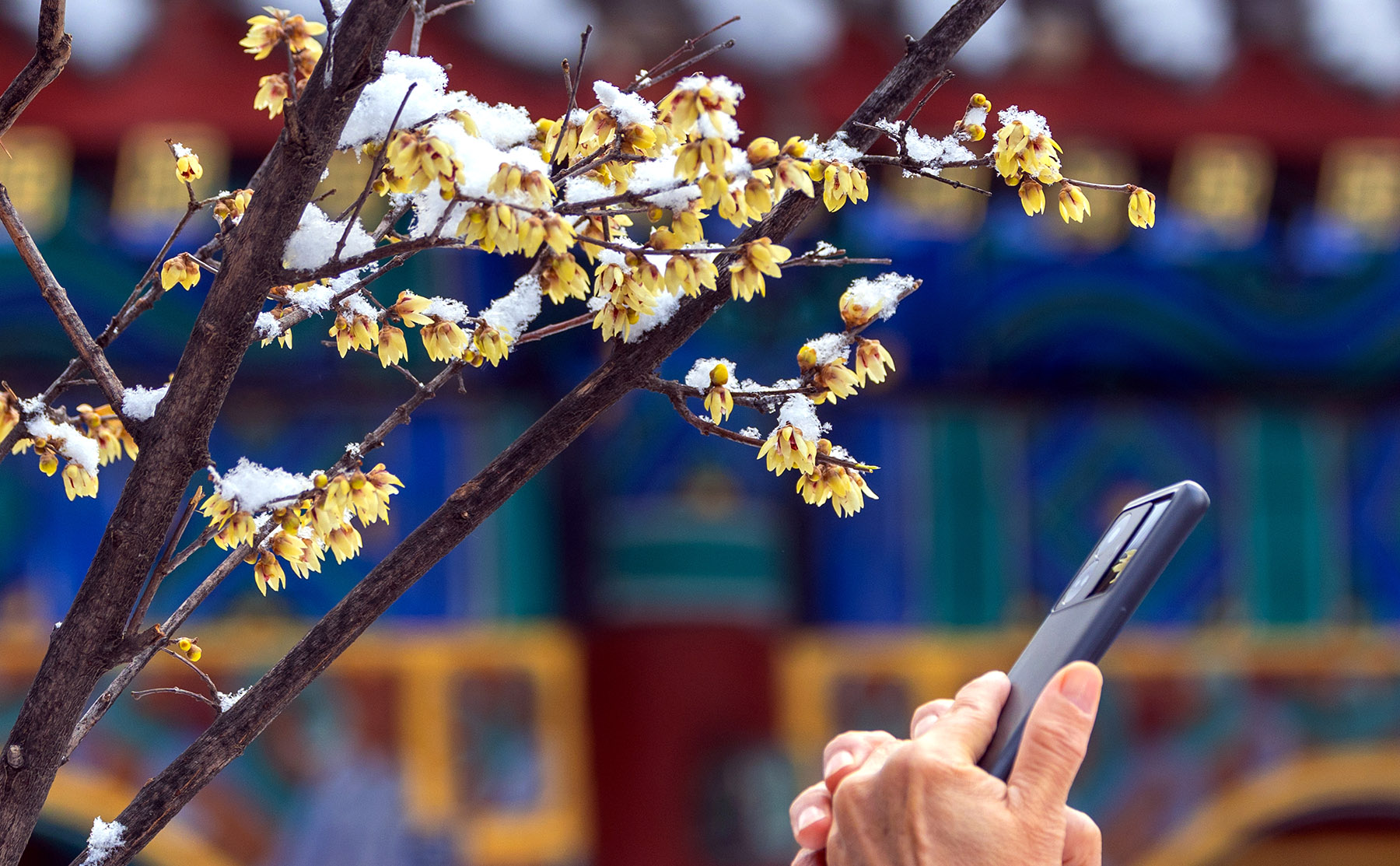
For more than a millennium, the blossoms have been Chinese poets' winter muse, symbolizing perseverance, purity and moral fortitude amid adversity. Poets and scholars shaped this cultural narrative as they found their ideals mirrored in the flowers.
Wang Anshi, a renowned poet and statesman of the Northern Song Dynasty (960-1127), penned the immortal lines: "You can't mistake them for snow mass from afar; For a subtle fragrance keeps coming forth." It was a metaphor for inner virtue — a quiet strength that reveals itself not through showy display, but through unwavering character.
Another poet who drew inspiration from the blossoms was Yang Wanli of the Southern Song Dynasty (1127-1279), who was known for his vivid imagery and appreciation of nature. He captured the resilient spirit of the blossoms in his verse:"Many flowers dare to bloom in the snow, but one tree alone ushers in spring for the world."
However, there is an amusing twist to the ancient tradition of winter blossom viewing. Some might have been celebrating an entirely different flower all along. The blossoms they admired were very likely the pink plum flowers that bloom later in early spring, not the waxy yellow wintersweet.
Li Qingwei, a professor at Beijing Forestry University, recently explained in a popular science video that wintersweet and plum blossoms, both called mei in Chinese, bloom around the same time and smell similar, leading flower lovers to group them together.
ALSO READ: Winter scenery across China
However, plum blossoms, academically known as Prunus mume, are pink and bloom from March to April. Wintersweet, with its yellow petals, is the true "cold-resistant warrior" of winter and is scientifically named Chimonanthus praecox.
Wintersweet's petals are covered in a waxy "down coat" that can withstand temperatures as low as — 10 C, which is why ancient poets extolled its noble and resilient spirit amid frost and snow.
Contact the writers at dengzhangyu@chinadaily.com.cn
