

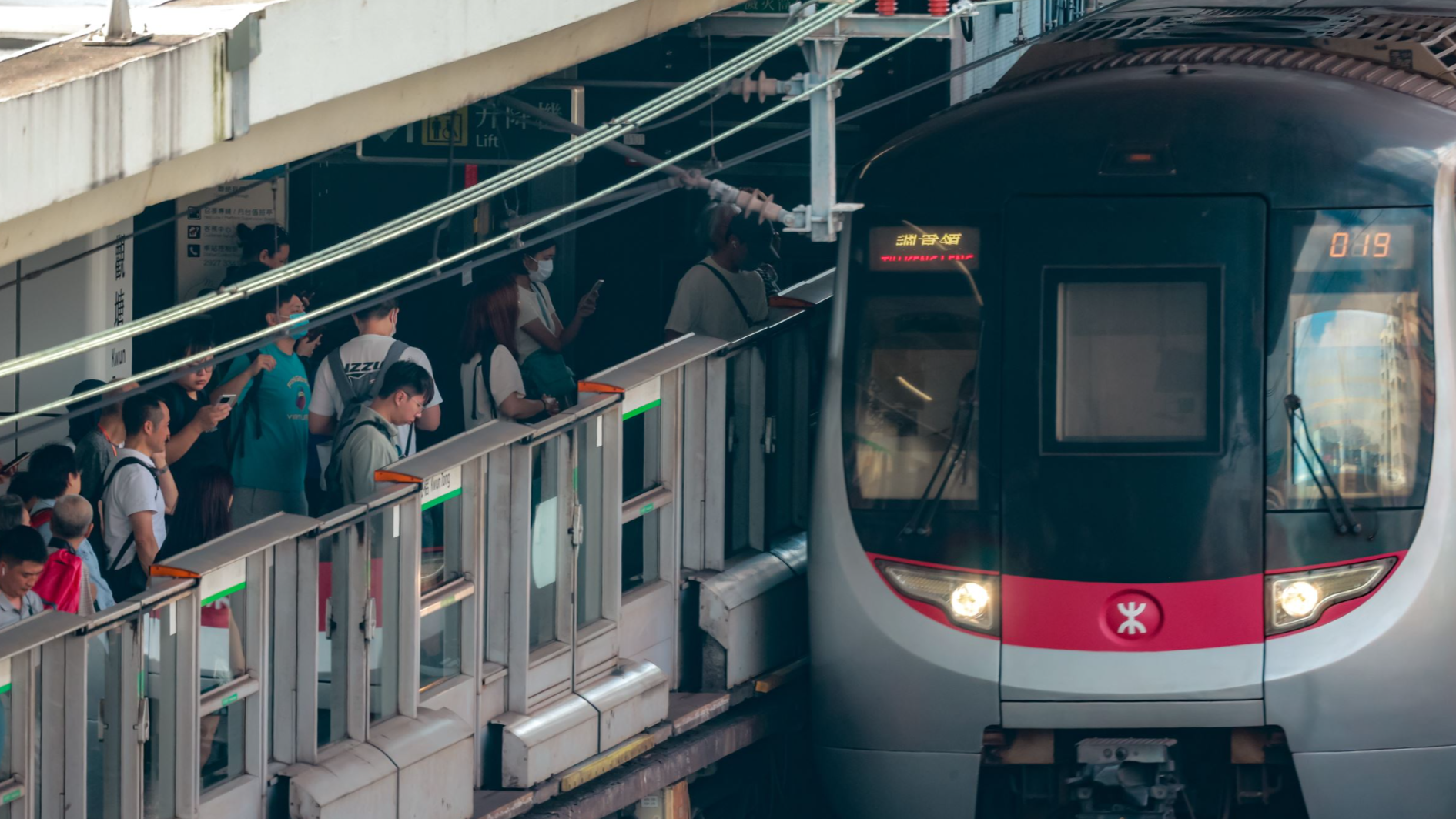
The awarding of a multibillion-dollar contract by Australia’s biggest public transport project to a Chinese consortium led by the Hong Kong Special Administrative Region’s MTR Corp and State-owned China Railway Rolling Stock Corp marks a pivotal transition for China’s high-end manufacturing — including exporting integrated systems built around Chinese standards, experts said.
MTR Corp, the SAR’s main railway operator, announced on Jan 5 that a joint venture with a subsidiary of Beijing-based CRRC Corp — the world’s largest manufacturer of locomotives and railway equipment — has secured a major contract to supply trains, operations and maintenance services to the Sydney Metro West project in the state of New South Wales.
The infrastructure works, connecting Sydney’s major commercial and residential hub in the west, Parramatta, and the city center, are part of Australia’s largest public transport project.
Du Yonghai, chief innovation officer at the Hong Kong Productivity Council, told China Daily that the deal represents more than a commercial success for the two companies. It amplifies how Chinese technology, Hong Kong’ operational expertise and the requirements of international users can be integrated and delivered globally, he said.
ALSO READ: HK's MTR consortium wins major Sydney Metro West contract
According to MTR Corp and Australian news outlet The Daily Telegraph, the consortium’s A$3.96 billion ($2.64 billion) contract covers 22 years. It will supply a fleet of 16 driverless metro trains serving nine stations along the Sydney West project’s 24-kilometer route, together with signaling, communications and control systems, as well as system integration, testing and commissioning.
The consortium will also oversee operations and maintenance for 15 years after the line becomes operational in 2032.
“At the core of the MTR-CRRC cooperation lies Hong Kong’s ability to translate advanced rail technologies into end-to-end solutions that meet the stringent requirements of developed markets, drawing on the city’s experience in managing complex international projects, its rigorous operational standards and sophisticated understanding of global regulatory frameworks,” Du said.
“This underscores Hong Kong’s role as a superconnector, not merely a bridge, but a system integrator, a facilitator of standard alignment, and a value multiplier,” he added.
David Tang Chi-fai, property and international business director of MTR Corp, said the company’s global experience positions it well to deliver the project.
“By partnering with CRRC — one of the world’s foremost suppliers of rolling stock — we will deliver world-class systems and operational solutions for this line, connecting new communities and helping drive the city forward,” he said.
ALSO READ: Passenger trips on cross-boundary high-speed railway hit 1m
MTR and CRRC have been partners since 2006, building collaboration across areas, covering rail asset renewal, the application of innovative technologies and international business expansion. In July, MTR signed a deal with CRRC Guangdong, marking its first investment in the railway equipment industry in the neighboring province, as it seeks to deepen integration across the rail industry value chain and unlock greater synergy.
National vision
Wang Xiaoyu, an assistant professor at the Financial Technology Thrust of the Hong Kong University of Science and Technology (Guangzhou), sees the joint overseas expansion of MTR and CRRC as an important model for Hong Kong enterprises leveraging their strengths to serve national priorities, and integrating more deeply into the nation’s broader development strategy on the world stage.
In particular, under the Belt and Road Initiative, where railways are a critical component of infrastructure connectivity, Wang said he expects closer collaboration between Hong Kong and the Chinese mainland to accelerate the global expansion of rail services to achieve an even greater impact.
Chinese-manufactured metro trains currently not only serve passengers in Hong Kong, but have also been exported to markets like the United States, Turkiye and the European Union. MTR also operates rail projects in mainland cities, such as Shenzhen, Beijing and Hangzhou, while managing major rail networks in Australia, Sweden and the United Kingdom.
“The broader significance of such a partnership lies in what it represents — a form of paradigm innovation,” Du said.
“With Chinese technology advancing to the forefront of high-end manufacturing sectors, such as rail transit, ‘China standards’ are increasingly demonstrating their potential to gain international standing. Through Hong Kong’s globally connected platform, this process of recognition is accelerating,” he said.
Supported by its global outlook, a professional services ecosystem, and an internationally recognized operating framework, Hong Kong plays what Du calls an “irreplaceable role” to help ensure that Chinese standards retain their technological sophistication, while achieving adaptability and credibility across markets.
Beyond the MTR-CRRC cooperation, the SAR has more to offer, said Du, citing Westwell Technology — a Shanghai-based firm specializing in artificial-intelligence-powered autonomous vehicles for the logistics industry. With the support of the Hong Kong Productivity Council, Westwell completed ISO-compliant safety risk assessments for its autonomous terminal tractors, enabling pilot deployment at Hong Kong’s port terminals and using the project as a reference case to facilitate its expansion into overseas markets.
Similarly, Beijing-based AI driverless technology firm UISEE conducted its internationally benchmarked, scenario-based testing and optimization in Hong Kong. The firm has adapted its autonomous-driving technology to meet the stringent requirements of environments, such as airport restricted zones, supporting its expansion into Southeast Asia and Middle East.
“Not to mention that autonomous-driving solutions originating from Hong Kong International Airport are increasingly emerging as globally accepted technical standards,” Du said.
“All these practices underscore that Hong Kong is where mainland innovation clears the last mile — from technology breakthroughs to global adoption.”
Contact the writer at sophialuo@chinadailyhk.com
