

Chinese automakers are emerging as some of the most influential forces in the industry.
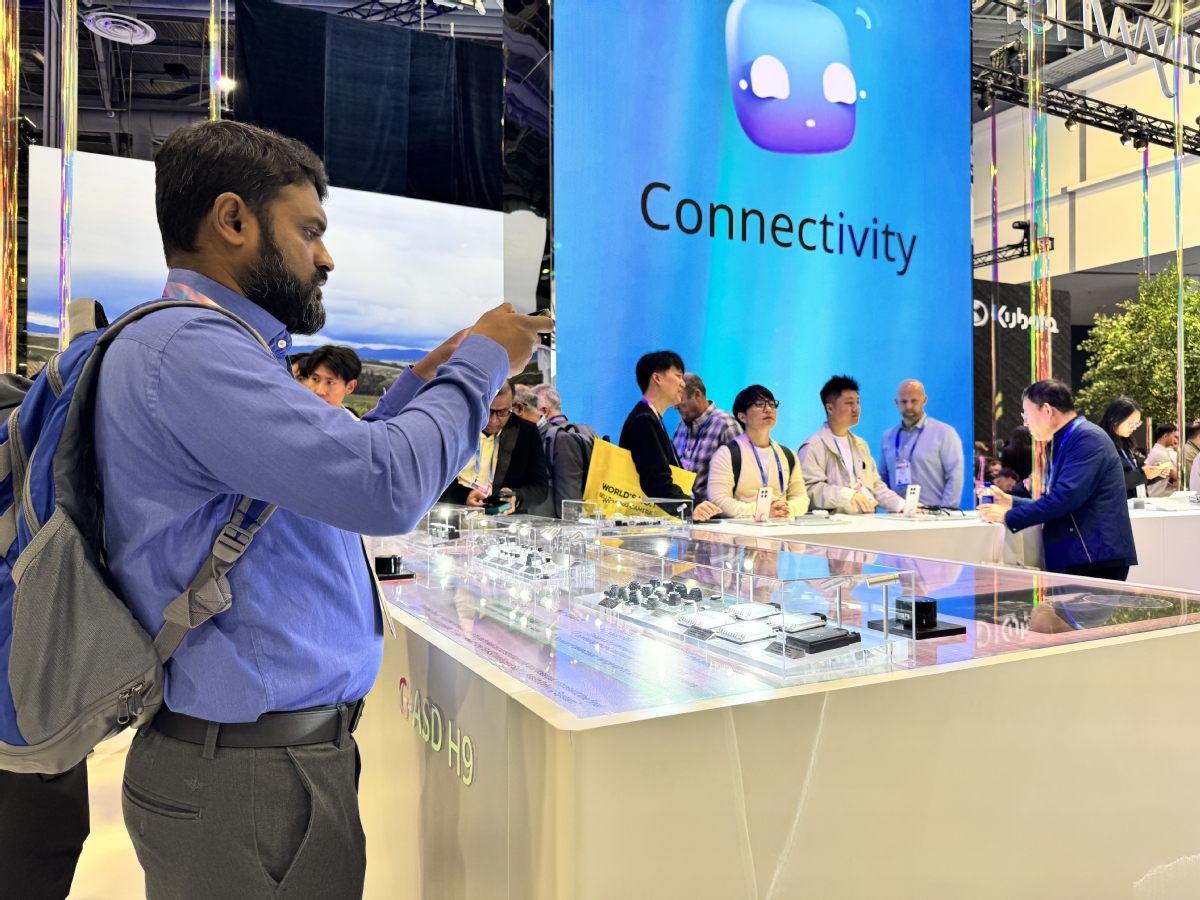
At CES 2026, Geely Auto Group made two major announcements: Full-Domain AI 2.0, its next-generation vehicle intelligence architecture, and G-ASD (Geely Afari Smart Driving), a new intelligent driving system aimed at making high-level autonomous driving a reality.
"Geely has evolved from a high-end manufacturing company into a globally oriented automotive technology enterprise driven by intelligent technologies," said Jerry Gan, chief executive officer of Geely Auto Group.
READ MORE: AI auto race enters fast lane at CES
Full-Domain AI 2.0 moves away from fragmented, module-based intelligence toward a unified, vehicle-wide AI architecture. The result is a centralized intelligence Geely calls a "super AI brain", which can coordinate the cockpit, chassis, safety features, and driving capabilities in real time by integrating computing power, data, and models.
"AI is reshaping the automotive industry in many ways, from powertrains and components to a systematic reconstruction of mobility ecosystems and lifestyles," Gan said."Geely is committed to creating safe, sustainable and intelligent mobility for the world."
G-ASD, Geely's next-generation intelligent driving system, combines AI algorithms, large-scale real-world driving data, and high-performance sensing and computing hardware to improve safety and confidence in complex traffic environments. According to Li Chuanhai, vice-president of Geely Auto Group and head of the Geely Research Institute, such systems point to a fundamental redefinition of the automobile itself.
"By 2030, cars will evolve into 'super intelligence' with emotional awareness, proactive service and continuous evolution," Li said."G-ASD and Full-Domain AI 2.0 are not distant concepts — they are tangible innovations that integrate with cockpits and chassis to deliver highly humanlike, user-friendly experiences."
Geely's global footprint underpins its technological ambitions. Since acquiring Volvo Cars in 2010, the company has maintained significant research and development and design operations in Europe, alongside manufacturing facilities around the world. This globalized structure, executives say, is both a strength and an ongoing challenge.
"The biggest mission for us now is to better coordinate among those facilities and to better leverage local resources and local talents to build better products and services for consumers all over the world," said Gu Yang, head of branding and communications at Geely Auto Group.
China's strength in electric and intelligent vehicles is underpinned by its broader industrial ecosystem. The country remains the world's largest EV market, with battery-electric and plug-in hybrid vehicles, accounting for more than half of new car sales, driven by dedicated EV platforms, rapid iteration cycles and sophisticated supply chains.
That technological leadership has not gone unnoticed by international industry players. Mahesh Kodumudi, from Hyundai Mobis and chief procurement officer at Scout Motors, said he was particularly impressed by Chinese battery technology showcased at the Geely booth.
"I know China is the leader when it comes to BEV battery tech, especially LFP," Kodumudi told China Daily, referring to lithium iron phosphate batteries, which now account for roughly 80 percent of battery-electric vehicles in China.
"The technology is increasingly used in the US, and we hope to bring Geely's technology to the US," he said.
Kodumudi added that Chinese companies' advantages extend well beyond batteries. "The speed and scale of product evolution in China is something the rest of the world should learn from."
Similar sentiments were echoed by Manoj Aggarwal from Maruti Suzuki, who expressed interest in the camera sensors used in Geely's G-ASD system. For emerging markets such as India, cost-effective alternatives to radar-heavy systems are particularly attractive.
Fast pace
"Cameras are cheaper than putting many radars, so that's why we are looking at this," Aggarwal said."Chinese EV makers develop vehicles at a very fast pace. They have almost cut development time in half compared with the rest of the world."
ALSO READ: Chinese innovations clean up at CES
While EVs are making headlines, Chinese automakers are also showcasing other developments. Great Wall Motors, or GWM, drew attention at CES by unveiling an internally developed 4-liter twin-turbo V-8 engine, an unconventional move in an era dominated by downsizing and electrification.
Yet the company's core competitiveness still lies in hybrid innovation. GWM announced its Hi4 intelligent hybrid electric system, featuring a unique all-wheel-drive configuration with both series and parallel modes, has already been deployed in more than 410,000 vehicles.
"This is a very unique configuration," Yvan Le Neindre, GWM's chief engineer, told China Daily. "Not many OEMs (Original Equipment Manufacturers) offer this kind of combination. We are probably the first to release it."
Contact the writers at renali@chinadailyusa.com
