

The viewing experience has become fully immersive since the 2010 mainland release of the first Avatar, Xu Fan reports.

Few film franchises have witnessed the unprecedented expansion of China's film market like Avatar has.
In January 2010, when the first Avatar was released, the Chinese mainland had just over 4,700 screens in 1,680 cinemas. Among these, a mere 14 were IMAX screens — the giant format widely regarded as the ideal way to experience the stunning landscapes of Avatar's alien world, Pandora. Now, 15 years later, the country boasts more than 92,550 screens, including nearly 800 IMAX, in over 15,430 cinemas, more than anywhere else in the world.
For those who remember queuing for hours on a chilly winter morning to purchase a single IMAX 3D ticket for Avatar, the options today have vastly improved. China's moviegoers can now choose from a variety of premium formats, ranging from CINITY and IMAX to Dolby, to watch Avatar: Fire and Ash, the latest and third installment of the iconic franchise.
ALSO READ: James Cameron celebrated in Hollywood amid 'Avatar' success
As of Monday, the 198-minute-long film has grossed over 700 million yuan ($99.8 million), consistently topping China's singleday box office charts since its premiere on Dec 19.
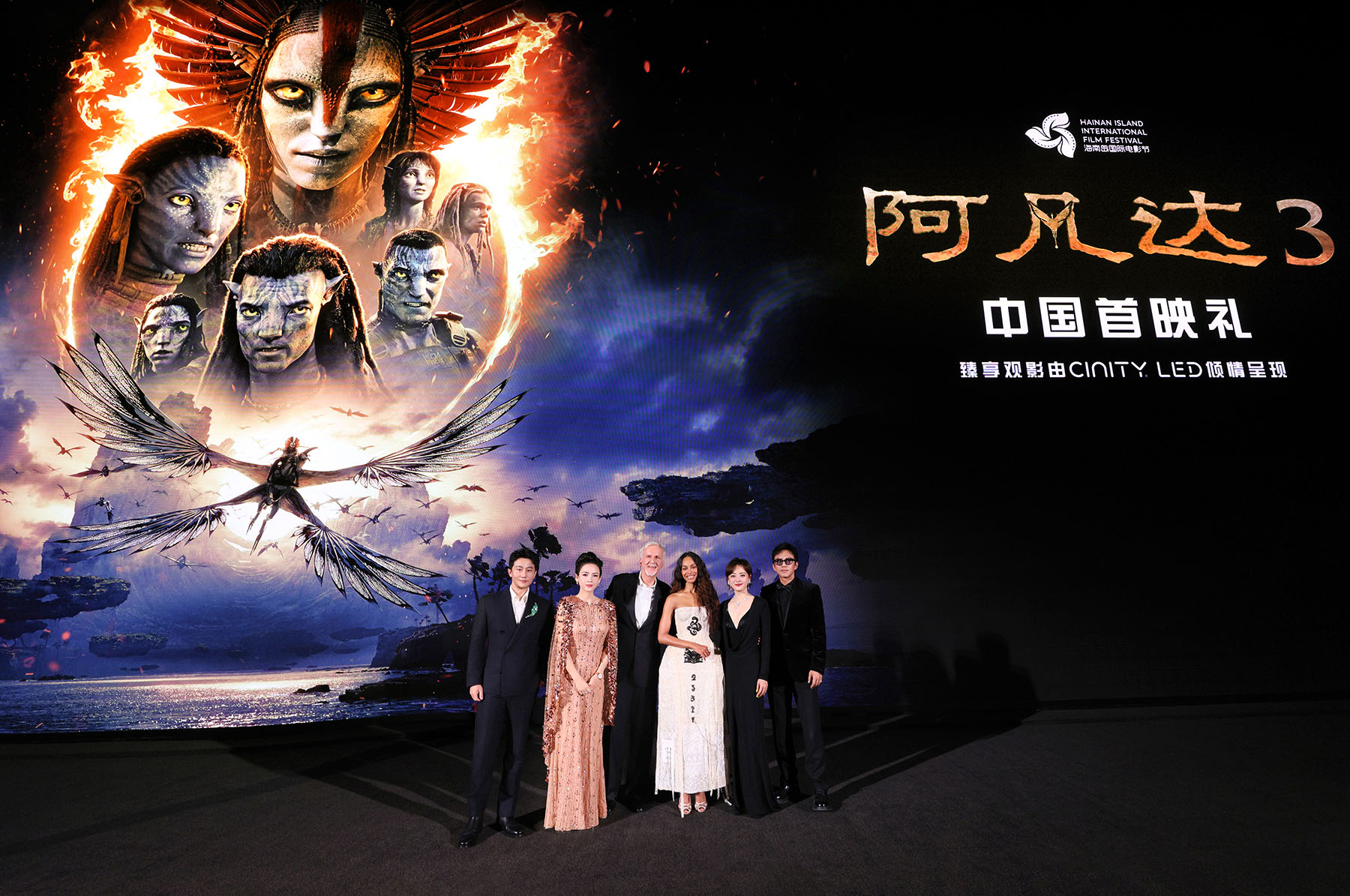
What makes Chinese fans most proud is that domestic technology now plays a pivotal role in the ideal visual impact when screening the new Avatar film. CINITY, an advanced screening system independently developed by the Beijing-based China Film CINITY Co, was the chosen format for the Chinese premiere of Avatar: Fire and Ash in Sanya, Hainan province, earlier this month.
The film is the first Hollywood movie screened in China in CINITY's exclusive format: LED, 3D, 4K, and 48 frames per second, which is higher than the standard 24 frames used in most cinemas. In short, these features make the experience fully immersive, making audiences feel as if they are part of the film's world.
According to China Film CINITY Co, director James Cameron had a CINITY screen installed in his New Zealand studio. In October, Chinese technicians transported the screen and spent 15 days installing it, allowing the director to see his visual effects demonstrated with exceptional vividness. A key technical upgrade involved brightness: the 3D brightness in Cameron's studio was 14 foot-lamberts, while the CINITY system was calibrated to 17.5 foot-lamberts, resulting in brighter and clearer images.
Despite overseeing such cutting-edge technology, Cameron, the legendary director who has helmed three of the world's five highest-grossing films, two of which are the first and second Avatar movies, says that although everyone sees him as a technical person, "the most important technology in filmmaking is still acting."
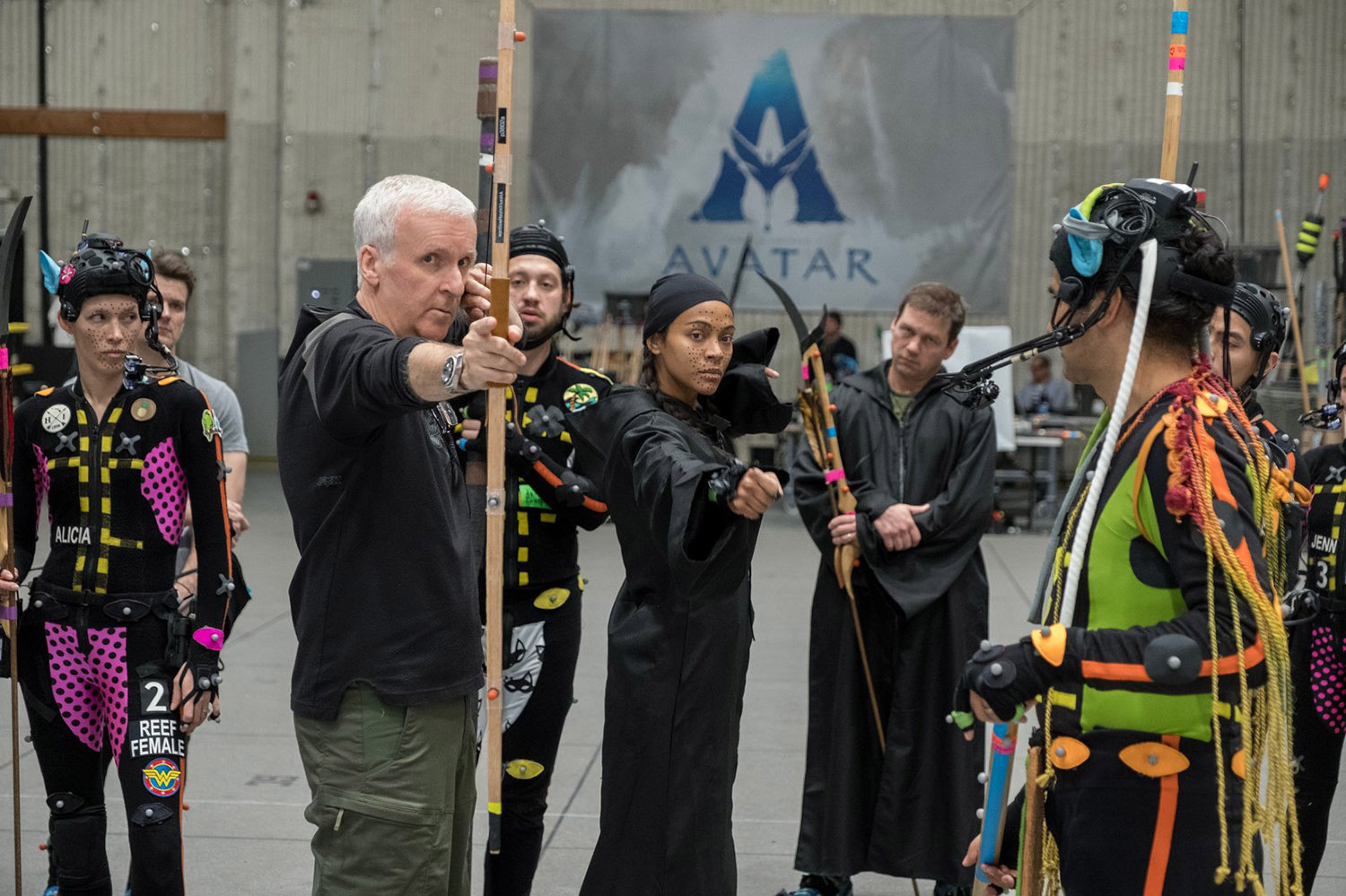
With more than 3,000 people involved in its production, the latest film was shot concurrently with the second installment, Avatar: The Way of Water, released in 2022.Over 18 months, the cast used performance-capture technology, translating their work into the film's characters: the blue-skinned, 3-meter-tall Na'vi, and their counterparts, the gray-skinned members of the Mangkwan Clan, also known as the Ash People, the new antagonists.
"We spent a lot of money and a lot of time — almost five years — completely revamping our technology. It was very innovative. Then we started production, and I promised the actors, I said, 'Play it as close as you want; we will see it. We will see microscopic changes in your expressions that you may not even be aware of. You don't have to act bigger because it's performance capture. What you want to do is act closer, like you're in a tight close-up in a movie,'" he says, adding that the actors were actually in close-up shots at all times once they put on the head-mounted rigs.
"What they've found is that it's best to just be honest and truthful in the moment, just like they're talking or interacting with the other actor, fully in character. It all worked. I think, for those of you who saw the film, you know what I'm talking about. Those (alien) people are real; you believe they're real," Cameron explains.
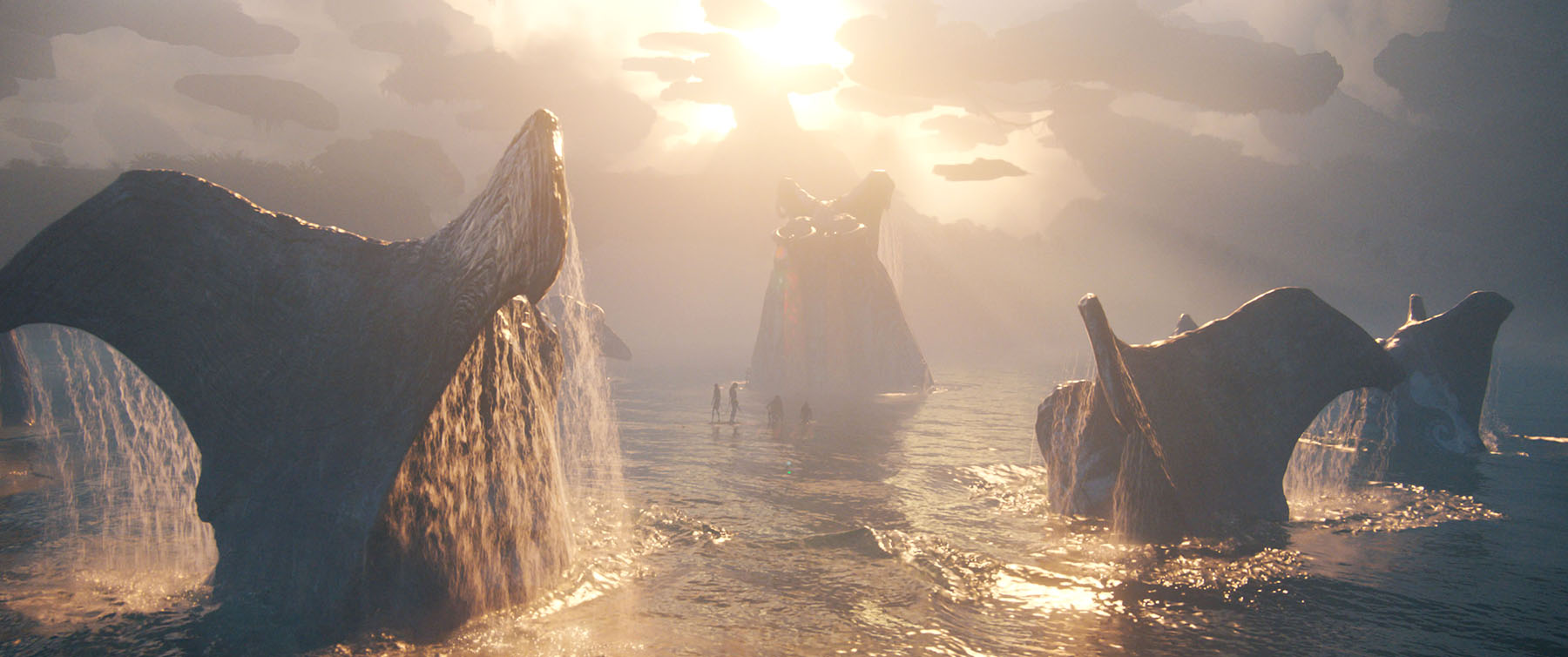
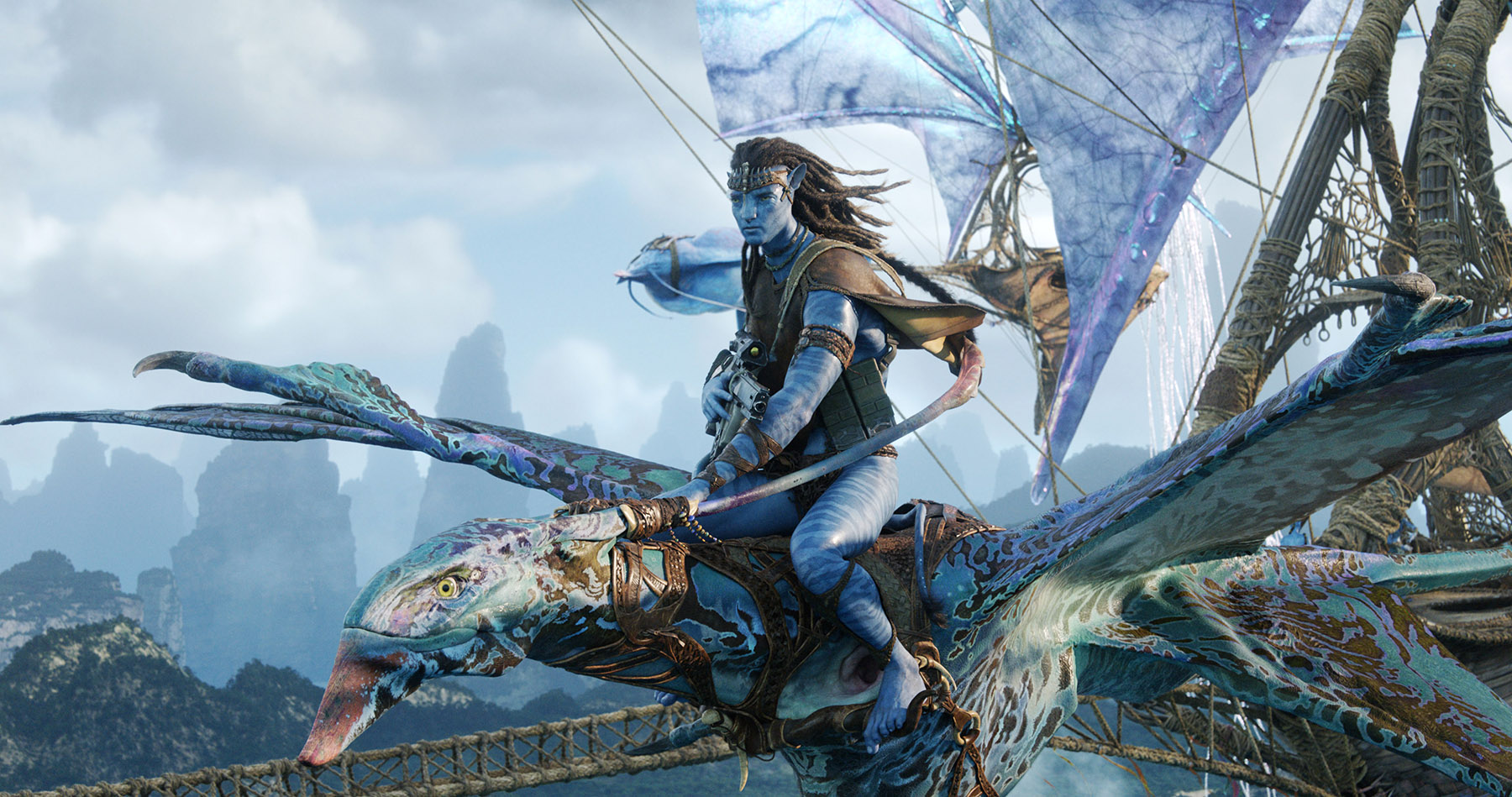
Picking up a few weeks after the end of Avatar: The Way of Water, the new story opens with the Sully family — led by Jake Sully, a former human soldier-turned-Na'vi, and Neytiri, the Na'vi princess — still living among the oceanic Metkayina Clan and the picturesque reefs of Pandora. While grieving the loss of their eldest son, Jake and Neytiri find themselves once again pursued by Colonel Miles Quaritch, the main antagonist, and his new ally Varang, the Ash People's ruthless female leader.
Turning 71 years old in August, Cameron was just 19 when he first conceived the core idea for Avatar. After dreaming of a bioluminescent forest, he woke up and made a color sketch. Decades later, having already become a celebrated director through blockbusters such as The Terminator (1984) and Aliens (1986), Cameron wrote the script for Avatar in 1995, three years before he famously declared himself the "king of the world" at the Oscars as Titanic swept the awards.
Despite being one of the most sought-after directors, with both fame and financial backing, Cameron had to wait another decade for cinematic technology to advance enough to realize Avatar. This pioneering runaway hit revolutionized the moviegoing experience and also accelerated the construction of 3D screens in China.
"I've been having crazy dreams my whole life. I feel so privileged to get to put them on a big screen. And I think we see the best parts of ourselves in the Na'vi as well," says Cameron, reflecting on his decades-long pursuit of bringing a teenage dream to life.
Most critics interpreted the first Avatar film as a metaphor for the conflict between indigenous peoples and colonizing outsiders, as well as a reflection of Earth's environmental crises.
With the changes over the past 10 years, Cameron's vision has continued to expand beyond the confines of a sci-fi story. "The themes of human connection and seeing each other, and being connected with nature and so on, seem to be just as relevant now as they were when I wrote it. We try to deal with things that are universal in the human condition: ideas around family, courage and a sense of duty to our family, that are really kind of timeless, existing outside of any specific country or culture," he says.
Aside from the film being screened in its original English, a stellar voiceover cast featuring top Chinese stars offers another option for local moviegoers. Celebrities lending their voices to major characters include the star couple Deng Chao and Sun Li, actor Huang Xuan and actress Zhang Ziyi.
ALSO READ: Disney announces new 'Star Wars' film, delays 'Avatar' sequels
Zhang, who voices Ronal, the spiritual leader of the oceanic Metkayina Clan who shelters the protagonists' family, in the Mandarin version, says dubbing holds the significance of a second-round creation after a film is completed. She aimed to breathe new life into the character within the localized language environment.
For Deng, the 46-year-old actor who lends his voice to Jake Sully, being part of the Avatar saga is a nostalgic journey. "When Avatar was first released, I remember seeing packed theater corridors and stairways, a truly unprecedented spectacle. The Avatar series is like an old friend, yet from another perspective, it's also like a teacher," says Deng, who is also a director.
Contact the writer at xufan@chinadaily.com.cn
