

NEW YORK/CARACAS/WASHINGTON - US President Donald Trump on Friday promoted his plan of securing investment of at least $100 billion to rebuild Venezuela's oil industry in a meeting with US oil company executives at the White House.
Trump urged major US oil companies to participate in the investment deal and promised them quick and good returns. Nevertheless, company CEOs largely did not commit to the deal.
Exxon Mobil CEO Darren Woods said given that the current situation in Venezuela presents an unacceptable risk, his company would not be diving headfirst into Venezuela.
"If we look at the legal and commercial constructs and frameworks in place today, in Venezuela today, it's uninvestible, and so significant changes have to be made to those commercial frameworks, the legal system," Woods said.
ConocoPhillips CEO Ryan Lance said his company lost 12 billion dollars from the previous nationalization of Venezuelan assets.
A Chevron top official detailed the company's current operations rather than discussing dramatically scaling them up. Chevron is the only US oil company that now operates in Venezuela through a joint venture with Venezuela's state oil company, according to local media.
By summoning the meeting, Trump was seeking an agreement to decide which US oil companies can enter Venezuela and rebuild the country's energy infrastructure.
The United States has taken control of Venezuela's oil exports to drive changes that must happen in the country, said U.S. Energy Secretary Chris Wright.
Earlier on Friday, Trump said on Truth Social that the United States, "in coordination with the Interim Authorities of Venezuela, seized an oil tanker which departed Venezuela without our approval."
"This tanker is now on its way back to Venezuela, and the oil will be sold through the GREAT Energy Deal, which we have created for such sales," Trump added.
It is the fifth oil tanker the US forces have seized, allegedly linked to Venezuela.
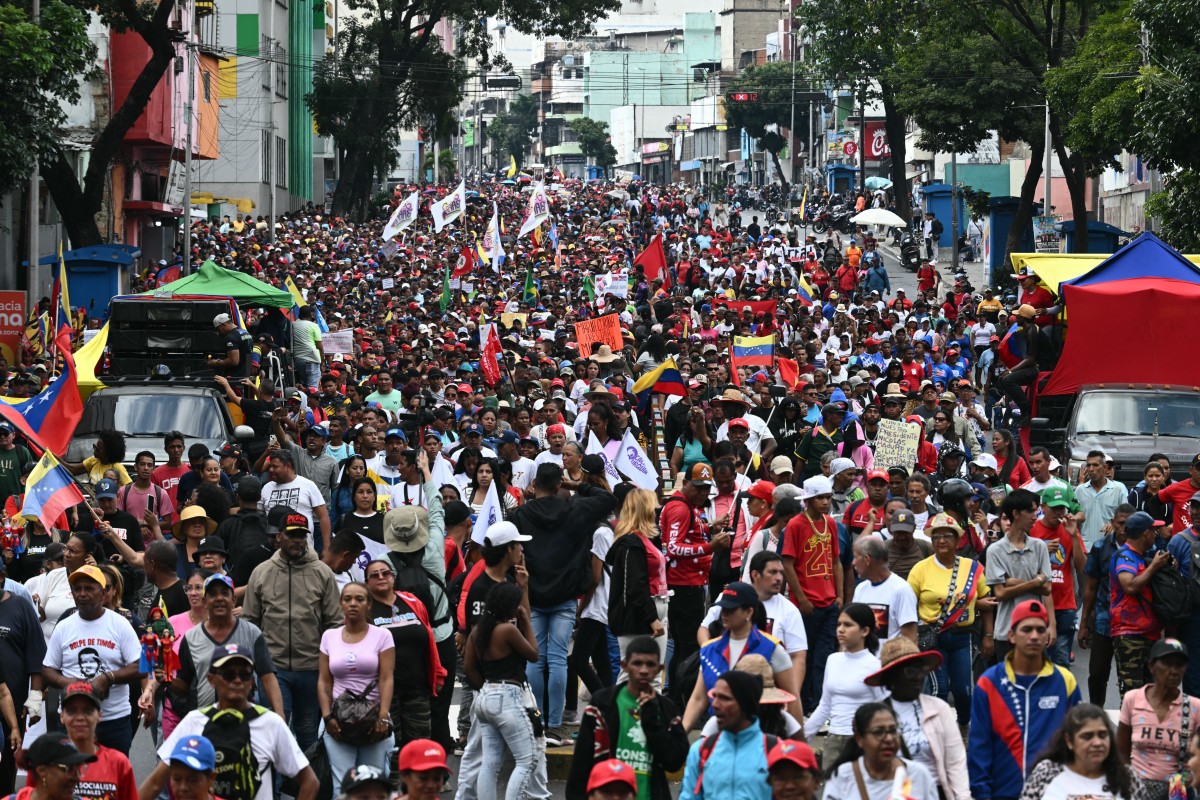
The US military forces raided and seized Venezuelan President Nicolas Maduro and his wife on Jan 3.
Since then, the Trump administration has quickly pivoted to portraying the move as a newfound economic opportunity, saying that the United States will be controlling Venezuelan oil sales indefinitely and that the Venezuelan authorities "will be turning over" between 30 million and 50 million barrels of sanctioned oil to the United States.
Venezuela has the largest proven crude oil reserves in the world, with approximately 303 billion barrels or about 17 percent of the global total, according to the US Energy Information Administration.
ALSO READ: Venezuela says remains committed to deepening trade agreements with China
Cooperation agenda
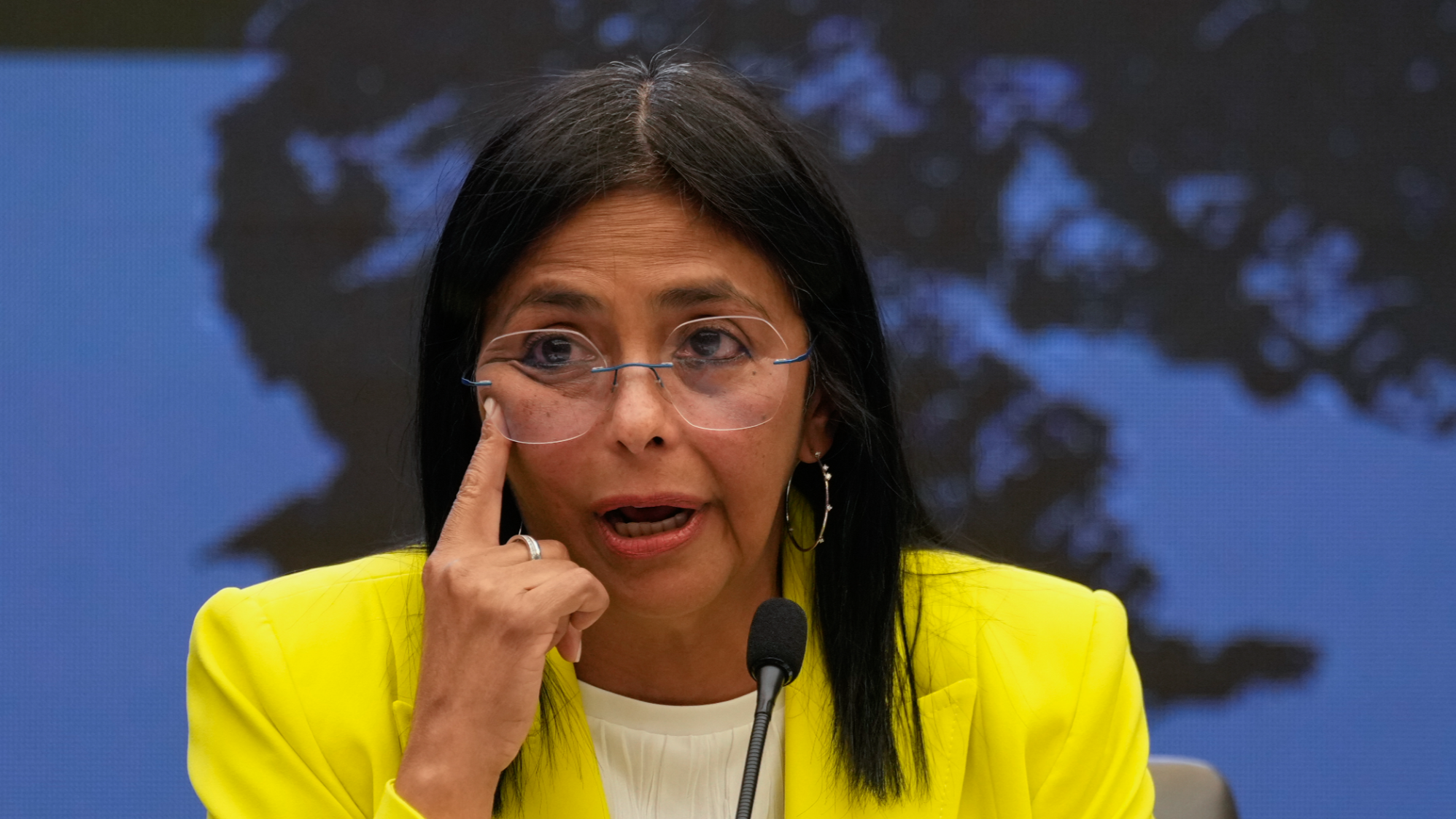
Venezuela's acting president Delcy Rodriguez on Friday held phone talks with Brazilian President Luiz Inacio Lula da Silva, Colombian President Gustavo Petro and Spanish Prime Minister Pedro Sanchez.
On her Telegram channel, Rodriguez said the leaders agreed on the importance of advancing a cooperation agenda, amid what she described as "the grave criminal, illegal and illegitimate aggression perpetrated against" Venezuela.
Rodriguez said she briefed the three leaders on the US armed attacks against the South American country, which caused the killing of civilians and military personnel.
"We agree on the need to advance with a broad bilateral cooperation agenda, based on respect for international law, State sovereignty and dialogue between peoples," Rodriguez said.
Meanwhile, Venezuelan Communication and Information Minister Freddy Nanez said Friday that Rodriguez has no plan to travel abroad in the near future.
"As a government, we are focused on the domestic agenda to guarantee our people their right to peace and stability," Nanez said on Telegram.
Embassy reopening
The US will assess the possibility of reopening the US embassy in Venezuela, according to a US official.
The US official said Friday that personnel from the State Department's Colombia-based Venezuela Affairs Unit, including the unit's chargé d'affaires John McNamara, will "conduct an initial assessment for a potential phased resumption of operations" in Caracas, where the US embassy was closed in 2019 with all embassy staff withdrawn.
'Exploratory' diplomatic process
Venezuela has decided to initiate an "exploratory" diplomatic process with the US government, Venezuelan Foreign Minister Yvan Gil said Friday in an official statement.
In the statement posted on his social media account, Gil said the talks are intended to "address the consequences arising from the aggression" and the US seizure of Maduro and his wife.
The exploratory dialogue will also cover "a working agenda on issues of mutual interest," the ministry said.
The Foreign Ministry added that in this context, a delegation of US State Department officials is currently in Venezuela.
