

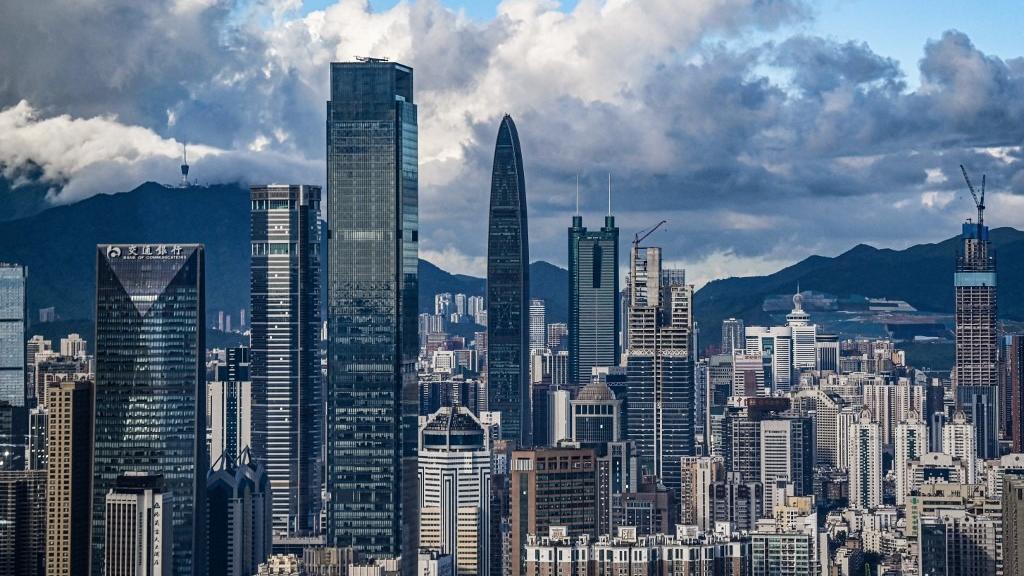
Office markets in Shenzhen and Hong Kong displayed mixed results in 2025, with the southern Chinese mainland city facing headwinds from oversupply while the special administrative region showed resilience, supported by strong demand from the financial industry.
Grade A offices in Shenzhen grappled with persistent challenges, as a sharp rise in supply outpaced demand recovery, pushing up vacancy rates and dragging down rents, according to a report from Cushman & Wakefield on Monday.
Average monthly rents for high-end office buildings in the city dropped to 149.4 yuan ($21.40) per square meter as of the end of 2025, a 11.7-percent decrease from a year earlier, as firms prioritized cost control and adopted cautious leasing strategies, the international real estate services provider said.
Supply pressure remained a challenge. As of the end of 2025, the stock of Grade-A office buildings in Shenzhen reached 9.08 million square meters, and more than 5 million square meters of new supply is expected in the next four years.
ALSO READL: Shenzhen's high-end office market remains gloomy in H1
“Despite the overall sluggishness, some structural opportunities have emerged,” said Zhang Xiaoduan, deputy dean of Cushman & Wakefield Research Institute.
The rapid development of artificial intelligence has boosted leasing activities for related enterprises, while emerging consumer electronics firms fueled demand for office upgrades, Zhang added.
Driven by globalization among Chinese enterprises, cross-border e-commerce, brand export enterprises and their supporting logistics and supply chain companies recorded large-scale leasing transactions in 2025, she said.
Zhang expressed confidence in the prospects for Shenzhen’s office market, given the city’s strong high-tech industry and resilient economy.
“Buoyed by Shenzhen’s solid foundation in high-tech industries, the large-scale expansion and capacity upgrading of cutting-edge sectors such as AI, semiconductors, advanced materials and biomanufacturing are expected to fuel demand for setting up corporate headquarters, the establishment of R&D centers, and expanding teams. Such trends are likely to inject further vitality into Shenzhen’s office leasing and investment market,” she said.
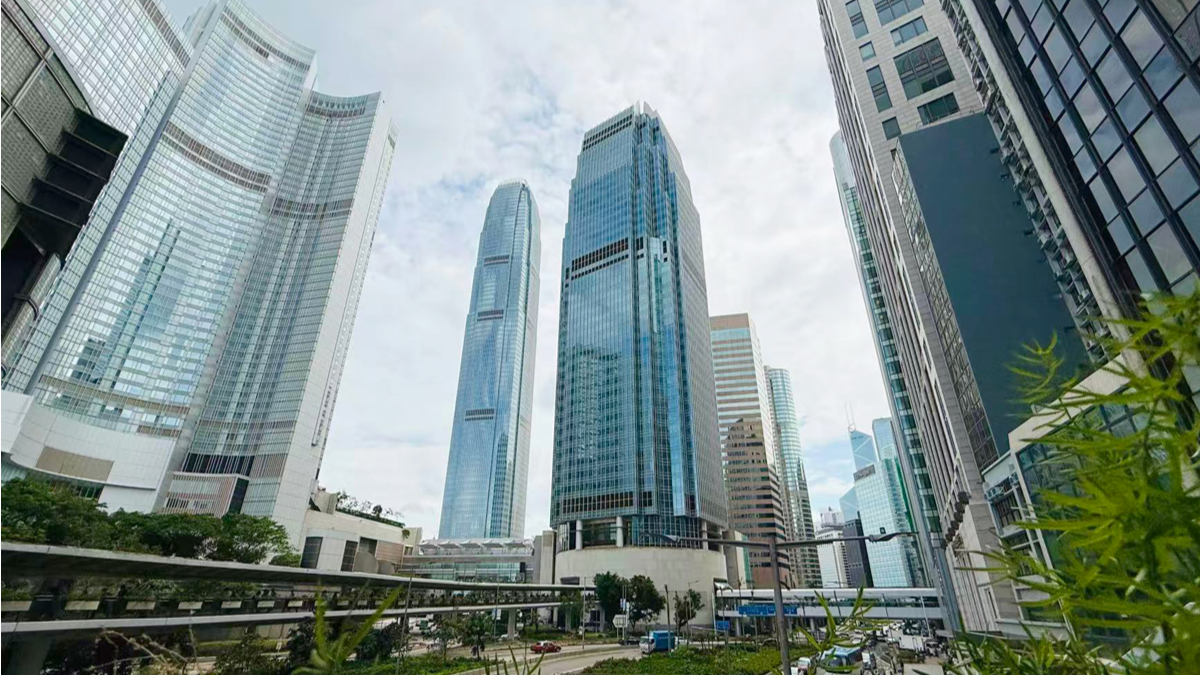
In Hong Kong, the commercial property market showed resilience over the past year, particularly the office segment, supported by improved investor appetite, solid end-user demand and buoyant financial activities.
Leasing in the Grade A office sector began to stabilize from mid-2025, recording a full-year citywide net absorption of 2.1 million square feet by year-end, according to real estate services firm CBRE.
Core areas’ performance rebounded sharply. Central district posted around 496,400 sq ft of net absorption for the year — its best performance since 2007 — while Tsim Sha Tsui hit a record 844,700 sq ft, the firm said.
READ MORE: Hong Kong home rents hit record high on strong demand
Ada Fung, chief operating officer of CBRE Hong Kong’s advisory services, attributed the strong showing to robust demand from non-banking financial institutions and global investment firms.
She said the SAR government’s efforts to reinforce the city’s standing as an international financial hub have boosted confidence among global funds, prompting many to return or expand their office presence in the city.
“We expect further growth in office leasing momentum as the vibrancy in Hong Kong’s financial markets extend into the new year, coupled with tenants opting for flight-to-quality relocations,” said Marcos Chan, CBRE Hong Kong’s head of research.
Chan added that the surge in initial public offering activity last year will deliver significant positive momentum to the office market in 2026, as such benefits typically take time to materialize.
However, CBRE forecasts Grade A office vacancy in the city will rise to around 17 percent this year, with rents declining within a 3 percent range, as supply remains elevated.
Hong Kong saw 119 IPOs in 2025, reclaiming the top global position for IPO funds raised, with nearly HK$285.8 billion ($36.7 billion), according to PwC.
Contact the writer at sally@chinadailyhk.com
