

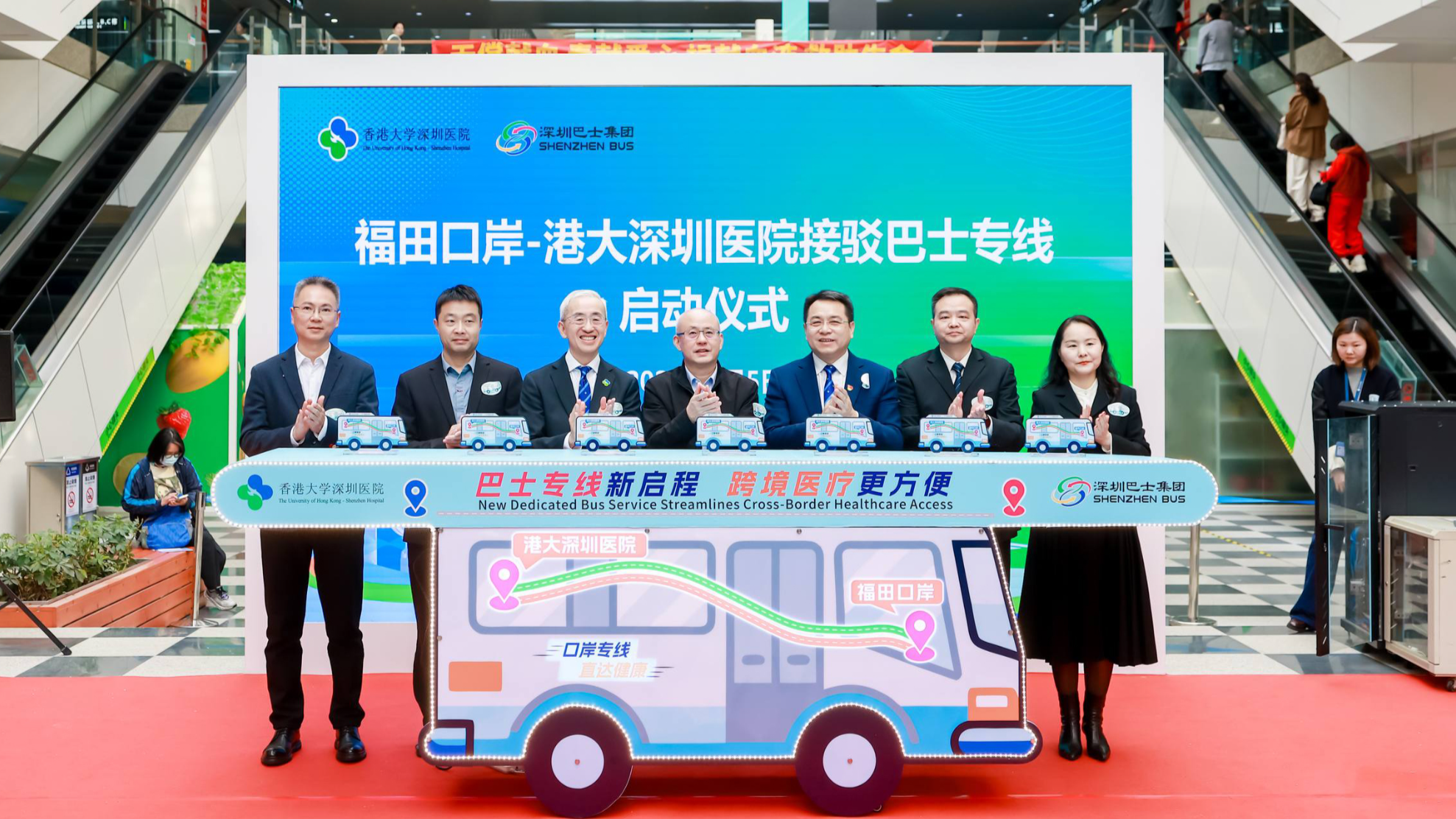
Cross-boundary medical integration between Hong Kong and Shenzhen has been further deepened with the opening of a direct shuttle bus route connecting Futian Port and the University of Hong Kong - Shenzhen Hospital (HKU-SZH) on Monday, providing an extra level of convenience for patients visiting the regional medical hub.
Amid a rising trend of Hong Kong residents traveling north for medical care, the new transportation measure is expected to enhance access to the hospital’s high-quality medical services, which combine the advantages of both Hong Kong and Shenzhen.
The route will run on a trial basis for three months, with a bus fare of two yuan ($0.29), while seniors aged 60 and above can ride for free. The daily service operates from 8 am to 6 pm, with each trip lasting 30 minutes and buses running every half hour. Passengers can pay with cash or use transportation cards.
ALSO READ: Zhuhai, HK transport first patient via direct ambulance service
Kenneth Cheung Man-chee, chief executive of the hospital, said that as a testing ground for cross-boundary medical cooperation, the hospital is committed to reducing barriers to medical integration and has been actively promoting the inter-connectivity of medical talent, drugs and devices, payment systems, emergency medical transfers, and medical information.
The shuttle bus route covers the last mile of transportation for patients, enhancing access to the hospital’s services as well as boosting medical connectivity between Hong Kong and Shenzhen, he said.
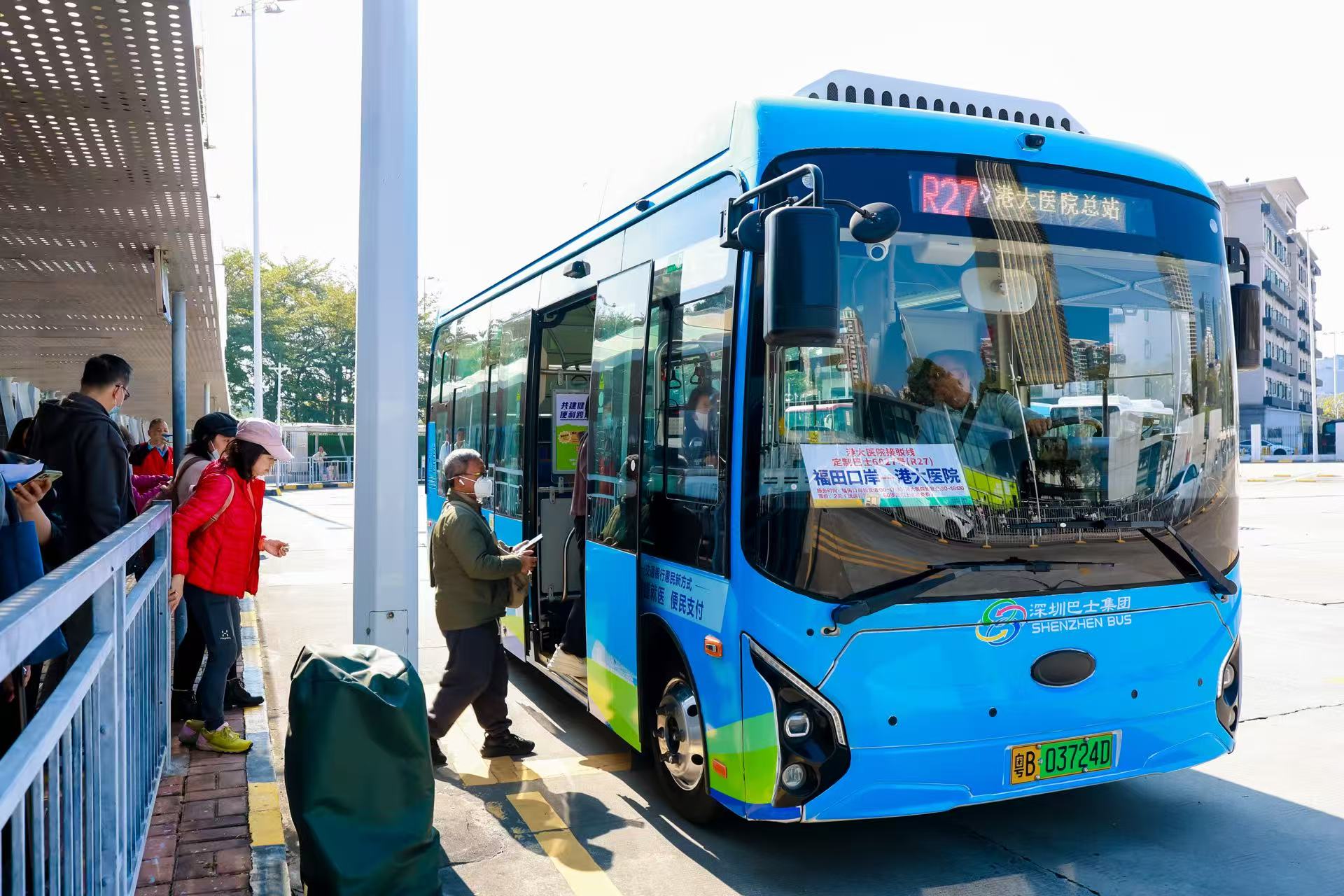
A Hong Kong patient surnamed Ho who was among the first passengers to use the bus service said the taxi service between the hospital and the port cost between 20 and 40 yuan, with the metro service requiring two transfers. The convenient and affordable direct bus service is particularly helpful for patients with chronic conditions who need to make frequent hospital visits, he added.
Chinese mainland resident Brian Zhong also used the bus service with his mother, who suffers from osteoporosis and has visited HKU-SZH every month for medication since early last year.
READ MORE: 6.3m HK residents can now use eHealth records in mainland
Coming from Huizhou, Zhong said that with the deepening of people-to-people exchanges, the new bus route also makes it easier for mainland patients like his mother to go to Hong Kong for family visits or to travel after their medical appointments.
The medication his mother uses is approved for sale in Hong Kong but not yet in the mainland. Currently, only a few mainland institutions, including HKU-SZH, provide it through a pilot program.
As a pioneer in cross-border medical integration, HKU-SZH serves as the inaugural pilot institution for many initiatives benefiting Hong Kong patients seeking healthcare services, such as the cross-boundary use of drugs and medical devices, as well as the health care vouchers system for older people in Hong Kong.
By the end of last year, HKU-SZH had served Hong Kong elders using health care vouchers a total of 140,000 times, and the program that allows cross-boundary use of Hong Kong’s drugs and devices had expanded to 71 medical institutions in Guangdong province.
According to the hospital, over 22 percent of its outpatient patients are Hong Kong residents. A survey released by the University of Hong Kong in August 2025 showed a significant increase in Hong Kong residents seeking cross-boundary medical treatment.
READ MORE: Qianhai instant insurance claims enhance cross-boundary medical care
Before 2011, only 5.9 percent of Hong Kong residents had used healthcare services on the mainland. The figure rose to 60 percent between 2019 and 2023.
It was also revealed on Monday that among all the medical services offered by the hospital, the most popular ones among Hong Kong patients in 2025 were Traditional Chinese Medicine, orthopedics, and general practice, which are often costly and have long wait times in Hong Kong.
Contact the writer at bingcun@chinadailyhk.com
