

ADEN, Yemen - More than 20 people were killed and dozens of others injured as Saudi warplanes intensified airstrikes on multiple locations in Yemen's southeastern oil-rich province of Hadramout on Friday, according to a local medical source.
The source at Seiyun Public Hospital told Xinhua that the facility has received more than 20 bodies over the past few hours. Dozens of others, including civilians, were injured in the strikes and are currently receiving medical treatment.
Earlier in the day, the Southern Transitional Council (STC)-affiliated satellite channel AIC reported that intensified Saudi airstrikes hit the Seiyun Airport and nearby residential buildings, killing seven members of the same family.
Local residents told Xinhua that the airstrikes caused panic among civilians, forcing many families to flee their homes.
ALSO READ: Saudi-backed Yemeni govt launches operation against STC in Hadramout province
Meanwhile, an official from the Aden-based, Saudi-backed, and internationally-recognized Yemeni government voiced grave concern over reports of civilian casualties and damage to civilian infrastructure, including the targeting of the Seiyun Airport.
The Saudi airstrikes coincided with fierce clashes on the ground between STC-affiliated forces and Yemeni government troops over control of military bases and state institutions in Hadramout.
During the past hours, the fighting has intensified as both sides seek to expand their influence in the strategically important region, according to local sources.
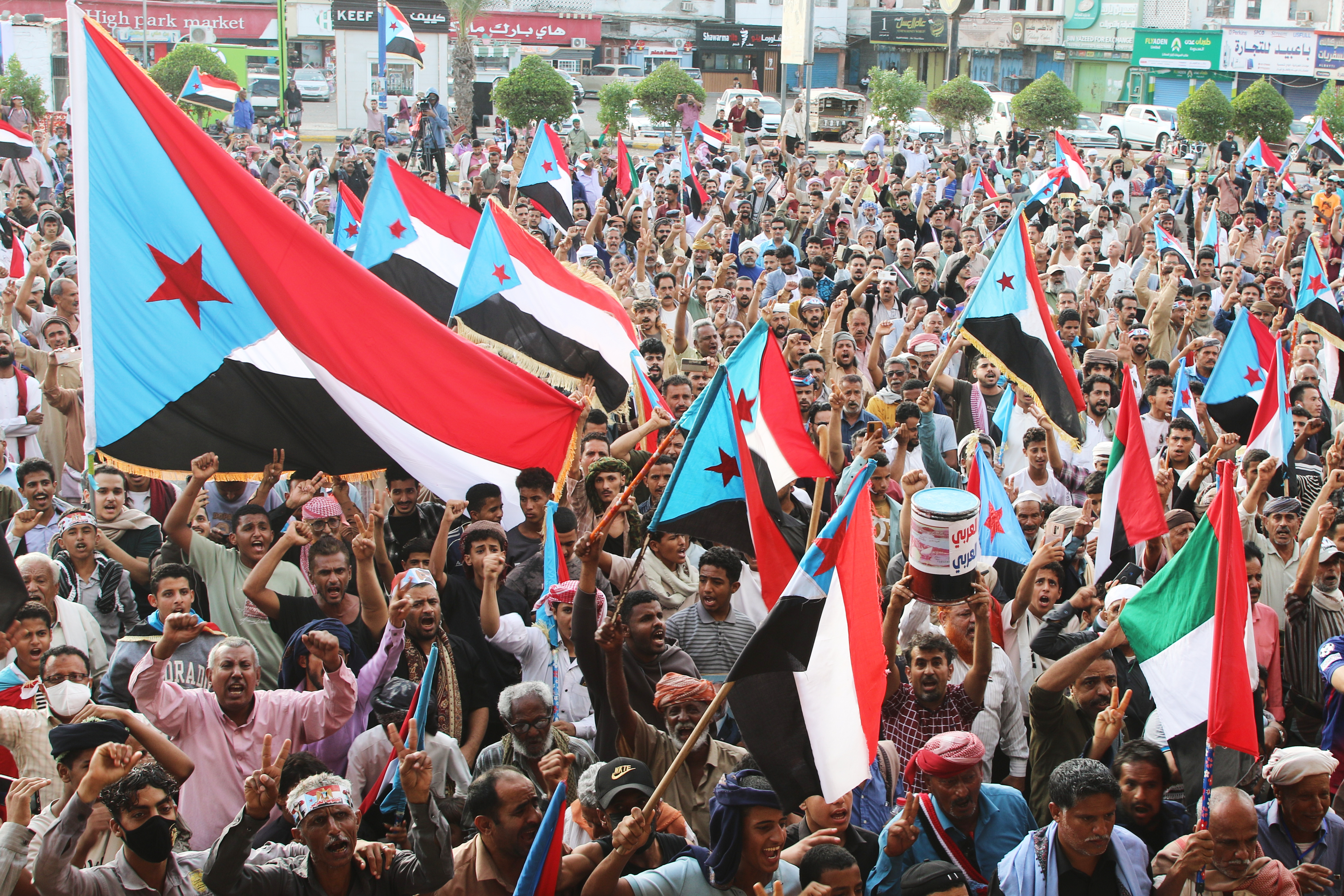
Amid the clashes, the STC also announced on Friday the launch of a two-year transitional period during which the council will administer the southern parts of the country, to be followed by a referendum on the independence of the south.
Tensions between the Yemeni government and the STC escalated after the latter seized large swathes of Hadramout and the eastern province of Al-Mahrah last month. Saudi Arabia views these areas as a "red line" given their proximity to its border and concentration of Yemen's remaining energy reserves.
Yemen has been mired in conflict since 2014, when Houthi forces captured Sanaa and large swathes of the north, prompting a Saudi-led coalition to intervene in 2015.
Formed in 2017, the United Arab Emirates (UAE)-sponsored STC seeks self-determination and eventual independence for southern Yemen. Despite joining the Saudi-led coalition and integrating into Yemen's ruling Presidential Leadership Council in 2022, the group continues to push for southern sovereignty, leading to recurring disputes over power-sharing and control of resources.
Following the latest escalation in Yemen, Saudi Arabia on Tuesday called on the UAE to withdraw its forces from Yemen within 24 hours and end all support for separatist groups.
On Friday, the UAE's Defense Ministry said in a statement that it has completed the withdrawal of all its armed forces from Yemen.
The process was carried out in a manner that ensured the safety of all personnel and was conducted in coordination with all relevant partners, it added.
Meanwhile, Chief of Yemen's Southern Transitional Council (STC) Aidarous Al-Zubaidi announced here on Friday the launch of a two-year transitional period during which the council will administer the southern parts of the country, to be followed by a referendum on the independence of the south.
In a televised speech delivered via the STC-affiliated AIC channel, Al-Zubaidi said the move was based on what he called a popular mandate and recent security and administrative developments in the region.
"The two-year transitional period will conclude with a constitutional declaration to restore the State of South Yemen," Al-Zubaidi said, adding that the declaration is scheduled to take effect on Jan. 2, 2028.
Following the transitional phase will be a popular referendum on self-determination, to be conducted through peaceful and transparent mechanisms and in line with internationally-recognized standards, he said.
However, the constitutional declaration in 2028 could take effect ahead of schedule if the STC's "calls go unheeded, or if the people, territory or forces of southern Yemen are subjected to any military aggression," he noted, adding that "all options remain on the table."
The Saudi-backed Yemeni government has yet to comment on the STC's announcement.
The announcement came amid fierce clashes between STC-affiliated forces and Yemeni government troops over control of military bases and state institutions in the southeastern oil-rich province of Hadramout.
During the past hours, fighting has intensified as both sides seek to expand their influence in the strategically important region, according to local sources.
Local media reports and military sources said Saudi warplanes intensified airstrikes on multiple locations in Hadramout earlier in the day, including Seiyun Airport and its surrounding areas, causing casualties.
Yemen has been mired in conflict since 2014, when Houthi forces captured Sanaa and large swathes of the north, prompting a Saudi-led coalition to intervene in 2015.
Formed in 2017, the United Arab Emirates-sponsored STC seeks self-determination and eventual independence for southern Yemen. Despite joining the Saudi-led coalition and integrating into Yemen's ruling Presidential Leadership Council in 2022, the group continues to push for southern sovereignty, leading to recurring disputes over power-sharing and control of resources.
