

Training for the Budapest International Circus Festival, the China National Acrobatic Troupe unveils a daring reinvention of its award-winning tumbling act, Chen Nan reports.
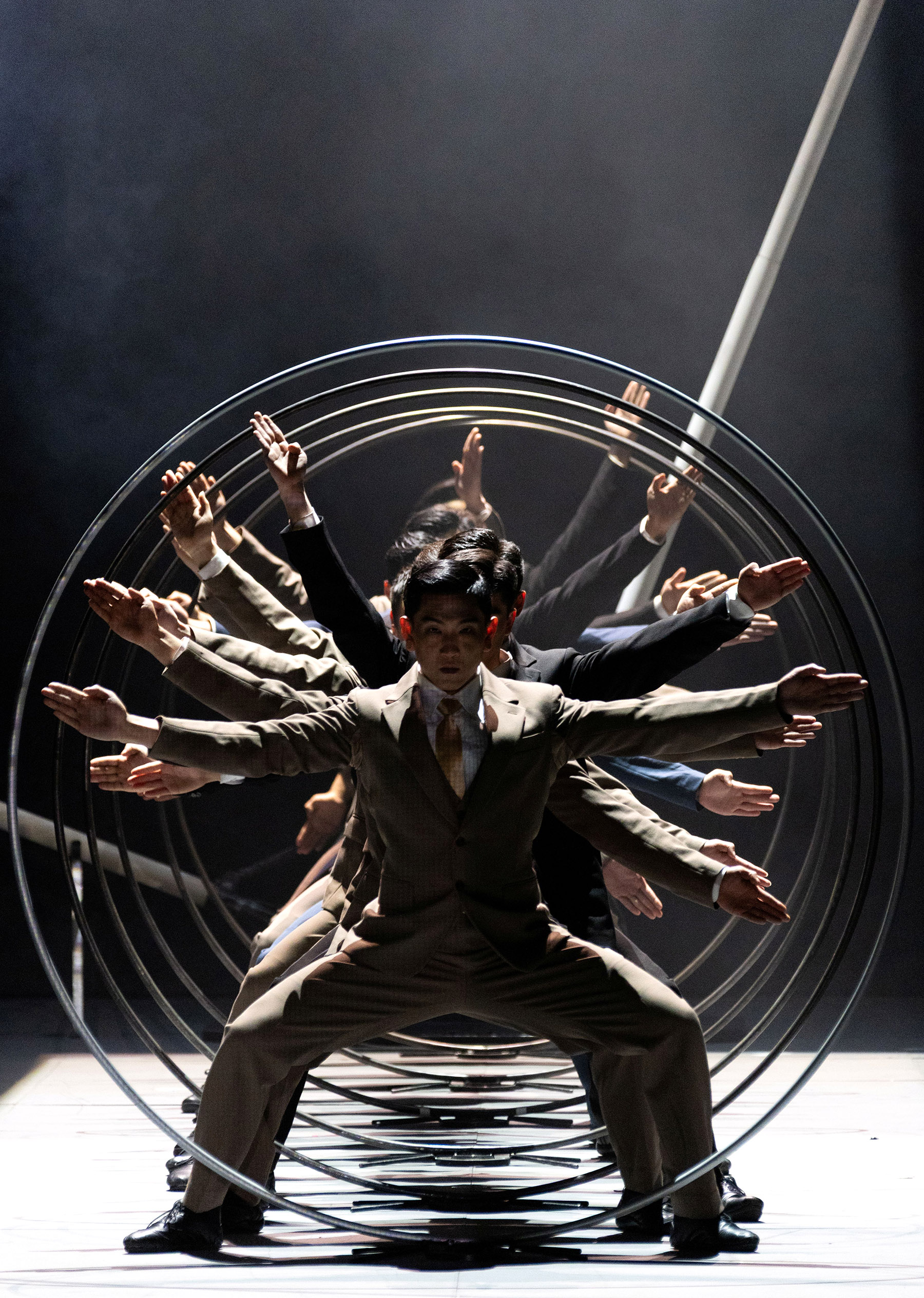
In the dim light of the China National Acrobatic Troupe's rehearsal hall, the sounds of swift footfalls and controlled breaths reverberate through the air.
A group of male acrobats, focused and poised, prepares for an ambitious performance. Their bodies move like fluid sculptures, each moment a careful calculation of strength and timing. The challenge ahead is not merely technical — it will push the boundaries of what was once considered impossible.
The acrobats are training for their upcoming competition, the 16th Budapest International Circus Festival, in Hungary, in January, where they will showcase a revolutionary reimagining of a classic Chinese acrobatic act, Time – Hoops Tumbling.
Under the watchful eye of the troupe's veteran artist and creative director, Sun Lili, they are rehearsing an updated version of a traditional performance — a daring act that demands the performers leap through a series of hoops fixed to the ground, all while maintaining perfect precision and rhythm.
In its original form, the show has been a staple of Chinese acrobatics for decades. The performers run, jump, and swiftly pass through the rings, which are arranged in a straight line. In 2013, the show won the highest award, the Golden Clown, at the Festival International du Cirque de Monte-Carlo, one of the most famous circus festivals in the world.
Though impressive in its own right, the format could, over time, begin to feel predictable. Yet, in the hands of Sun and her team, the act has been transformed into something extraordinary, capturing the essence of innovation without losing its traditional roots. Through an ingenious combination of props and choreography, the troupe is infusing new energy into the performance, elevating it to breathtaking heights.
"Eight rings," Sun says with pride, watching as the acrobats leap through multiple rings stacked in succession as high as 3 meters. "They can now clear up to eight rings in one jump and this time, they will jump in darkness."
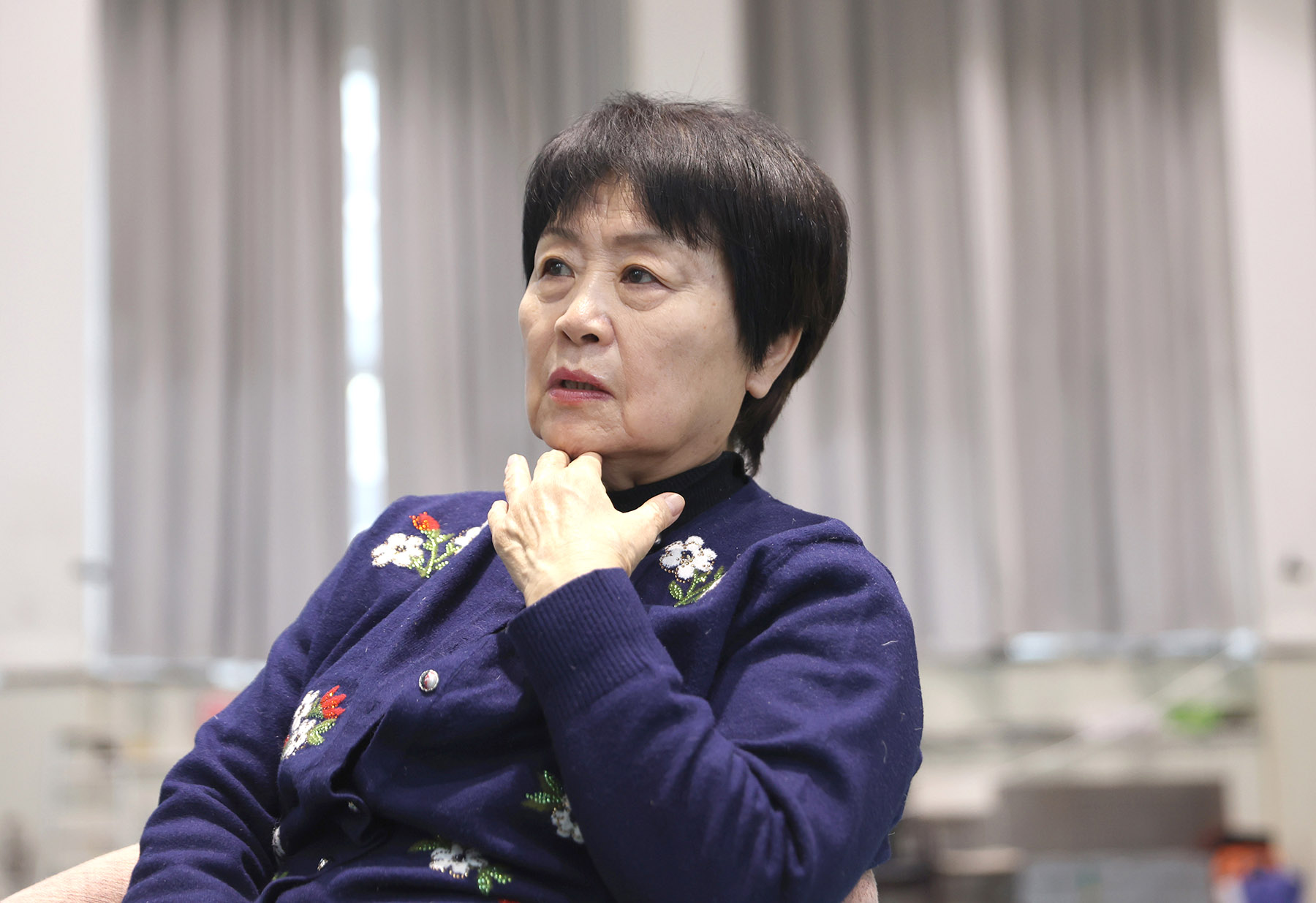
Making her stage debut at the age of 8, Sun, herself an iconic figure in the world of Chinese acrobatics, has spent about four decades working with the China National Acrobatic Troupe and nurturing the troupe's young talents, pushing the limits of their skills, and expanding the boundaries of what was thought possible.
This year, as the China National Acrobatic Troupe marks its 75th anniversary, she is excited to see that the troupe has undergone significant transformations, adapting to new trends, technology and global expectations while staying rooted in the traditions of Chinese acrobatics.
According to Li Chi, president of the China National Acrobatic Troupe, the history of Chinese acrobatics spans more than 3,000 years, making the form one of the oldest and most enduring performing arts.
The troupe was set up in 1950 and was the first artistic performance group established after the founding of the People's Republic of China in 1949.
Initiated by Premier Zhou Enlai, the troupe was formed by a group of veteran acrobats from across China. They gathered in Beijing to form the precursor to what would become the China National Acrobatic Troupe. The first mission assigned to the then newly established troupe was to perform in the Soviet Union in October 1950.
In 1957, the troupe's artist, Jin Yeqin, earned China's first gold medal in acrobatics at an international level at a world youth festival in Moscow, with his performance in "bicycle skills", marking a significant milestone for Chinese acrobatics globally.
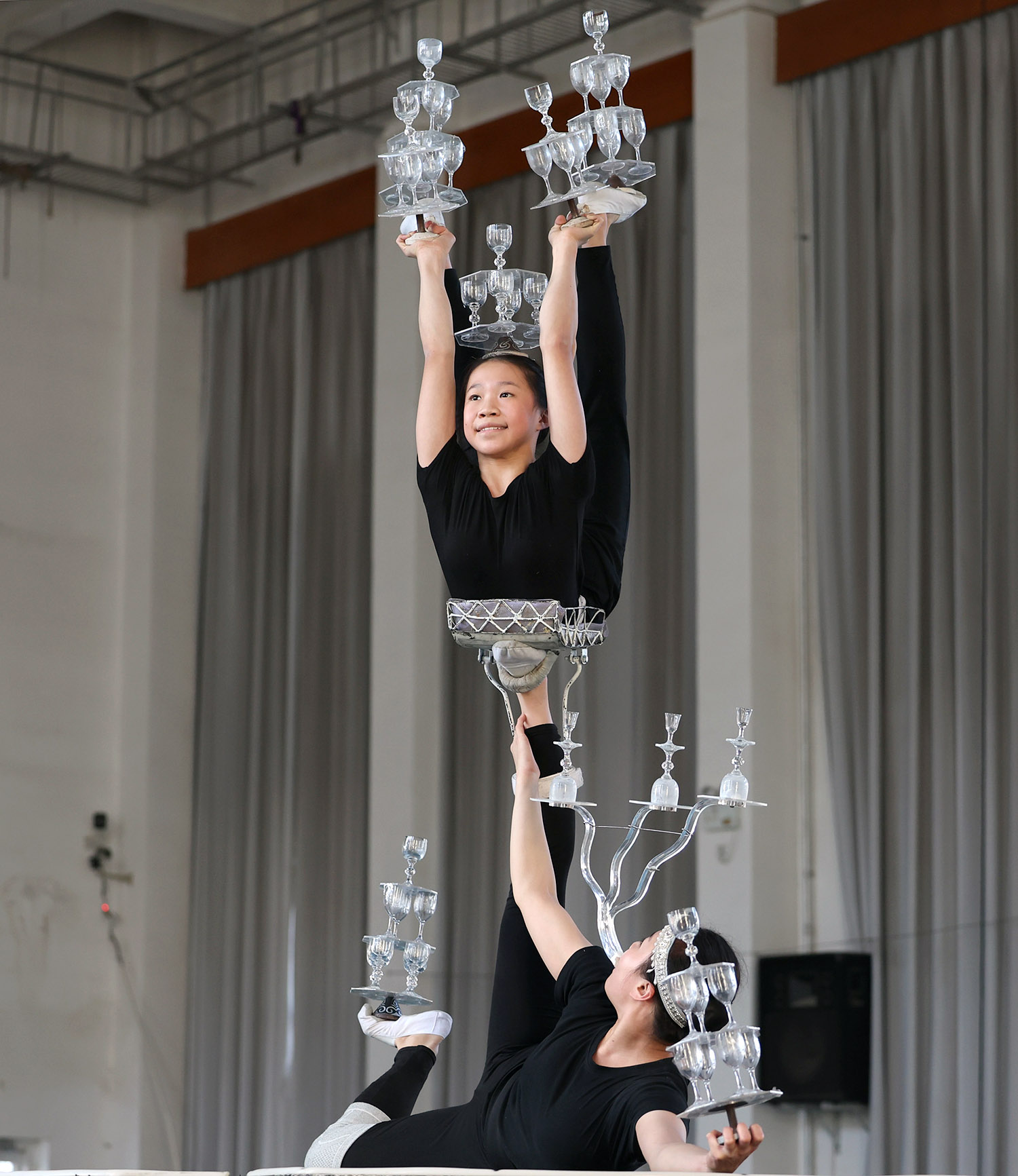
But in the world of acrobatics, few moments were as triumphant as the debut of Bowls Pagoda, which won the Golden Clown award during the Festival International du Cirque de Monte-Carlo in 2004. This groundbreaking performance not only marked a pivotal point in the history of the troupe, but also pushed the boundaries of what was thought possible in the realm of circus arts. It was a story of risk, innovation and relentless pursuit of excellence, recalls Sun.
"At the time, the troupe was experiencing a period of low morale with the market shrinking and a lack of incoming talent, and we had never won the coveted Golden Clown, a symbol of excellence in the circus world," recalls Sun. "The performance normally used seven acrobats, but we decided to involve 13 performers for the competition, a bold and daring move."
Sun adds that they also redesigned the choreography, incorporating innovative moves like the "chair toss and catch" and a series of gravity-defying "switching poles" stunts. The technical difficulty was ramped up dramatically, but the team was determined to create a performance that was both thrilling and artistically rich. The result was a stunning fusion of modern dance and acrobatic artistry, featuring elements of Eastern fashion and mysticism that captivated the audience.
When the show premiered in 2004, the response was immediate. The crowd erupted into applause, and the atmosphere in the arena was electric. The audience, in sheer admiration, rose to their feet in a collective ovation. After eight curtain calls, the excitement remained palpable.
From its humble beginnings, the troupe has grown into one of the most prestigious acrobatic groups in the world, attracting admiration for its artistry, technical mastery and ability to fuse tradition with innovation.
Over the past 75 years, the troupe has earned 76 international gold medals, including four Golden Clowns, and played a key role in taking the art of Chinese acrobatics to audiences around the world.
"In the early years, we focused primarily on single acts, but as the art form grew, we began to create more complex narratives and integrated acrobatic performances, combining traditional skills with innovative theatrical storytelling," says Li.
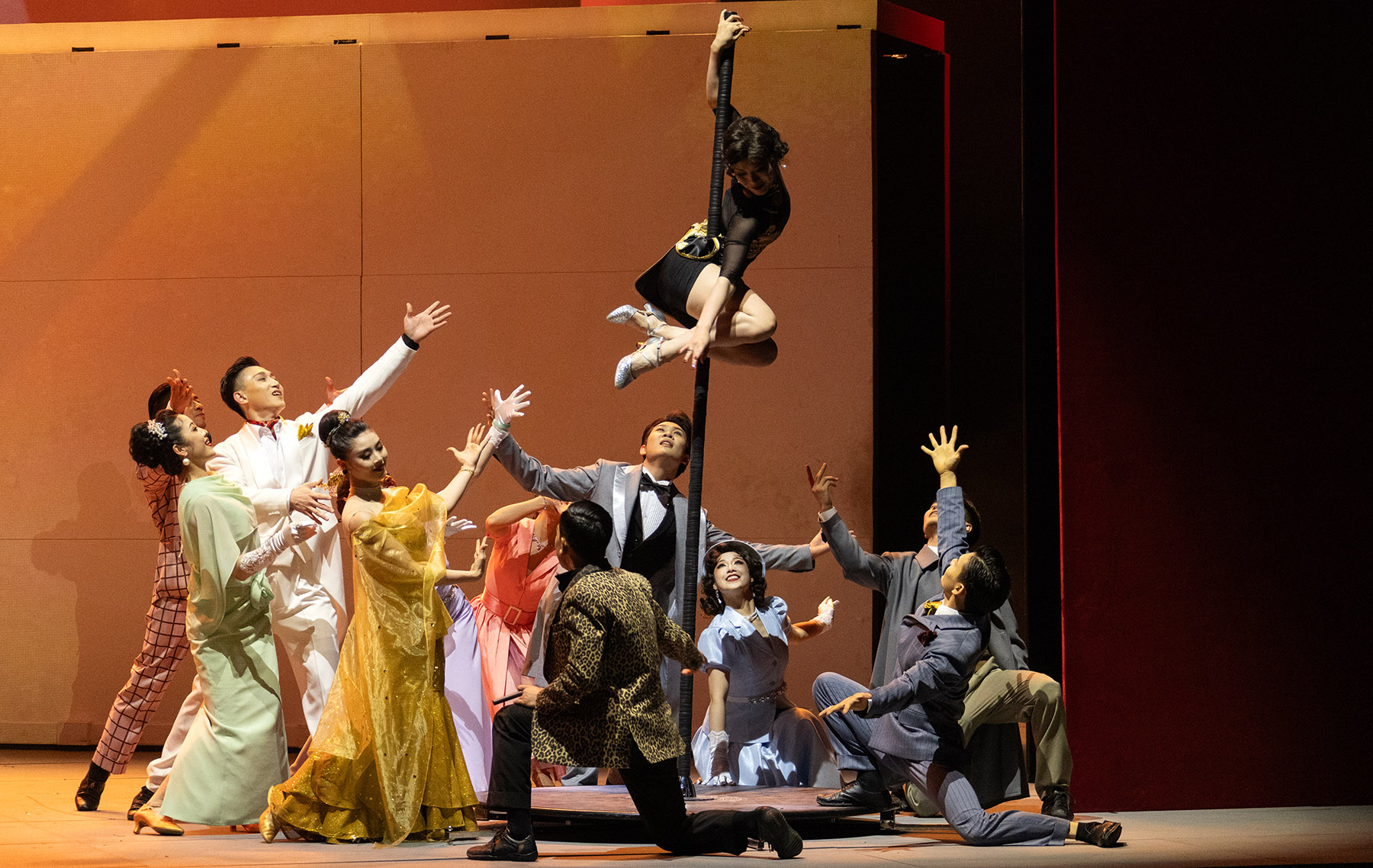
One of the recent popular productions by the troupe is The Rooftops of Beiping, which combines acrobatics with other art forms, such as dance and martial arts. The show premiered on Nov 29 and has received warm feedback from audiences, especially from young people sharing their reviews on social media platforms.
"Acrobats today need more than just technical expertise. We need to be actors, dancers and even athletes," says acrobat Liu Sun, who performs in The Rooftops of Beiping."An acrobat should excel in multiple disciplines, pushing the boundaries of what we can do.
"The performances, which combine acrobatic skills with modern storytelling, are gaining popularity with younger audiences. They offer more than just physical feats. They resonate with the younger generation and show the full range of an acrobat's abilities," he says, adding that the costumes also challenge the acrobats in the show, since the male performers wear suits and female performers wear qipao.
ALSO READ: Art festival's vision delights overseas audiences
Liu was a member of the men's acrobatic performance of the troupe, which won the Golden Clown at the Festival International du Cirque de Monte-Carlo in January 2025.
At 36, Liu has evolved from a small town boy from Harbin, Heilongjiang province, to one of the most innovative acrobats in the troupe. His initial reluctance toward acrobatics has transformed into a deep passion, marking his path as one of the most dynamic figures in the troupe.
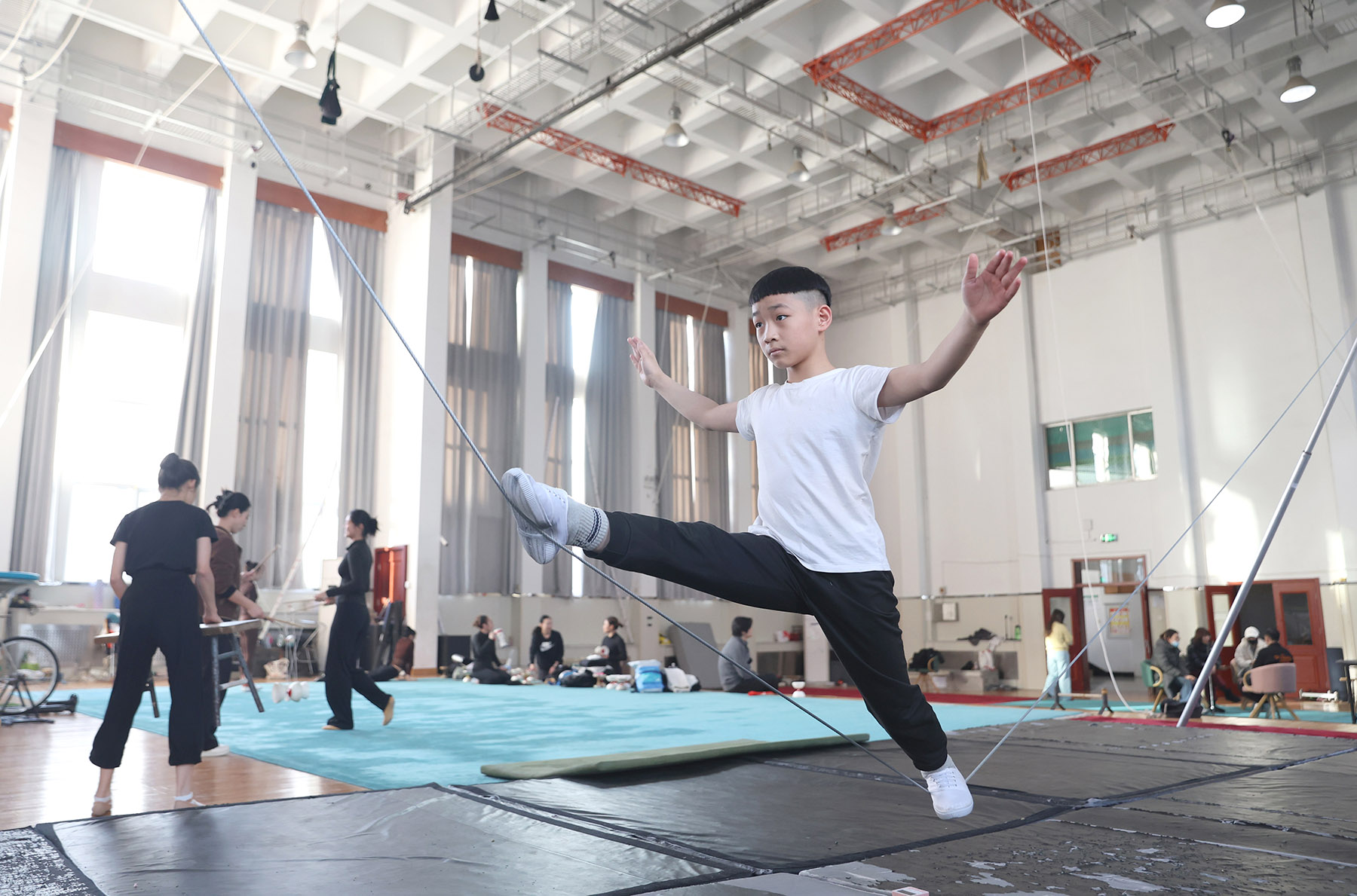
Growing up in a family of factory workers, Liu was first drawn to gymnastics by his father's love of sports. But the harshness of competitive sports left him questioning his future. The turning point came in 2002 when Liu moved to Beijing and joined the school of the China National Acrobatic Troupe.
"I once considered acrobatics old-fashioned and boring. However, I realized that today's theaters are attracting more young people and even older generations who are captivated by modern acrobatic performances," he says.
Contact the writer at chennan@chinadaily.com.cn
