

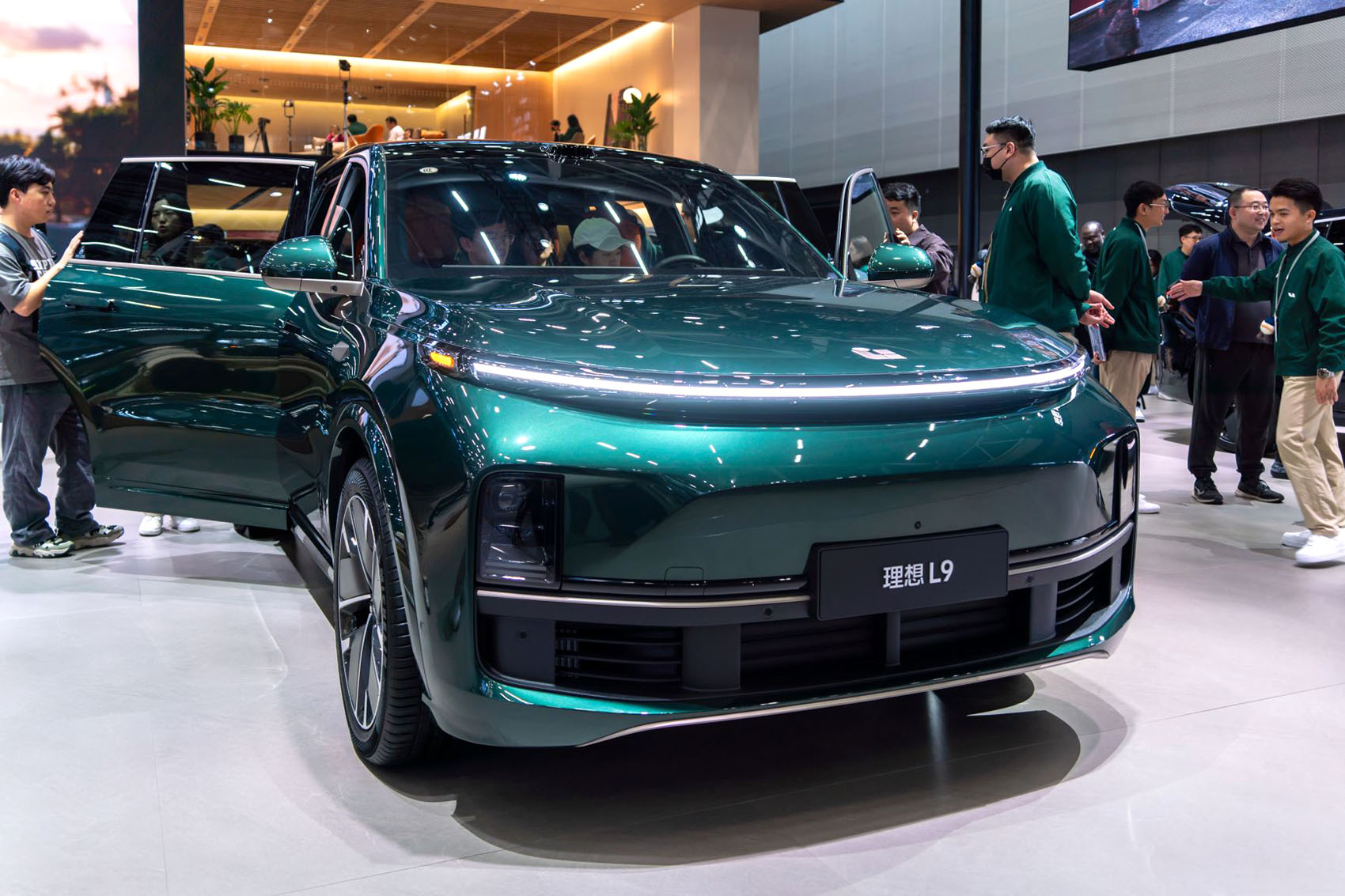
Range-extended electric vehicles, which once gained prominence by eliminating range anxiety and saw soaring sales in recent years, are now facing a continued sales decline amid the growing dominance of battery electric vehicles.
Data from the China Passenger Car Association shows that domestic retail sales of REEVs dropped 4.3 percent year-on-year in November, marking the fifth consecutive month of decline.
Li Auto, a pioneer in the REEV segment, has not been spared, with its deliveries down 38.2 percent in October, which was its fifth consecutive monthly sales decline.
Among new energy vehicle startups, the sales ratio of BEVs to REEVs has shifted from 57:43 in November 2024 to 73:27 currently.
READ MORE: Range-extended EVs outstrip competition with fast growth
This downturn stands in stark contrast to REEVs' stellar growth trajectory in 2021-24, during which their sales surged by 218 percent, 130 percent, 154 percent, and 70.9 percent year-on-year respectively.
By design, REEVs differ from BEVs by featuring an internal combustion engine that serves to generate electricity for the battery only, a configuration that extends driving range and was once their key competitive edge.
An industry insider said that range extender technology thrived during 2021-23 due to the limited range of BEVs and inadequate charging infrastructure. Now that these issues have been resolved, the transitional nature of REEVs has become increasingly apparent.
Advancements in BEV technology have eroded the appeal of REEVs. Mainstream BEVs now offer ranges exceeding 600 kilometers with high-end models surpassing 700 km. Meanwhile, ultrafast charging technology can add 400 km of range in just 10 minutes, alleviating range anxiety.
The number of charging piles for NEVs in China exceeded 19.32 million as of the end of November, an increase of 52 percent from a year ago. This equates to two charging piles for every five BEVs, among the highest in the world.
William Li, founder and CEO of BEV startup Nio, said that the advancement of BEV technology has addressed the core issue of range anxiety. Besides, compared to REEV models, BEVs have significant advantages in weight reduction, which can lead to better handling, enhanced safety features and lower maintenance costs.
Meanwhile, falling battery costs have reduced REEVs' price advantage. Battery-grade lithium carbonate dropped from 600,000 yuan ($85,615) per metric ton in 2023 to 70-80,000 yuan now, lowering BEV production costs. Some BEVs now match or undercut hybrid plug-in and REEV prices in the same segment.
Additionally, price cuts for gasoline vehicles have driven a recovery in their sales, exerting pressure on REEV sales.
The accelerated development of solid-state batteries could potentially spell the end for REEVs, the industry insider noted.
However, some experts suggest that REEVs still hold appeal in specific markets. They retain value in rural areas with sparse charging infrastructure and in the commercial vehicle sector, where long-distance travel and uncertain refueling opportunities are common.
ALSO READ: China leads way in EV revolution
Several automakers, including XPeng, Leapmotor, Zeekr, Deepal and IM Motors, have launched REEV models in 2025, establishing a dual-power strategy of both BEVs and REEVs.
Soochow Securities released a research report on REEVs in July, expressing optimism about the sector's market prospects. The report predicts that by 2027, REEVs' market share could reach between 10 and 15 percent.
A GAC Group representative said that as overseas charging infrastructure lags behind China's, plug-in hybrids and REEVs — with their fuel refueling option — remain key to maintaining export competitiveness.
Contact the writers at caoyingying@chinadaily.com.cn
