

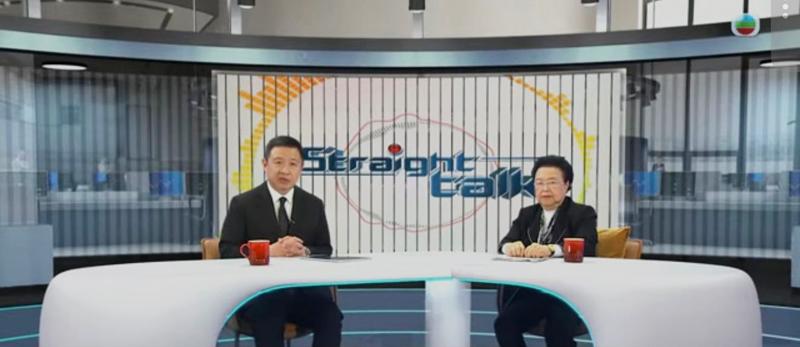
Joining the show this week is veteran political figure Maria Tam. In the shadow of the tragic Wang Fuk Court fire, she talks about the vital role of governance in crisis and the Legislative Council’s duty to support swift relief while ensuring accountability, and what the upcoming election means for Hong Kong’s resilience, unity, and future.
Check out the full transcript of TVB’s Straight Talk host Dr Eugene Chan’s interview with Maria Tam, GBM GBS CBE JP:
Chan: Good evening. I'm Eugene Chan, and on behalf of our Straight Talk team and viewers, we want to express our deepest condolences to the victims and their families, and our appreciation to the emergency crew of the devastating Wang Fuk Court fire, a disaster that has claimed at least 160 lives, with some more missing.
In times of crisis, the role of government comes into the sharpest focus. While a future episode will examine the response in more details, this evening, we discuss the upcoming Legislative Council election and its importance, particularly in the light of the recent events.
Joining us is Maria Tam, a prominent figure in Hong Kong's legal and political spheres. Now retired, she previously served at every level of our representative councils, as well as on numerous government committees. Maria, thank you for being with us …
Tam: Thank you, Eugene, for asking.
Chan: … during this very difficult time.
Impact of fire
Chan: Before our discussion on the Legislative Council election, what are your thoughts and feelings about the catastrophic fire at Wang Fuk Court and the heavy loss Hong Kong or our city is suffering?
Tam: These are sad days and sad times for Hong Kong, and, like everyone else, my sympathy goes to the victims’ families, those who are wounded, and those who are affected by this trauma. And in terms of what I see is happening for rescue and relief, I think the government is doing a quick job and is very efficient, and the financial aid is already on the way. Resettlement is being arranged, and you can see that all the different government departments and the civil servants or members of the disciplined forces – all coming out to look for whatever could be rescued, and also how to grant relief to those who are affected. And the community absolutely pours out with sympathy, support, and even love for their neighbors. And I think it's very touching, very moving. It's like the Lion Rock spirit coming back again, and hand in hand, we're going to walk through the rugged path. And I think we will recover, but it's very, very important, and it's on many people's minds now. It's that there's a long process of resettlement, healing, granting of relief and aid, and also there must be an inquiry as to the reason and the root of the problem, and what measures could be taken thereafter. Either to sort of eradicate malpractice in the construction industry or the building industry or whatever. And also, the ICAC (Independent Commission Against Corruption) is already taking action. And I can see the new LegCo, the 8th term LegCo, when they come in, will have to cooperate with the government, to give financial aid relief, sort of emergency measures that need their support, and also go into the root of the matter and see whether we can change the construction industry, the supervision system in the future so that this thing won't happen again.
Chan: Right, Maria, thank you for a very … sort of, I can feel it, heartfelt feelings for Hong Kong and especially all those decades of service you have done for the people of Hong Kong. At this time, naturally, many Hong Kong people, I'm sure, if you read in the social media, are reflecting on public governance and especially on the role of our institutions. Without going into very specifics, which we will discuss in the later part of the episode, in your view, how important is public confidence in our institution, in particular the government, during these times of crisis?
Tam: Public confidence in the government is very important. That is why, one of the things I see, which is very helpful, is very quickly, the government comes out and says, look, your donations, we're going to arrange for a special bank account and the process for receiving and dishing out. And the police, the fire services and the medical services are all there. And in terms of mobilizing the civil servants' help, every family is given two civil servants to follow up with their hardship and the immigration office and the medical services, plus in the private sector, all the doctors and lawyers, accountants, business sector – all lining up to help. So, I think it's an impressive gathering of, you know, not only unity of purpose, but also resources that we can help to relieve the situation. So, I really think it is important for this phase to go over before we can look into other areas.
Chan: Right. Maria, this catastrophic fire has caught headlines internationally, and in Hong Kong, definitely not for the best reason, but a lot of sympathy has been shown to Hong Kong and also especially our firemen, and also the medical personnel, which is something that we are very proud of.
Tam: Yes. Well, I think this spirit of unity and feeling of togetherness is a very good, motivating force to carry Hong Kong forward. And I think it will.
Function and role of LegCo
Chan: Yes. Maria, in times of such a crisis, I'm sure people are looking for accountability, and also the worldis demanding answers. What can the legislative council do on such occasions?
Tam: Well, the legislative council, I think, the first thing is to wait till the government inquiry, the official inquiry, is done. Of course, in the meantime, it's part of the Legislative Council's role to, on the one hand, check and balance the executive and on the other, work with the government. So, in terms of financial resources or support, the Legislative Council should really give a greenlight. And in terms of other reliefs that may be coming its way, such as the use of the mobile cabins, for example, there should be special arrangements in the Wang Fuk Court area. All those things that may happen that some people are affected and not very happy about, but I think the Legislative Council members can come by as a bridge and explain and try to resolve this issue. I think a general community will be supportive of the government.
Chan: Right. So, Maria, we know that in the past, before this tragic accident, we saw a lot of, I mean, efforts put into this eighth Legislative Council election. You see a lot of people coming out and asking us to vote for Hong Kong's future. And to just make sure the viewers know how important the Legislative Council is, we know that the core function is lawmaking, funding and approval, as you just said, and monitoring government performance. Am I right?
Tam: Well, I think the Legislative Council, other than the constitutional responsibility that I mentioned, it's actually a very good bridge between a community and the government. And not only that, if you look at the combination of the Legislative Council Election Committee, we call it the Electoral College, where you can elect 40 LegCo members. The combination of the background, of the members of the electoral college, composed of business professionals, political, NPC deputies, CPPCC members, and organizations, national organizations, non- political, who are having activities in Hong Kong, and also the district board members. So, if you look at the combination, the result should be that those who are elected by them, those who got the most votes, would be able to either be in touch with all sectors of the homeland community, or they have support from those communities. But the main important thing is that because they don't belong to any political party, and the fact that they are not just representing one functional constituency, they would oversee public interest from an angle of overall view. So, they would not only look at Hong Kong locally, they can look at our relationship with the country, they can look at our relationship with the rest of the world. Then you have the functional constituency members who are experts in their own field.
Chan: Right.
Tam: And you know our government, our AOs (administrative officers) are what we generally call generalists.
Chan: Right.
Tam: But most of them are very, very good, even on specific issues.
Chan: Indeed.
Tam: So, you have the generalists mainly helping out the administration and specialists, helping out LegCo. But one thing they must remember is they are not there just to fight for their own constitution...
Chan: …Their own rights. Yes.
Tam: … but they have to be careful. They're there not only to fight for the interests of their voters.
Chan: Right.
Tam: They have a responsibility to use their expertise to help perfect government policies or laws, and also to get support from their own community for government policies.
Chan: Okay.
Tam: And then the third type are the members from the direct election.
Chan: Right, from the geographical section.
Tam: And they really got their eyes and ears on the grassroots on the ground, and they know the hardship or aspirations of the grassroots, and their responsibility is to vamp it in LegCo, bring it out to the attention of the government, and make sure that all those who are less-of in a Hong Kong community get care and attention. So, for the Legislative Council, I think the basic composition itself is good and complimentary with, complimentary to the government's efforts.
Chan: Okay, Maria, time for a short break now, and we will be back with more Straight Talk. Thank you for staying with us.
Chan: Thank you for staying with us. Legendary political leader and legal expert Maria Tam is with us, and we have been reflecting on the devastating Tai Po fire and also discussing the upcoming Legislative Council on how recent events are shaping the political landscape.
So, Maria, thank you for sharing with us your thoughts on different sectors of the Legislative Council, and how it is going to help Hong Kong. You know in 2021 when we have this ensuring reforming our political system, ensuring patriots are administrating Hong Kong, some people are often going to ask, there is no obvious fractions between the political parties, so how can the Legislative Council, while supporting the government in terms of policy but making sure they are accountable, how can we be sure they are doing the other part of the work?
Tam: Well, I think our Legislative Council members have a particular role and there is nowhere in the Basic Law, which gives the responsibility of any individual or group to check and balance the government. So, if there are issues or matters on which they think the government might have gone wrong or whatever has been proposed is not fair or need to be improved, I think they have a responsibility to air it, to speak about it because the system is such that within the Legislative Council, you have the power and privileges ordinance, which gives them the right to speak without criminal responsibility.
Chan: Right.
Tam: And outside, if you are even looking at the national security law, it is very clear, unless what you are doing is seditious, as long as you don't cause hatred, ridicule, contempt, disaffection, then it is your freedom to criticize the government.
Chan: Right.
Tam: And there is even a statutory defense to say “I do it out of good intention.” So, as long as there is no malice, an individual or Legislative Council member can criticize the government, and particularly it is the responsibility of the Legislative Council members.
Chan: Right. Maria, critics of the past often spoke of the legislative gridlock, meaning they could be arguing about things, do not move on. Some critics said today there’s a lack of vigorous debates in the last term. So, from a unique position, sort of, you have been seeing all these developments, what is the essential balance the LegCo must strike so that it’s both efficient and truly representative of the public concern while supporting the government? This is the second time I am asking this similar question but this has been hovering the minds of many voters.
Tam: First of all, the seventh-term LegCo by comparison did not have the high profile that the previous LegCo had, I wouldn't say enjoyed, had, because the adversarial approach is gone. And basically, we have a common objective, which is patriots administering Hong Kong for the benefit of the Hong Kong people and for the opening up and the interests of our nation. So, that being the big objective, the actual policies that affect, for example, our livelihood, medical, social, education, and all that. There are lots of, as far as I know, talks and meetings, for example, the ante-room session, that the present-term government is conducting with the LegCo members, so they don't wait until there is a big debate or a demonstration. The relationship between this government and the Legislative Council members are much more friendly.
Chan: Right.
Tam: And more exchanges there. And secondly, because you have a common objective, you would wait. If this thing is being pursued in a certain manner, would I get my results? Or would I cause any side effects that is sort of adverse to either community order, social order, or the feeling between the government and the people? You can still try and achieve that. And as far as I know, many LegCo members told me they have spoken to a certain secretary and things get adjusted and being resolved to some extent there.
Chan: I see.
Tam: Not 100 percent in the wishes of the LegCo member, but there are improvements.
Chan: So, things really have changed a bit in terms of how they work here.
Tam: So, that is a totally different style of government and communication between the LegCo and the executive now. And I trust they will carry on.
Chan: Right. Thank you for bringing that point out. That means although there haven't been vigorous debates as before, a lot of sort of negotiations or the give and take has been done behind the doors, right?
Tam: Yes, that is right.
Chan: Which is a good thing to know.
Election preview
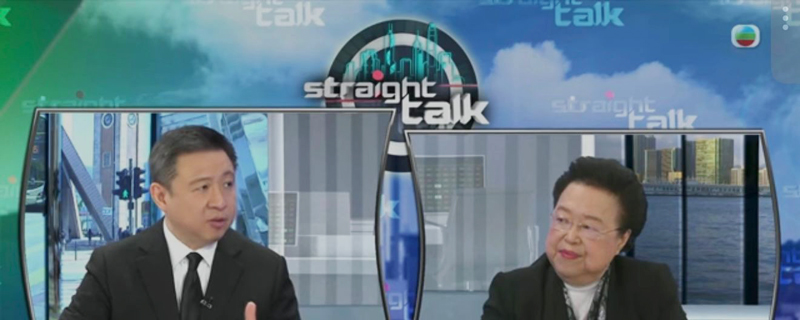
Chan: So, with the upcoming election, as you just said, in the last term, there’s not a lot of public exposure of the seventh term, as compared to previous terms, are definitely far less. With the new term coming up, and we saw that out of the 161 candidates running, there is only like 50 plus members are staying on from the last term. I think 35 have left the Legislative Council or decided to move on to let the newcomers. How are we going to choose the right candidate? Because a lot of people, friends have said to me, “I’d love to vote, but who should I vote for?” What advice should we give them?
Tam: Well, two things there: the first thing is continuation. I think with the 51 members that are still running …
Chan: 54 actually.
Tam: … I can't campaign for anybody. I would just say that experience is very important.
Chan: Right.
Tam: Even in the LegCo, those people who get elected are experienced in their own fields. And some of them are already involved at different levels in politics. When you are in the LegCo, you still have to learn the ropes. So, I think those who are running for re-election have a particular role to play.
Chan: Right.
Tam: And secondly, in terms of the new members, how they can pick up, you have to look at the experience, the track record, the platform, and the way they deliver their election messages. You have to judge whether this is somebody with better ability. You are, if possible, trying to find out if this person is sincere about his service to Hong Kong. And if you have not heard anything adverse about his reputation, then, although you may not know the candidate well, you still, as a responsible citizen, should go and study his agenda, his program, his platform, try and understand their background. And by comparison, which one is likely to help fulfil the purpose of a LegCo council member? I say this in particular with respect to those who are not really interested in elections normally. This is actually the time you should come out and help to perfect the system.
Chan: Right.
Tam: It may be that you don't know too much about the candidate, but it is your responsibility to vote. I mean government has its own responsibilities, so does LegCo, and also …
Chan: The voters.
Tam: … members of Hong Kong community who are registered voters.
Chan: Right.
Tam: And even out of people you don't know too much or out of those you can possibly assess objectively, who is likely to perform well, then you should go and vote.
Chan: Maria, I mean just to clarify, there will be 54 candidates who are going to continue to rerun for the election. Fifty-four, that is even better than 51.
Tam: Yes, yes. The average age of the candidate is going to be 48.
Chan: The majority of the candidates are between 40 and 49. So, do you expect a younger LegCo to be more energetic or what will be your expectations for this coming term?
Tam: This is difficult to predict. It all depends on the individual. My advice is: if you are prepared to wholeheartedly serve the community and do your best, and sacrifice your own time, and be grateful for the opportunity to serve Hong Kong and the country, then you will be a good LegCo member because you are prepared to learn, then you are prepared to bring fresh ideas, you are prepared to criticize, and you are prepared to, if necessary, compromise a little bit to make things work.
Chan: Right.
Tam: So, I think it doesn't really matter that you have freshmen coming in.
Chan: Okay.
Tam: The most important thing is that you are prepared to learn, and you are really wholeheartedly committed to the task.
Chan: Right. Thank you, Maria, for sharing your insights with us.
Hong Kong is at a moment where reflection and resilience go hand in hand. While we mourn with the families affected by the recent tragedy, it is also important to look ahead and understand how our institutions, including the Legislative Council, can continue to serve the community and help to shape a strong and stable future.
Thank you for joining us on Straight Talk, and have a good evening.
