

Self-deprecating 'wonang travel' trend prizes comfort, minimal exertion over adrenaline rush
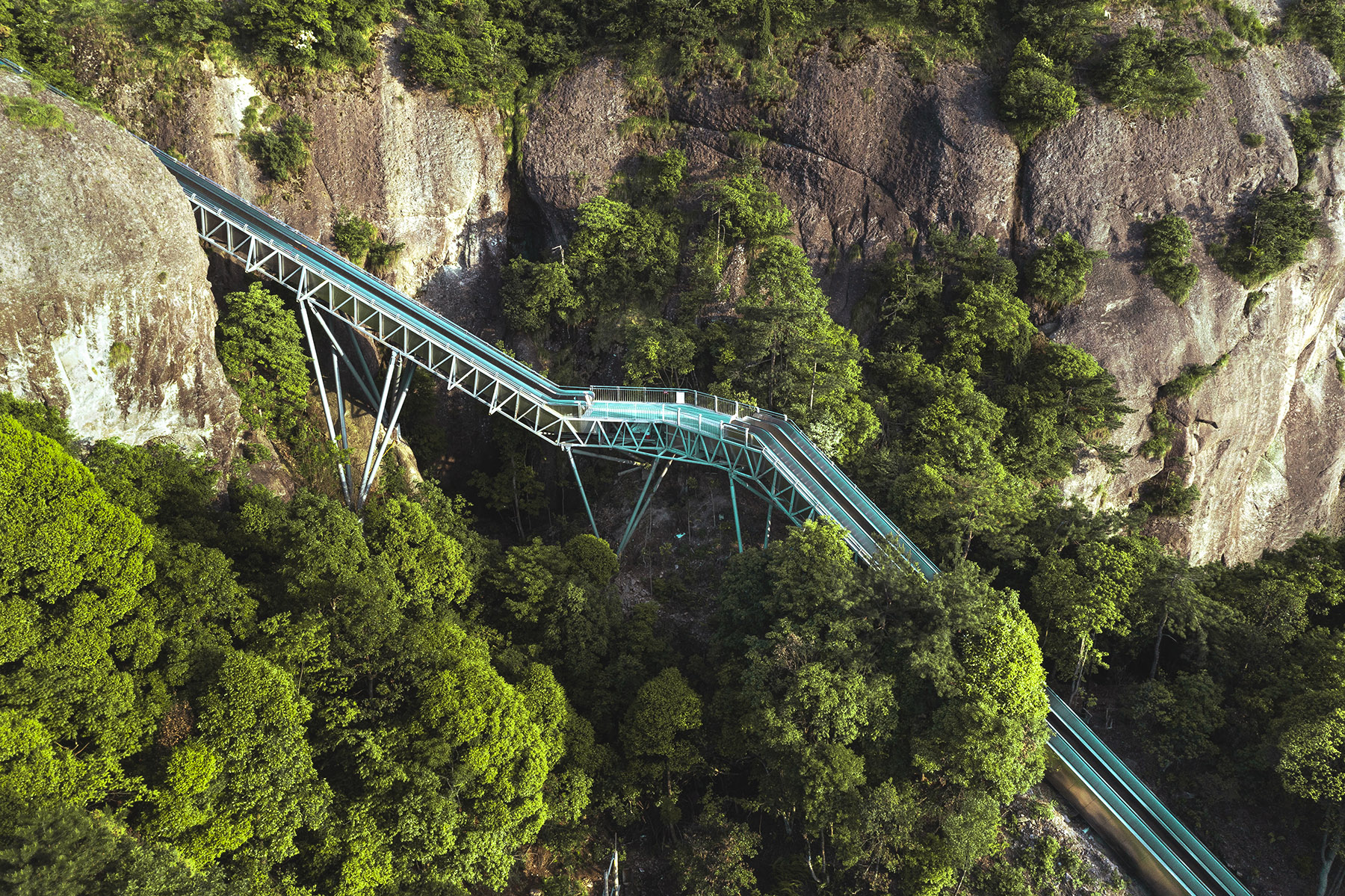
In the past, 26-year-old e-commerce professional Cao Peiqiang's idea of an adventurous travel thrill was a theme-park pirate ship or a cable car ride.
"I'm a man who sought out fresh air and scenic views, not heart-stopping drops," said Cao from Hangzhou, Zhejiang province.
Yet, on a November weekend, he stood on a cliff precipice in a scenic spot about a two-hours' drive from his workplace, locked in a battle between his own curiosity and a crippling fear that had always held him back.
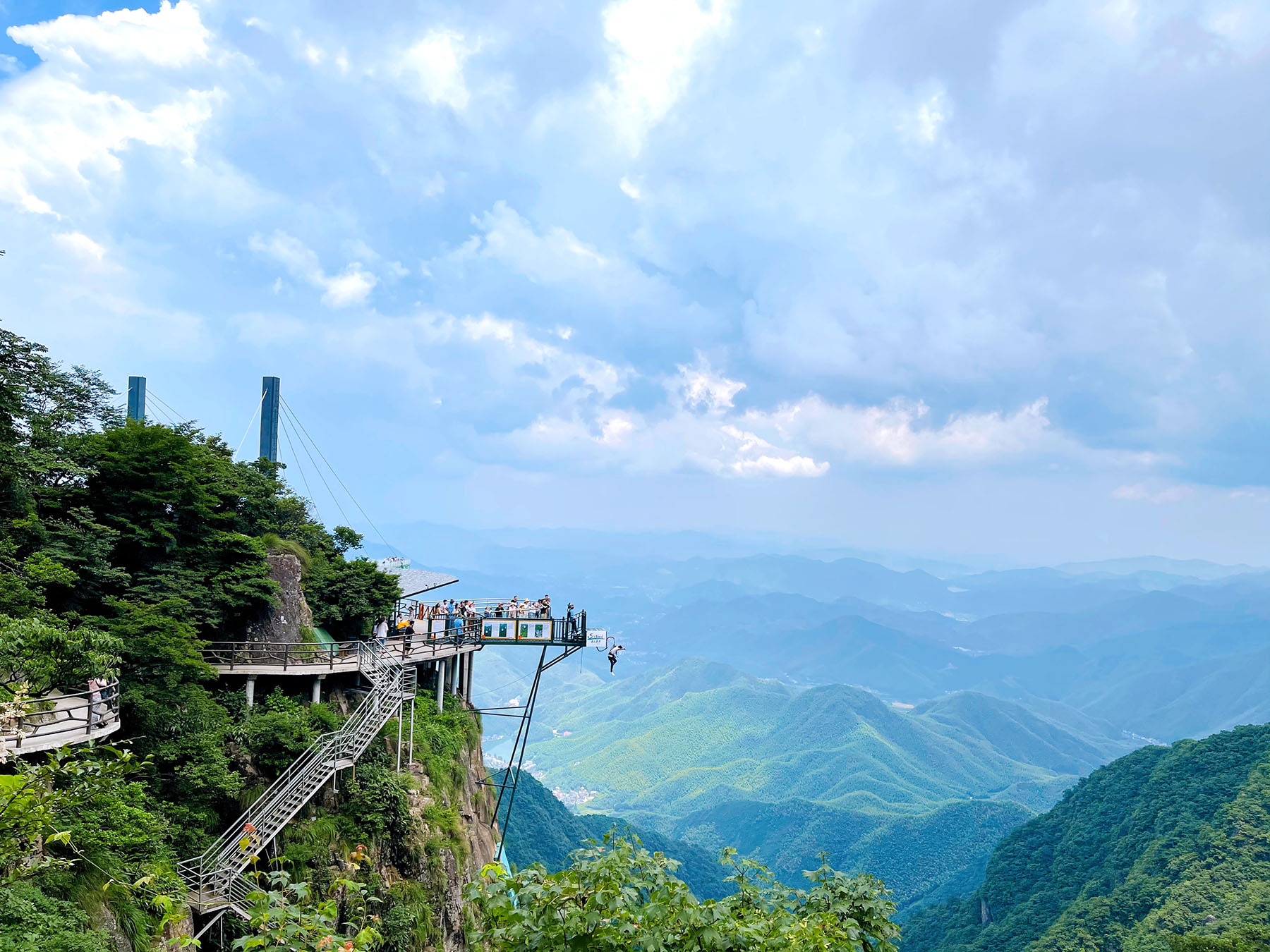
With a cliff drop of 40 meters, the jump in front of him wasn't for the fainthearted.
But Cao wasn't about to plunge toward earth on the end of a retractable rubber bungee rope. Instead, he would be winched gently down, experiencing the thrill with a greater sense of security.
"The moment you step onto that platform, there's nothing in front of you — just air," Cao said.
Cao's siren call to the majestic, cloud-draped valleys of the Yunshang Caoyuan (Cloud Meadow) scenic area in Huzhou city had been a social media trend known as a "wonang" jump, which translates as a "wimp" or "spineless" jump.
However, looking from the platform seemed like peering at a bottomless pit. "It felt like I was jumping off a building to my death," Cao said.
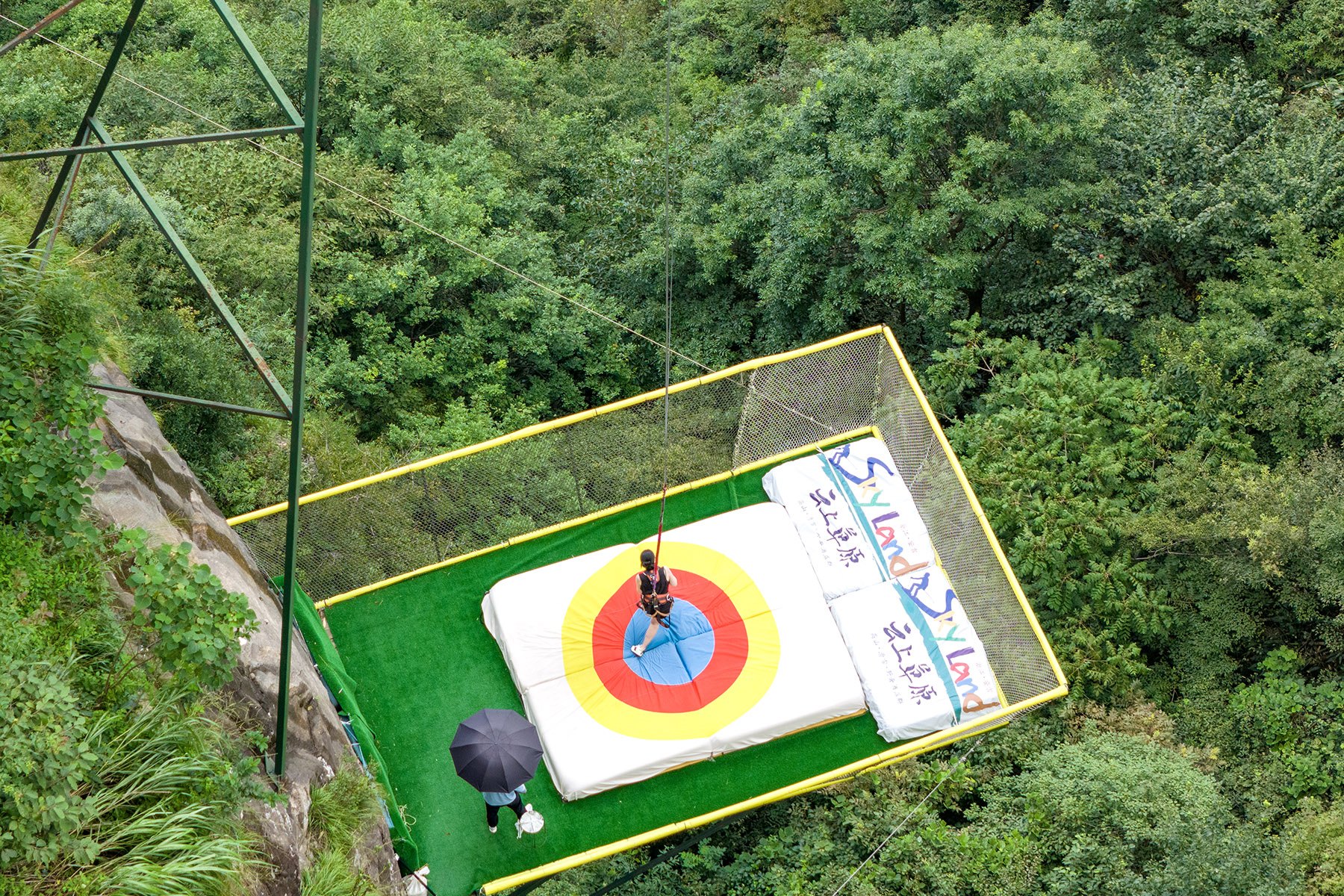
For two to three excruciating minutes, he stood frozen, a silent battle raging within. "There were people waiting in line behind me. They were cheering, but it just felt like pressure," he said.
He eventually jumped, thinking: "I've already come all this way, and I'm a man. If I don't jump, how humiliating would that be?"
The defining feature of the Cloud Meadow wonang jump is not the fall, but the save. A speed regulator on the jump cord arrests the plunge not with a violent jerk, but with a smooth, gradual deceleration.
"It wasn't uncomfortable. There was a little tug, but it was a process, not an instant stop," Cao explained.
The initial frantic leap is transformed into a serene, controlled descent. "That's when I dared to open my eyes. The slow part was actually comfortable. Like a gentle, floating landing," Cao said.
His "wimp leap" was a microcosm of a broader shift in China's experience economy.
It's no longer about conquering nature or one's own limits in a dramatic, heroic fashion. Instead, the new trend caters to a rising number of urbanites who pursue a managed, accessible thrill — mostly in the form of a challenge — that maintains a reasonable comfort level, while pushing them just enough to feel a sense of triumph.
In contrast to the 2023 "special forces-style" travel craze characterized by a fast-paced, intense itinerary, "wonang travel" is built around minimal exertion, maximum comfort.
Soft landing
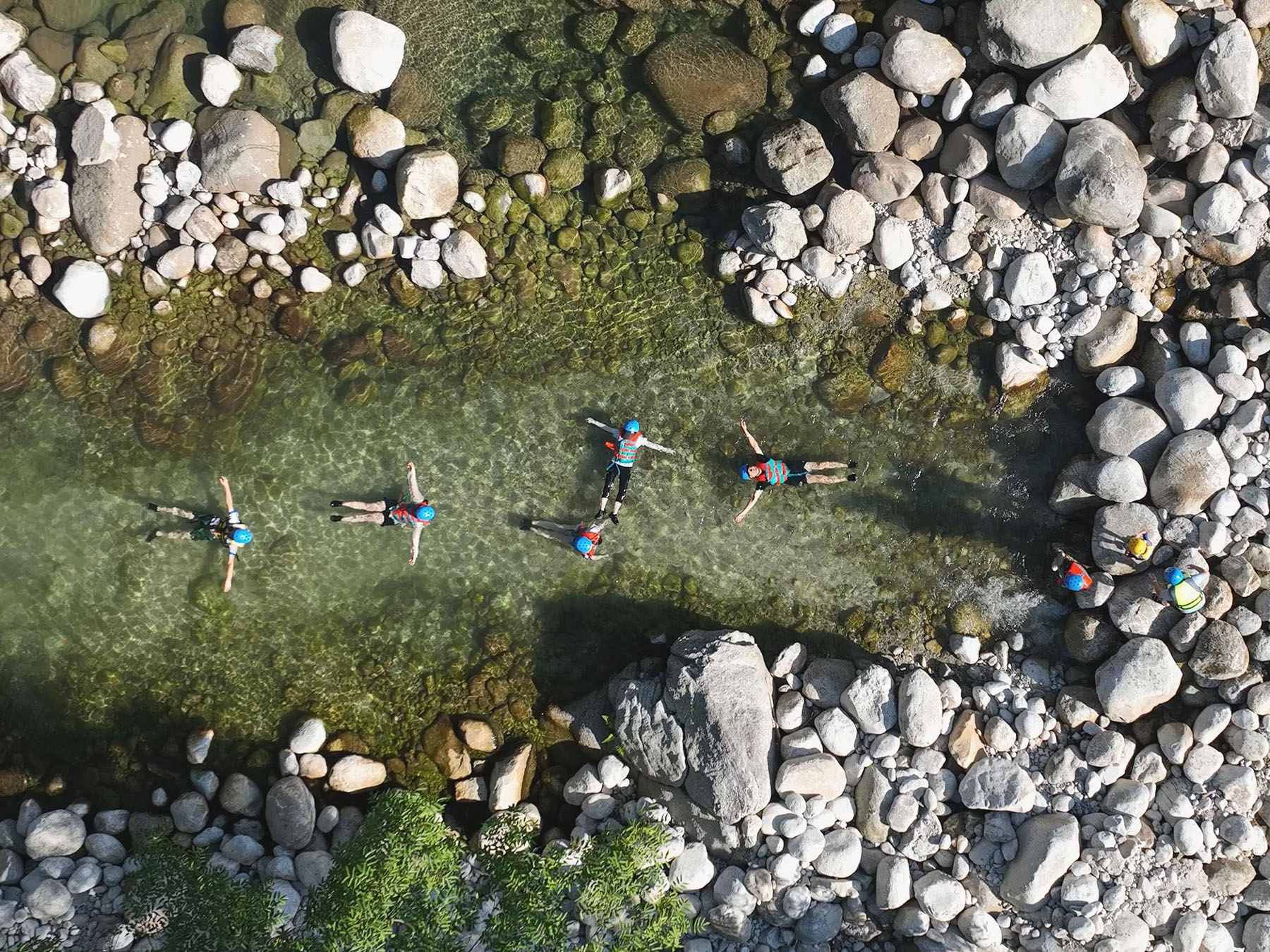
Since last year, hiking, rafting, and bungee jumping under the security of the wonang umbrella have changed travel habits and met psychological needs, especially among younger people.
According to data from Meituan Travel, searches for wonang rafting surged more than 130 percent during the summer, while wonang bungee jumping and wonang hiking saw increases of 62.6 percent and 84 percent, respectively.
In response, many scenic destinations have begun rolling out their own wonang products to meet rising demand.
The bungee jump — set at an elevation of 1,160 meters in Cloud Meadow — has been the star attraction at the Zhejiang scenic area since June 2024. "Our maximum cliff drop here is 40 meters," said Li Yang, a manager with Cloud Meadow.
Logically, it is the ideal setting for a traditional bungee jump, but market research by Li's team told a different story. "We researched it, and many of our target visitors responded that they would be too afraid to try it the traditional way," he said.
So, the team pivoted and decided to lower the stakes, and a speed regulator was installed at the top of the bungee cord.
"Traditional bungee relies on an elastic rubber rope for that sudden drop and rebound. Our system works differently," Li explained.
"When the limiter senses weight, it doesn't snap back. It lowers you slowly, almost like a parachute drop."
The gentler approach attracted a stream of visitors and prompted the team to expand the facility from one to three bungee platforms. Daily jump participation now averages nearly 700 people, accounting for 15 percent of all visitors to the scenic destination, Li said.
He credited the viral interest in the jump to the wonang meme that has swept across the social media, celebrating the relatable humor in being timid. "It obviously struck a chord when we officially rebranded it the 'wonang bungee'," he said.
The "cowardly" label may draw crowds, but it doesn't erase the fear factor — and that's where the real entertainment begins, Li said.
"The name creates a hilarious contrast. When people actually step onto the platform, the reality hits: 'Wait, this is still high!'" Li noticed.
That gap between expectation and reality turns the jump platform into a stage for real-life human comedy.
"You see people — especially young men and women — standing there hesitating, pacing back and forth. Some take five or six minutes. The longest I've seen was 10 minutes," Li recalled. "That struggle is pure entertainment for everyone watching. It's also where we get our funniest viral videos."
'No-sweat ascent'
Shenxianju, a national park in Zhejiang's Taizhou city famed for its volcanic rock formations and sea of clouds, has also attracted more visitors since it adopted a "painless ascent" two years ago.
For years, the park's breathtaking scenery, ranging from long suspended walkways to stunning sites like Guanyin Rock (a natural rock formation resembling the praying Goddess of Mercy) and misty waterfalls, came with a physical toll.
Reaching the views required hiking endurance.
But a few years ago, the park management began to think of ways to make the hiking less strenuous, which gave rise to one of the hottest wonang travel trends.
Wu Yan, a Shenxianju administration deputy general manager, said: "We realized that the traditional climbing model no longer met modern travelers' needs."
"More families, seniors, and even young people wanted a friendlier, less strenuous way to experience nature," she said.
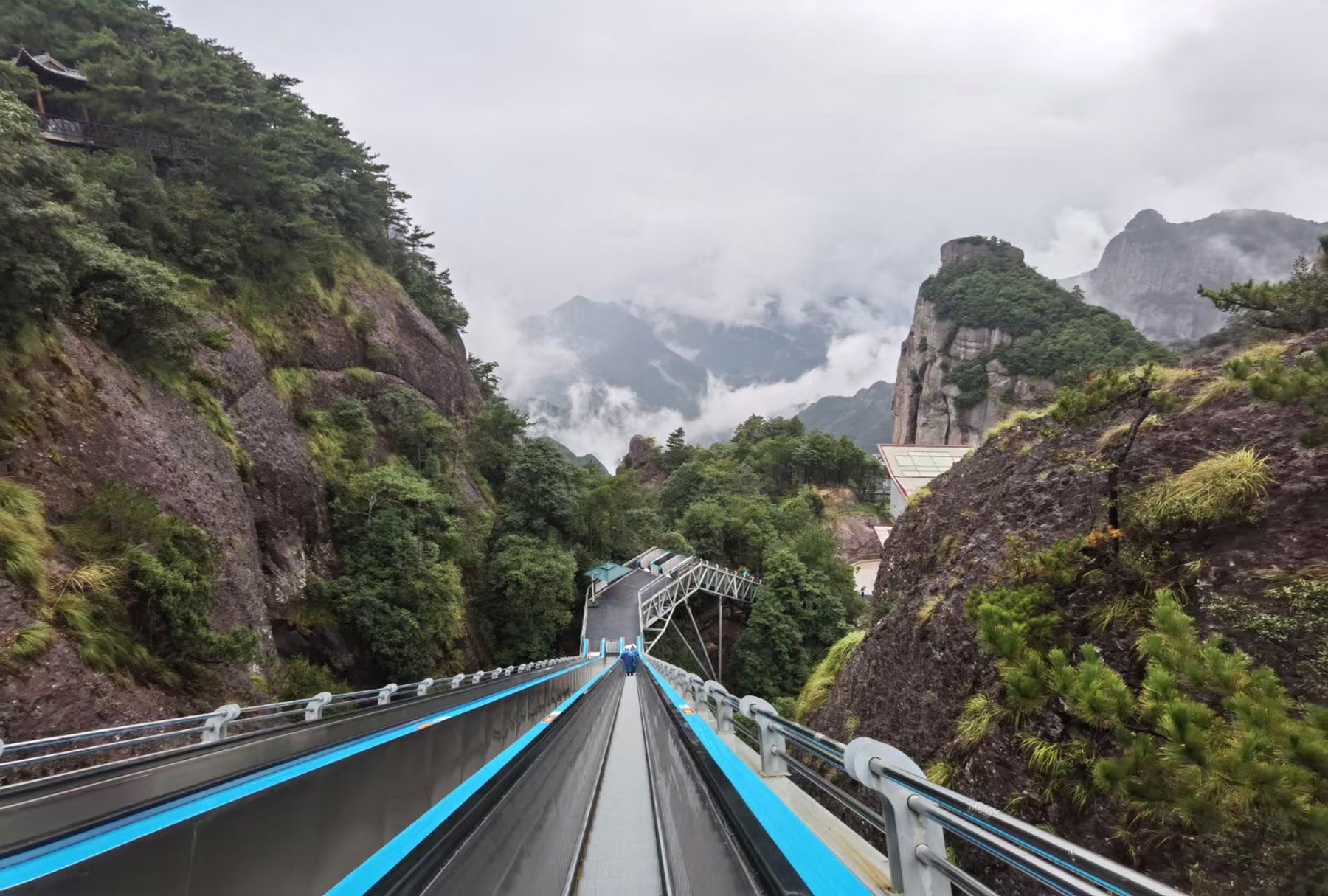
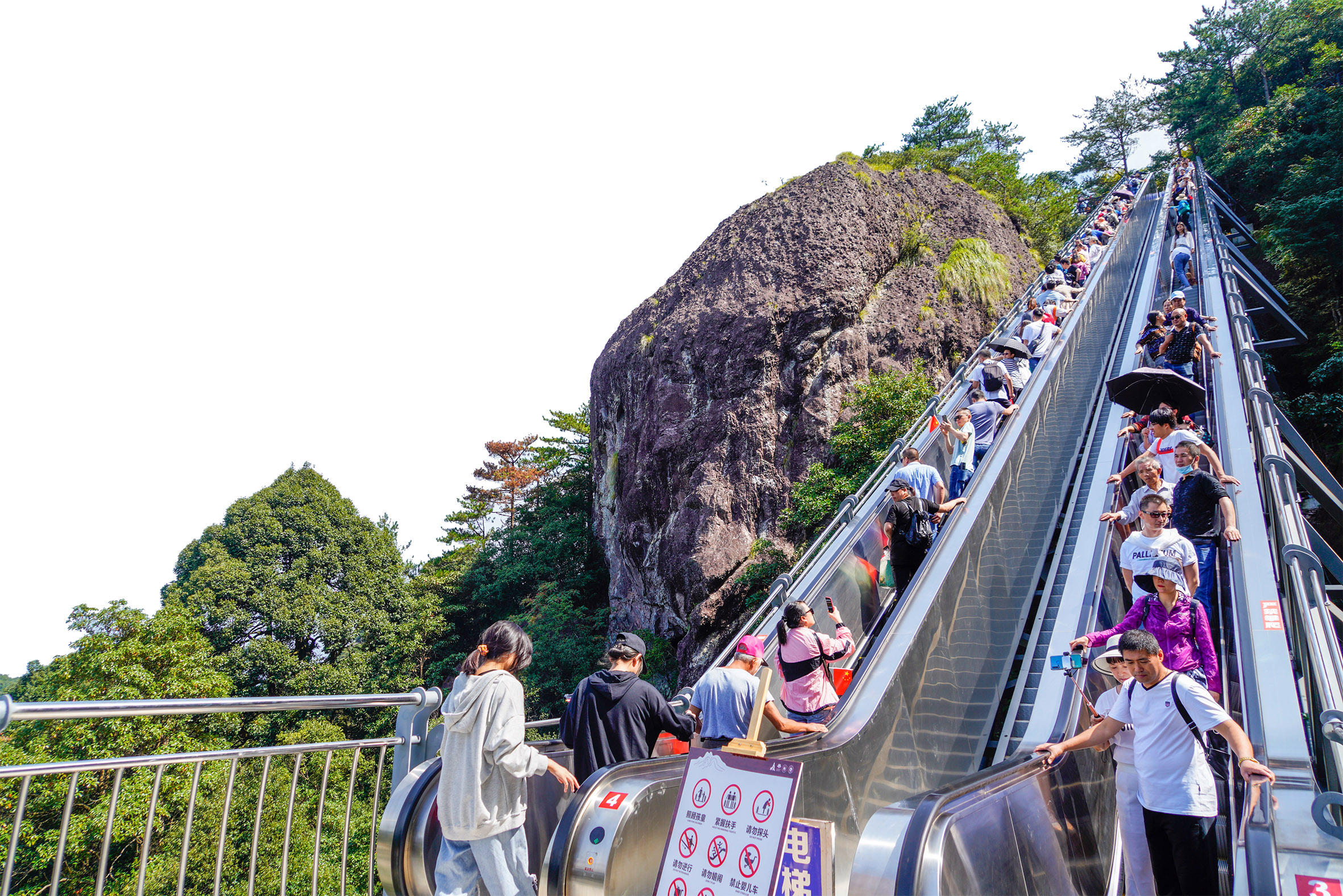
So the park designed a "no-sweat ascent", launched in October 2020, that consists of a carefully engineered system of cable cars, and escalators built into the mountainside, along with gentle walking trails with almost no perceptible incline.
Even the cliffside plank paths were cleverly designed between 750 and 850 meters above sea level, diffusing a 100-meter elevation gain into nearly flat, leisurely walks.
"Where it's still steep, we use escalators. It's all about preserving the views and the comfort," Wu said.
The park now offers more than 10 tailored routes, including those for classic photo opportunities, quiet forest loops, wilderness trails, and family adventure zones.
No matter the path, the goal is the same — let each visitor explore at their own pace.
This year, the online buzz around the "no-sweat hiking" at Shenxianju topped 300 million views, Wu said. Visitor numbers are up 15 percent year-on-year, with a notable rise in international guests and a sharp drop in complaints.
"The fact that 'no-sweat travel' has gone viral shows that tourists now value the experience over exertion," she added.
When asked how many visitors still choose stairs over escalators, Wu was frank. "Basically no one. If there's an escalator, they'll take it. That's just how modern tourists are," she said.
The most powerful endorsement came from a 105-year-old World War II veteran who, with the help of escalators and gentle paths, reached the summit with his family in 2023.
"He played the piano in the mountaintop cafe and took a four-generation family portrait, and said he was grateful to have seen such beauty," Wu said.
Li Wei, dean of the institute of urban planning and tourism landscape design at Northwest Normal University, said wonang travel should not be mistaken for "surrendering", as it reflects a broader transformation in travel values.
Modern travelers, particularly younger generations, are rejecting the "tough it out" mentality in favor of more sustainable and self-aware approaches, he said, adding that mountains and rivers are not there to be conquered, but to be enjoyed and embraced.
The worth of a journey is not measured by its intensity or a checklist of sights, but by genuine comfort and a sense of fulfillment, he explained.
He believes the trend signals the maturation of "emotional consumption" among Chinese youth. At its core lies a pivot from external validation — showing off living the "good life" — to an inward search for personal contentment.
Keeping it real
However, Li Wei cautioned that it's necessary to ensure a diversified supply and the authenticity of tourism products.
This means providing convenient facilities like escalators while also preserving traditional hiking paths, thus respecting diverse travel choices, he said.
Wu Yan from Shenxianju said infrastructure like escalators can be copied, but what really sets a place apart is the natural landscape and thoughtful service. "Thoughtfulness should extend beyond infrastructure in most cases," she said.
During peak travel periods, Shenxianju offers free nail art, children's painting, snacks, and interactions with "immortal non-player characters". Wu sees these activities as an important part of the "emotional value" for modern travelers.
Shenxianju 3.0 expansion work is already underway, promising new sights, richer experiences, and even smoother movement through the mountainscape, she said.
ALSO READ: Countryside areas transformed over past 20 years
Cloud Meadow is also expanding by working on a kids' version of the wonang jump, designed for even younger thrill-seekers, said Li Yang.
Cao still often relives his recent bungee jump experience and recommends it to his friends.
He believes the wonang jump offered him the best of both worlds. On one hand, two-tenths of the controlled fall gave him a safe taste of the traditional version. On the other, it was supplanted by eight-tenths of blissful floating, which he said was "a perfect psychological buffer" that built his confidence for more challenging jumps in the future.
He sensed a subtle transformation washing over him when his feet were back on solid ground. The quiet, hesitant office worker was gone, replaced by a man with a newfound, quiet confidence.
"There was certainly a sense of accomplishment," Cao reflected. "It was my first time trying anything like this. It gives you the courage to do other things you were once afraid to try."
Contact the writers at yangfeiyue@chinadaily.com.cn
