

China's national carbon emissions trading market has officially crossed 1 billion metric tons, Li Gao, vice-minister of the Ministry of Ecology and Environment, said on Wednesday.
Since the national carbon market began trading more than five years ago, China has built the world's largest carbon emissions trading market from scratch, covering about 8.3 billion tons of carbon dioxide emissions, or more than 65 percent of the country's total carbon dioxide emissions, he said at a State Council Information Office news conference.
ALSO READ: China carbon emissions market sees trading volume top 930m tons
In terms of emissions reduction and efficiency improvement, during the 14th Five-Year Plan period (2021-25), China promoted about 530 million metric tons of carbon dioxide emission reductions in the thermal power sector.
More than 1,100 key emitting entities gained about 36 billion yuan ($5.39 billion) in emissions-reduction returns, and society-wide emissions-reduction costs were lowered by 56.8 billion yuan, according to Li.
In terms of price guidance, market activity has continued to rise, and trading scale has continued to expand, with the carbon price becoming an important basis for enterprises to formulate carbon reduction strategies, he said.
ALSO READ: China reports big rise in national carbon market trading
Internationally, the achievements of China's carbon market construction have been highly praised by the international community and have become an important window showcasing China's active response to climate change.
Going forward, the national carbon emissions trading market will continue to expand its coverage, extending to major emitting industries such as petrochemicals and chemicals by 2027, he said.
According to the 2026 annual report on China's policies and actions for addressing climate change, China's carbon dioxide emissions per unit of GDP were 17.7 percent lower than in 2020.
READ MORE: China aims to cover key industrial emitters in carbon market by 2027
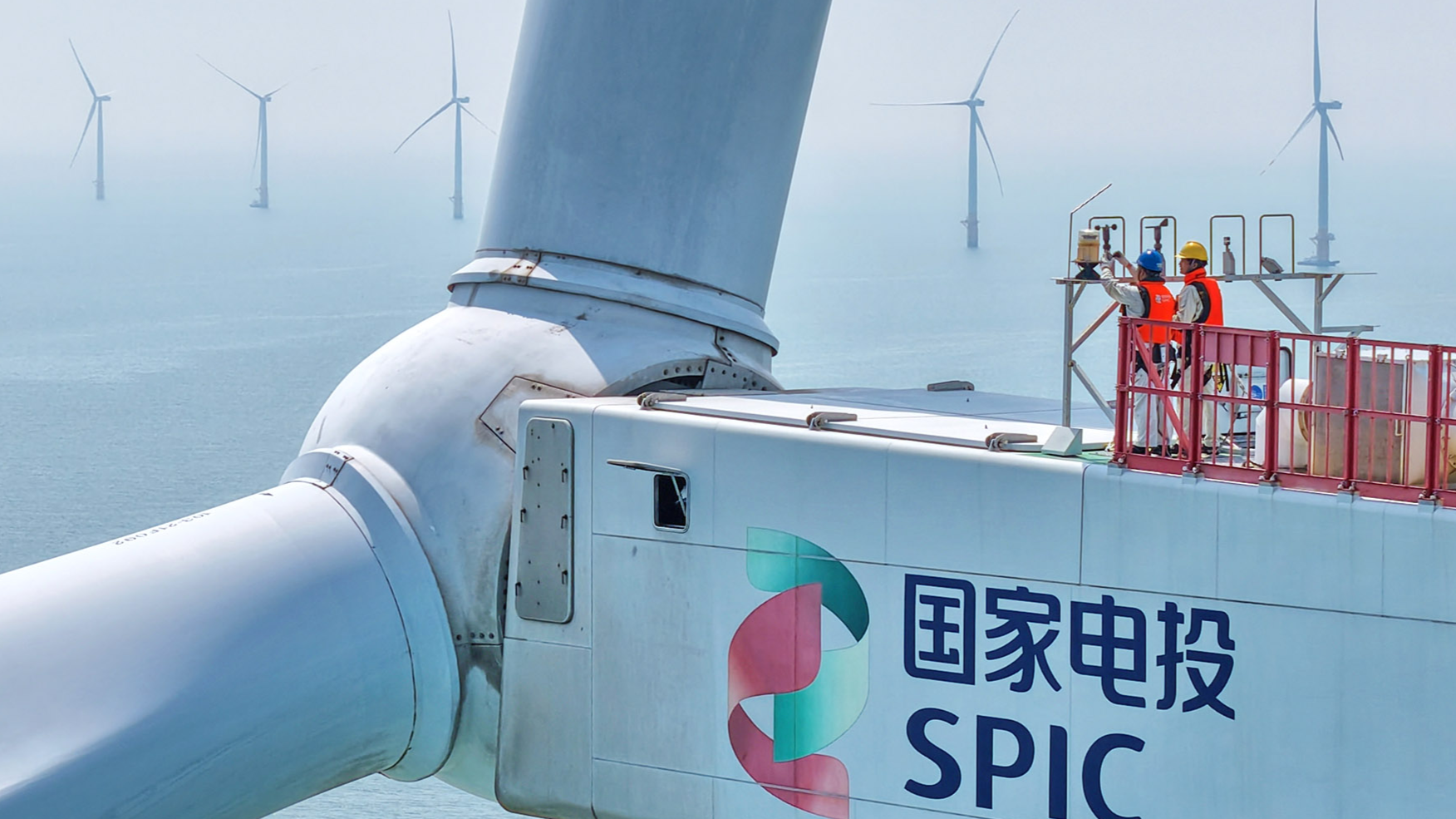
Nonfossil energy consumption accounted for 21.7 percent of total energy consumption, while the combined installed capacity of wind and solar power reached 1.84 billion kilowatts. Forest stock volume reached 20.988 billion cubic meters, according to the report.
