

Hong Kong is pitching itself as a “critical bridge” between the Guangdong-Hong Kong-Macao Greater Bay Area and international markets by expanding cross-jurisdictional regulatory trials under the Sandbox Connect project.
The initiative aims to help drone and air-mobility companies use the special administrative region as a gateway to global markets.
The project is the first cross-jurisdictional trial in Hong Kong’s emerging low-altitude economy (LAE). It forms part of Sandbox X, the second phase of the city’s regulatory trials. The Project Facilitation Task Force of the Working Group on Developing the Low-altitude Economy is overseeing the project.
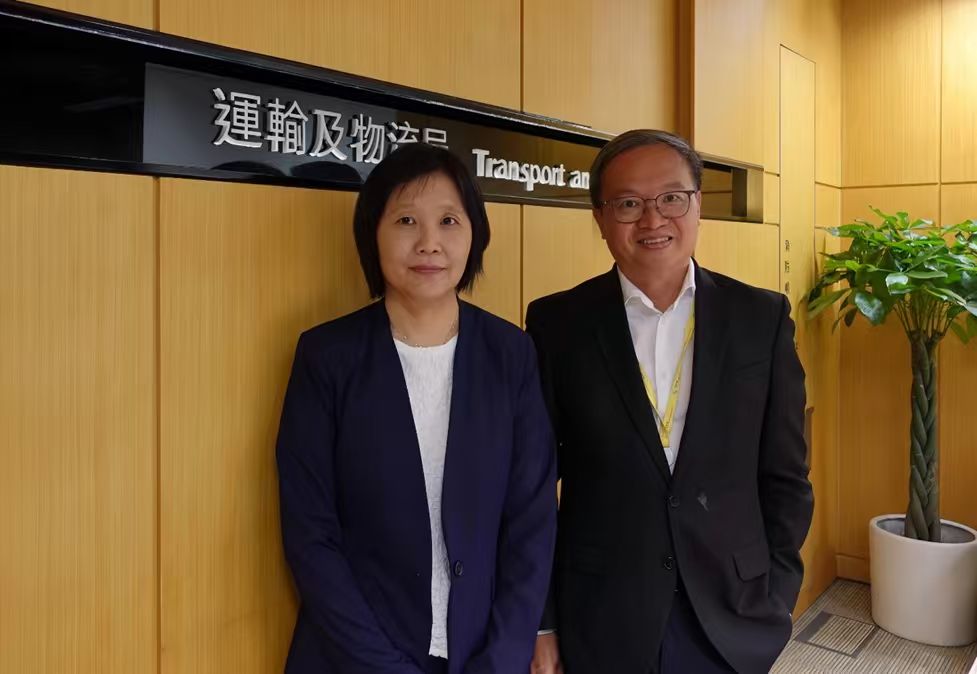
Joan Hung Sze-man, deputy secretary of the Transport and Logistics Bureau, and Dominic Chow Wing hang, deputy director-general of civil aviation at the Civil Aviation Department, are co-convenors of the cross-sectoral task force.
ALSO READ: Hong Kong's first five-year plan stakes its claim in LAE
According to Chow, the Sandbox Connect project aims to expand trials to the Greater Bay Area, using Nansha in southern Guangzhou as a gateway.
The International Advanced Technology Application and Promotion Center in Nansha and the Hong Kong University of Science and Technology’s Guangzhou campus are project players in Guangdong province.
Guangdong, with its manufacturing base and technological depth, will handle upstream testing and technical validation, while Hong Kong will focus on commercialization, standard-setting and certification, Chow said.
In Hong Kong, the task force includes senior officials from at least a dozen government departments, including those responsible for civil aviation, policing, planning and lands, and telecommunications.
READ MORE: HK to lead low-altitude economy with innovation, say experts
The two sides are working together to design a joint regulatory testing framework. As part of Sandbox X, the initiative builds on earlier progress, moving from isolated demonstrations to more complex operations involving shared platforms, unmanned aircraft system traffic management (UTM) systems, and passenger trials of electric vertical take off and landing aircraft (eVTOLs), Chow said.
Fifteen leading UTM companies, including groups with experience in overseas markets and companies from Hangzhou and Shenzhen, are adapting their systems to Hong Kong’s operating environment, he added.
Officials said the approach, which they described as an example of policy innovation, improves efficiency and could eventually support cross-jurisdictional operations, particularly in logistics and future long-haul flights of up to 1,000 kilometers.
READ MORE: HK launches frequency license to support low-altitude economy
According to the co-convenors, the longer-term goal is to establish a Hong Kong-Guangdong “LAE regulatory green channel” based on mutual recognition of standards and expedited approvals.
Beyond the Greater Bay Area, the initiative is also intended to position Hong Kong as a platform for international LAE cooperation, with common standards seen as a key part of that effort.
Recently, the Hong Kong Productivity Council and the Greater Bay Area Low Altitude Economy Alliance signed a joint statement of intent, joined by more than 50 organizations, to develop a framework for international LAE standards. Hung also highlighted the city’s active participation in the country’s delegation to the International Civil Aviation Organization (ICAO).
Footage of Hong Kong’s inaugural eVTOL flight was shown to participants at a recent ICAO regional conference and was well received, she said.
“Hong Kong plays a pivotal institutional role in elevating the country’s successes and advanced LAE technologies to the global stage,” she added.
