

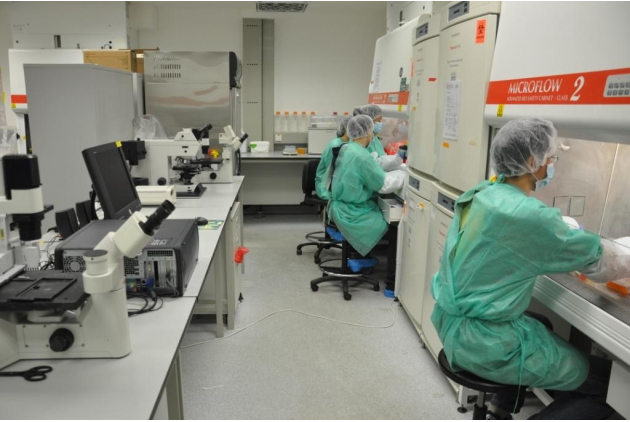
A key step toward a functional cure for HIV has been achieved, as a cross-border research team involving Hong Kong and Shenzhen institutions delivered promising clinical trial results for its innovative therapeutic HIV vaccine.
This therapy offers the potential to help people living with HIV avoid lifelong medication, through vaccine injections administered over a few years to help control the virus.
During an academic seminar in Shenzhen on Tuesday, the team announced the results of the vaccine’s investigator-initiated trials — extension studies based on Phase I trials, designed to provide stronger support for Phase II trials.
The study, carried out at Shenzhen Third People’s Hospital among 10 volunteer HIV patients, with seven completing the treatment, found that two achieved significant viral control while all but one showed some degree of control, marking an important milestone for HIV patients, said Chen Zhiwei, chair of Immunology & Immunotherapy and director of the AIDS Institute at HKUMed.
“These results, with one case showing excellent outcomes and another showing notable effects, will significantly guide the design of subsequent phase II clinical trials, particularly influencing protocol design, dosage, and treatment monitoring,” he added.
The research team plans to complete the second phase of clinical trials in 2028 and apply for conditional approval in select hospitals. They expect a full launch of the therapy across the nation, including Hong Kong, in 2030 or 2031.
According to United Nations data, around 40.8 million people worldwide are living with HIV, a virus that attacks the immune system. Although global leaders pledged to keep new cases below 370,000 per year, 1.3 million new infections were recorded in 2024.
Acquired immunodeficiency syndrome (AIDS) occurs at the most advanced stage of HIV infection. Since AIDS was discovered in 1981, HIV has claimed the lives of 44.1 million people.
Compared to traditional antiretroviral therapies, nucleic acid vaccines can help the immune system control viral replication without continuous medication, potentially reducing side effects.
The vaccines are also expected to alleviate the financial burden on people living with HIV. Currently, mainstream antiretroviral drugs on the market cannot cure HIV and require lifelong use. For example, in the United States, the list price for Biktarvy, a common HIV treatment drug, is $4,216 per month, which adds up to around $50,000 per year.
The research team hopes to price the vaccine between 10,000 yuan ($1,480) and 20,000 yuan per dose. A full course is expected to involve 10 doses over roughly three years, though the dosage may be adjusted based on clinical progress and the patient’s condition.
In May, the team launched a technology innovation center in the Hetao Shenzhen-Hong Kong Science and Technology Innovation Cooperation Zone, focusing on the research, development, and application of HIV vaccines.
Davis Xu and Chen Hong contributed to this story.
Contact the writers at bingcun@chinadailyhk.com
