

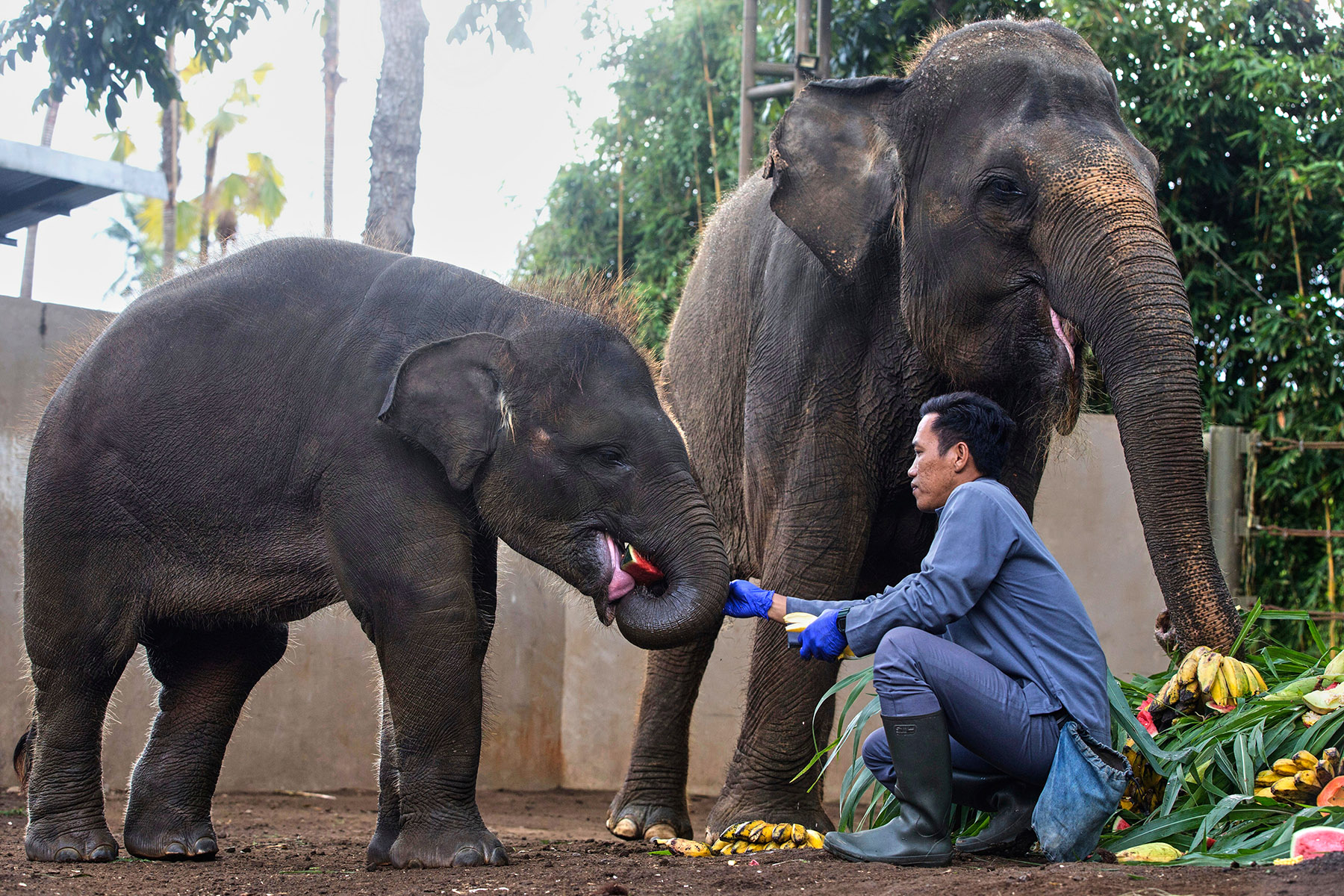
Sumatran and Kalimantan elephants are now critically endangered as their habitat areas have been reduced from 42 to 21, Indonesian Forestry Minister Raja Juli Antoni told a meeting with various nongovernmental organizations in Jakarta earlier in May.
The government will issue a presidential instruction on rescuing the populations and habitats of Sumatran and Kalimantan elephants.
Raja Juli said the progressive step was taken as a response to the conditions of Sumatran and Kalimantan elephants and their reduced habitat.
The policy serves as an operational basis for interagency work. The presidential instruction draft is currently being circulated among ministries.
READ MORE: Close calls
"The presidential instruction shows a strong commitment from (Indonesian) President Prabowo Subianto to save our elephants. Our focus is on how to execute those ideas in the field," Raja Juli said.
"Future governance must provide full orientation to conservation."
One crucial point in the presidential decree is the integration of infrastructure with animal living space.
Raja Juli provided an example that if the Public Works Ministry is building toll roads, then it must consider elephant home range maps, which have been prepared by the Forestry Ministry.
Technical solutions such as tunnels or underpasses will be mandatory to allow elephant herds to still roam their home range without being disrupted by human activities.
The minister also directed that the 21 remaining elephant habitat areas be maintained and their ecosystem quality improved. The main strategy is to build a corridor uniting all fragmented habitats because of illegal activities and changes in land use.
"It is important for us to have accurate data. There must be a clear target to increase the (elephant) population in the Conservation Strategy and Action Plan," he said.
"If there is no increase in population, we must find the problem and solve it."
Handling conflicts
As part of the long-term solution, Raja Juli also highlighted the handling of the conflict between elephants and humans in Way Kambas, Lampung, which has been ongoing for some 40 years.
He said that Prabowo suggested constructing an effective barrier to prevent casualties among both humans and elephants, while continuing to repair elephant habitats.
ALSO READ: Patience pays off for elephants' keepers in North Sumatra
Experts estimated that there were some 2,800 to 4,000 Sumatran elephants in the 1980s. The Forestry Ministry estimated in 2007 that the population decreased to between 2,400 and 2,800 and further reduced to between 1,694 and 2,038 in 2017.
Forest encroachment and deforestation for oil palm plantations have further cornered the Sumatran elephant in its habitats.
Rampant deforestation and land conversion for various economic activities such as mining, plantation and energy development, are also believed to have contributed to the natural disasters in northern Sumatra in November 2025.
