

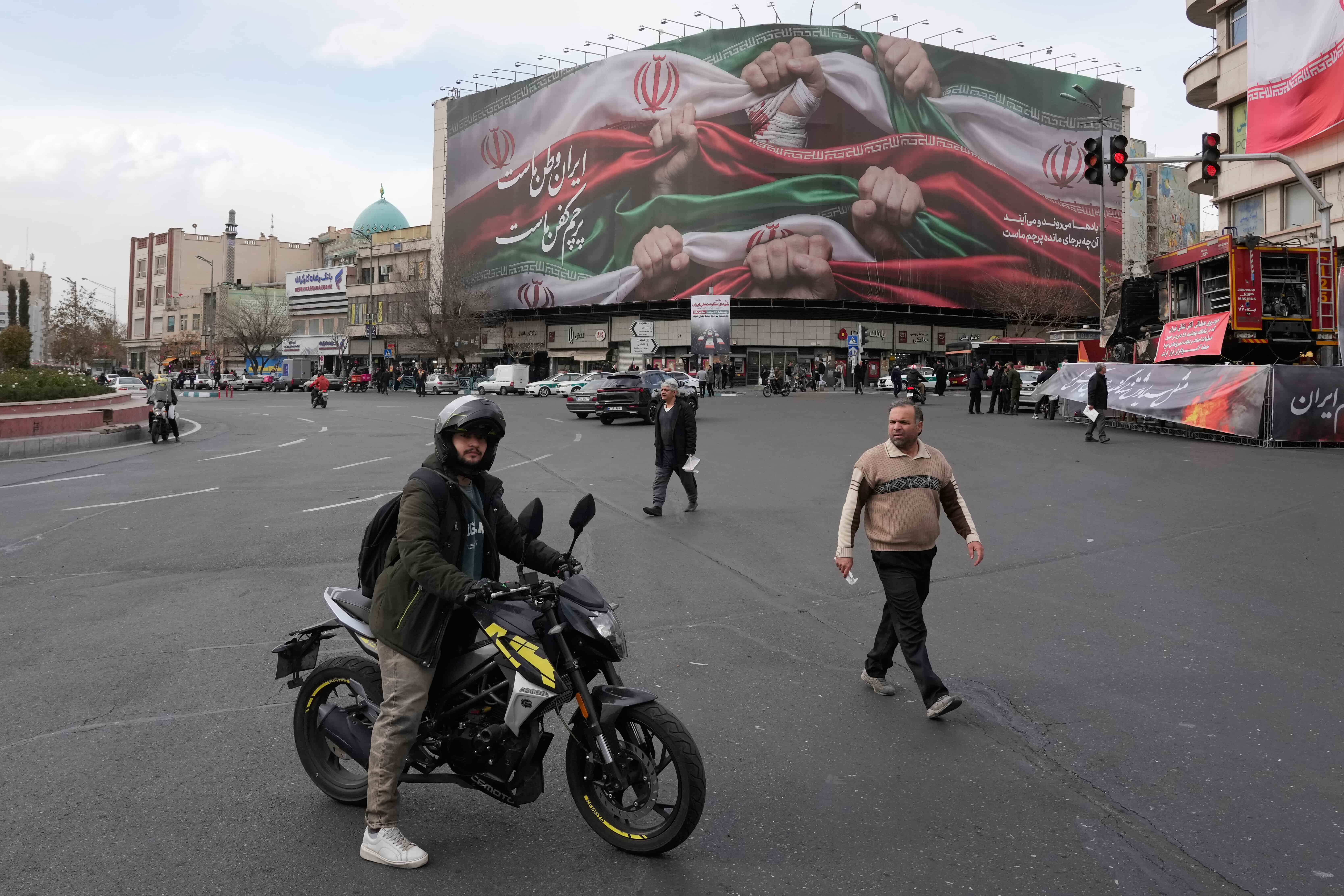
CAIRO/TEHRAN/AMMAN/JERUSALEM/LONDON - Plans for potential US-Iran nuclear negotiations remain uncertain as reports of an upcoming meeting in Istanbul were questioned by Iranian officials, while both sides continue to exchange warnings and bolster military deployments amid rising regional tensions.
Mixed signals on potential US-Iran talks
US President Donald Trump's special envoy, Steve Witkoff, and Iranian Foreign Minister Seyyed Abbas Araghchi are reported to plan a meeting in Istanbul on Friday to discuss a potential nuclear deal and other issues, Axios cited a US official as saying on Monday.
But Iranian media later cast doubt on the reports. Tasnim, citing Iranian officials, said details of the talks have not been finalized. "The potential negotiations are still at a preliminary stage, and once the overall framework and structure of the talks take shape, subsequent stages and further details will be finalized," the agency reported.
Earlier Monday, Iranian Foreign Ministry spokesperson Esmaeil Baghaei said Tehran was carefully studying the structure of potential negotiations with Washington, with a focus on lifting sanctions and advancing national interests.
He emphasized that sanctions relief remains a core priority. Baghaei cited Araghchi as saying the nuclear issue has long been used as a pretext for conflict against Iran, and added that Iran's primary demand in any talks is "the removal of unjust sanctions."
Iranian President Masoud Pezeshkian has reportedly ordered the start of negotiations with the United States on the nuclear issue, according to semi-official Fars News Agency, citing an unnamed government source. Fars also reported that talks would likely take place in Türkiye in the coming days.
Iran denys to send enriched nuclear materials abroad
A senior Iranian security official told Fars on Monday that Tehran does not plan to send enriched nuclear materials abroad, after Russia and Türkiye suggested they could host or process Iran's uranium to ease tensions.
Trump on Sunday warned that if Iran fails to reach a nuclear deal with Washington, the US would assess whether Iranian Supreme Leader Ali Khamenei's claim that an attack could spark a regional war is accurate. Araghchi told CNN the same day that a "just, fair, and equitable" nuclear deal with the US remains achievable if Washington abandons coercive policies.
Washington has said any deal with Iran must include a ban on uranium enrichment, the removal of already enriched material, limits on long-range missiles, and a rollback of support for regional proxies. Analysts said such conditions would be "very difficult" for Iran to accept.
Israeli, US navies hold joint drill in Red Sea
These developments follow a period of heightened military tensions in West Asia. The Trump administration deployed an aircraft carrier strike group and multiple warships to the Middle East in late January, with the US leader continuing to send warnings to Tehran.
Also on Monday, the Israeli military announced that Israeli and US naval forces conducted a joint exercise in the Red Sea a day earlier.
The drill is part of the ongoing strategic coordination between the Israeli Navy and the US 5th Fleet, which oversees maritime operations in the Red Sea, Gulf of Aden, and Gulf of Oman, the Israeli military added.
Officials characterized the maneuvers as a routine effort to strengthen regional security and interoperability between the two partners.
A regional war at any time
In response to the military buildup, Iran's Armed Forces' Chief of Staff Abdolrahim Mousavi warned that Tehran's response to "the slightest mistake" by the US could trigger a regional war, according to official news agency IRNA. He said Iran cannot be "blockaded" and any attack would have severe consequences for US forces and their allies.
Jordan-Iran diplomacy stabilizes the regional situation
Jordan said Monday it will not allow its territory or airspace to be used in any regional conflict or as a "launching pad" for military action against Iran, warning it would respond to any violation of its sovereignty.
Deputy Prime Minister and Foreign Minister Ayman Safadi made the remarks during a phone call with Iranian Foreign Minister Seyed Abbas Araghchi, the Jordanian Foreign Ministry said. Safadi stressed that Jordan would use all available means to counter any attempt to breach its airspace or threaten the country's security and the safety of its citizens.
The two ministers agreed to maintain communication and coordination on regional developments and ongoing diplomatic efforts to reduce tensions.
Domestic security operations
Iranian authorities on Monday said they arrested four foreigners of undisclosed nationalities for "participation in riots" in Tehran province. State television reported that homemade stun grenades were found during searches of suspects' belongings. Authorities have accused Israel and the US of involvement in the unrest.
The office of President Pezeshkian released a list Sunday of 2,986 people killed in the unrest, compiled from data provided by the Iranian Legal Medicine Organization. The total death toll, including unidentified victims, stands at 3,117. The statement emphasized a commitment to transparency and accountability, pledging that no bereaved family would be left unheard.
Weeks of protests over the sharp depreciation of the rial swept cities across Iran from late December to January. Initially peaceful, the demonstrations escalated into clashes that caused casualties and damage to public property, including mosques, government buildings, and banks. Tehran has blamed the unrest on the US and Israel.
UK imposes new sanctions on Iranian officials
Britain on Monday imposed another package of sanctions against ten individuals and an organization, blaming their role in dealing with the recent unrest in Iran, according to a statement by the country's foreign office.
Those sanctioned include Iran's Interior Minister Eskandar Momeni, Police Chief in Lorestan Province Mohammad Reza Hashemifar, Public Security Police Chief Seyed Majid Feiz Jafari, Commander of Fars Province in Islamic Revolutionary Guard Corps (IRGC) Yadollah Bouali, as well as several other military and judicial personnel, according to the statement.
Britain has already imposed more than 550 relevant sanctions on Iranian individuals and organizations, including the IRGC in its entirety, said the statement.
The move came after similar measures taken in recent days by the United States and the European Union.
In response to an anti-Iran resolution adopted by the European Parliament, Iran condemned it as "meddlesome."
