

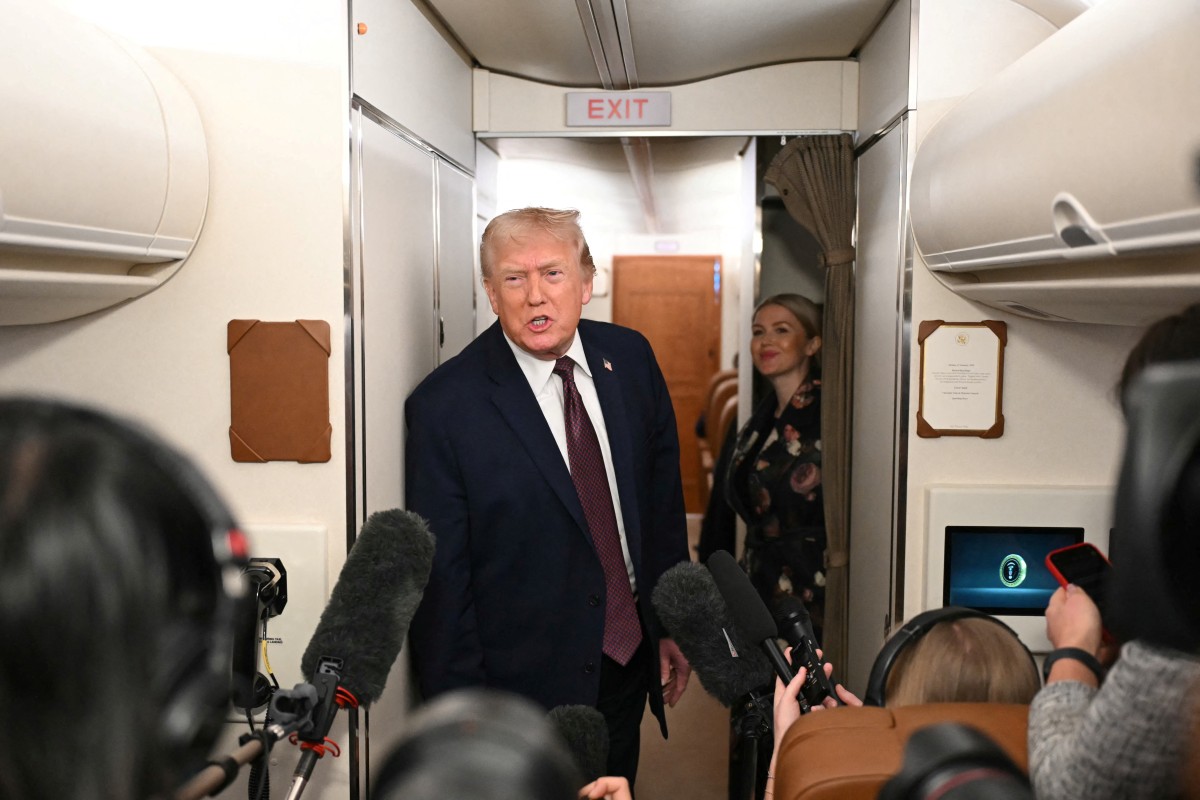
WASHINGTON/TEHERAN/CAIRO/UNITED NATIONS - US President Donald Trump said Sunday that his administration is weighing "some very strong options" including potential military action against Iran.
When asked by reporters aboard Air Force One if Iran has crossed a red line to trigger a response, Trump said, "They're starting to, it looks like."
"We're looking at it very seriously. The military is looking at it, and we're looking at some very strong options. We'll make a determination," Trump said.
The president added that he is getting an "hourly" report on the situation in Iran.
Trump revealed that the leaders of Iran have reached out to him, expressing a desire to negotiate. "The leaders of Iran called," said Trump, adding that "They want to negotiate."
Trump is scheduled to be briefed Tuesday on options to respond to the unrest in Iran, the Wall Street Journal reported on Sunday, citing US officials.
Secretary of State Marco Rubio, Defense Secretary Pete Hegseth and chairman of the Joint Chiefs of Staff Gen. Dan Caine are expected to attend the Tuesday meeting, said the report, adding that Trump isn't expected to make a final decision at the meeting as the deliberations are at an early stage.
ALSO READ: Iran's Supreme Leader Khamenei urges unity, slams US in address
The Trump administration's options could include boosting anti-government sources online, deploying secretive cyber weapons against Iranian military and civilian sites, placing more sanctions on the country and military strikes, as well as the possibility of sending terminals of Starlink, a satellite-based internet service owned by Elon Musk, into Iran, according to the report.
The Pentagon hasn't moved any forces in preparation for potential military strikes, said the report, noting the United States will need to put assets in place not only to launch attacks but also protect American forces in the region.
The United States recently moved the aircraft carrier USS Gerald R. Ford and its strike group from the Mediterranean to Latin America, leaving no carrier in either the Middle East or Europe.
Iran warns of 'rioters', foreign meddling
Teheran warned it would strike US and Israeli bases if Washington attacked Iranian targets under the excuse of "protecting" protesters, as fatalities from two weeks of nationwide unrest in Iran climbed.
State media reported that Iranian government declared three days of national mourning for "martyrs" killed in recent protests, after at least 111 members of Iran's security forces have been killed in clashes since the protests began 14 days ago.
Meanwhile, human rights groups based outside the country said the number of protesters killed has topped 200, though this figure could not be independently verified.
The escalating violence has been accompanied by a sharp rise in regional tensions. Iranian Parliament speaker Mohammad Bagher Qalibaf on Sunday threatened to retaliate against US and Israeli military assets across the Middle East if Washington launched strikes against Iran.
"If you take action to attack Iran, both the occupied territories and all American military centres, bases and ships in the region will be legitimate targets," Qalibaf told parliament.
His remarks followed reports that US President Donald Trump is considering military options to "protect" protesters. Qalibaf described the situation as a "terrorist war" following the 12-day conflict with Israel in June 2025, which Teheran said killed more than 1,000 Iranians.
ALSO READ: NYT: Trump briefed on options for military strikes in Iran
Israeli Prime Minister Benjamin Netanyahu said his government is "closely monitoring" the situation in Iran.
"If the current leadership were overthrown, Israel and Iran would once again become faithful partners in building a future of prosperity and peace," Netanyahu said during a weekly cabinet meeting.
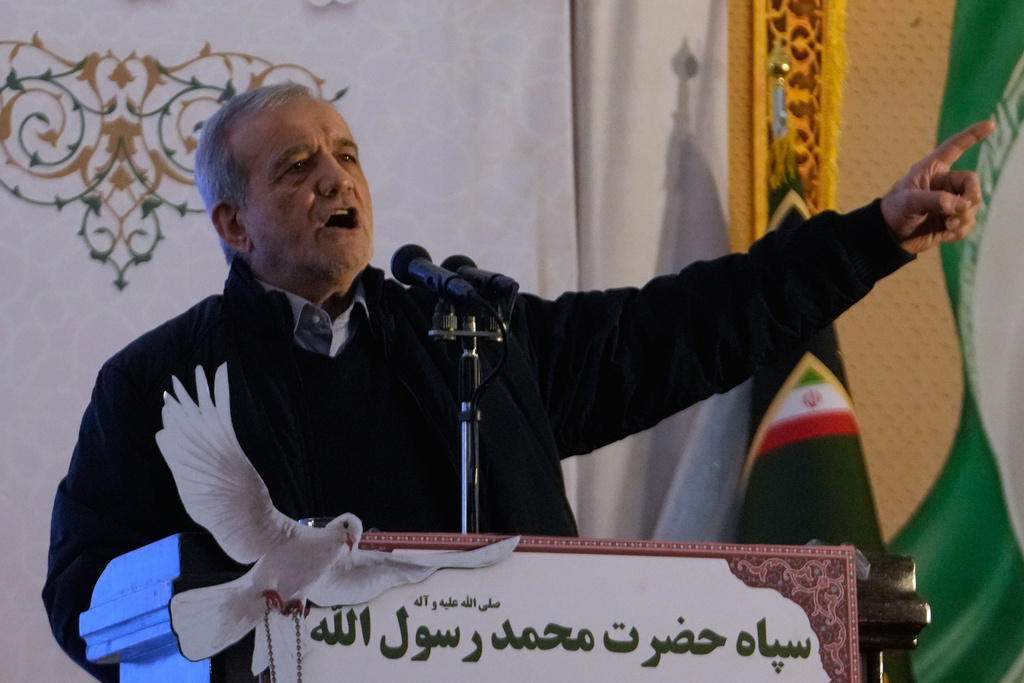
Also on Sunday, Iranian President Masoud Pezeshkian attempted to strike a balance between conciliation and force. In a televised interview with the state-run IRIB, he stated that his government is prepared to address the economic grievances driving the protests, but warned that "rioters" will not be tolerated.
"People have concerns, and we should sit with them and resolve those concerns," Pezeshkian said. "But our higher duty is not to allow a group of rioters to come and destroy the entire society."
Pezeshkian also detailed the government's plans to implement a major subsidy reform program aimed at stabilizing markets, boosting production, and increasing purchasing power, providing an update on its current progress.
The protests initially erupted over a sharp depreciation of the rial and sweeping subsidy reforms. Iranian authorities have blamed the unrest on foreign-linked agents and US sanctions. To contain the unrest, the government has restricted internet access for four straight days, with monitoring group NetBlocks reporting a disruption lasting more than 60 hours.
The semi-official Tasnim news agency detailed a high toll among security personnel in the provinces. In Isfahan, Governor Ali Ahmadi confirmed 30 security personnel have died and reported the death of an infant among civilian casualties. Further fatalities included 12 security personnel in Fars province and eight police Special Units members in Teheran.
Tasnim also reported that 11 mosques have been set on fire in Isfahan and Mashhad, while two Red Crescent workers were killed in separate attacks in the north.
While state television aired footage of quiet streets in major cities on Sunday morning to project a sense of calm, the government remains focused on implementing a major subsidy reform program. Officials said the plan is intended to stabilize markets and boost purchasing power, though the immediate fallout has instead fueled the current wave of public anger.
READ MORE: Iran protests: Trump threatens US action, rules out sending troops
Meanwhile, UN Secretary-General Antonio Guterres urges the Iranian authorities to exercise maximum restraint and enable access to information in the country, his spokesperson said on Sunday.
"The secretary-general urges the Iranian authorities to exercise maximum restraint and to refrain from unnecessary or disproportionate use of force," spokesperson Stephane Dujarric said in a statement.
He further urges steps that enable access to information in the country, including restoring communications, the statement reads.
