

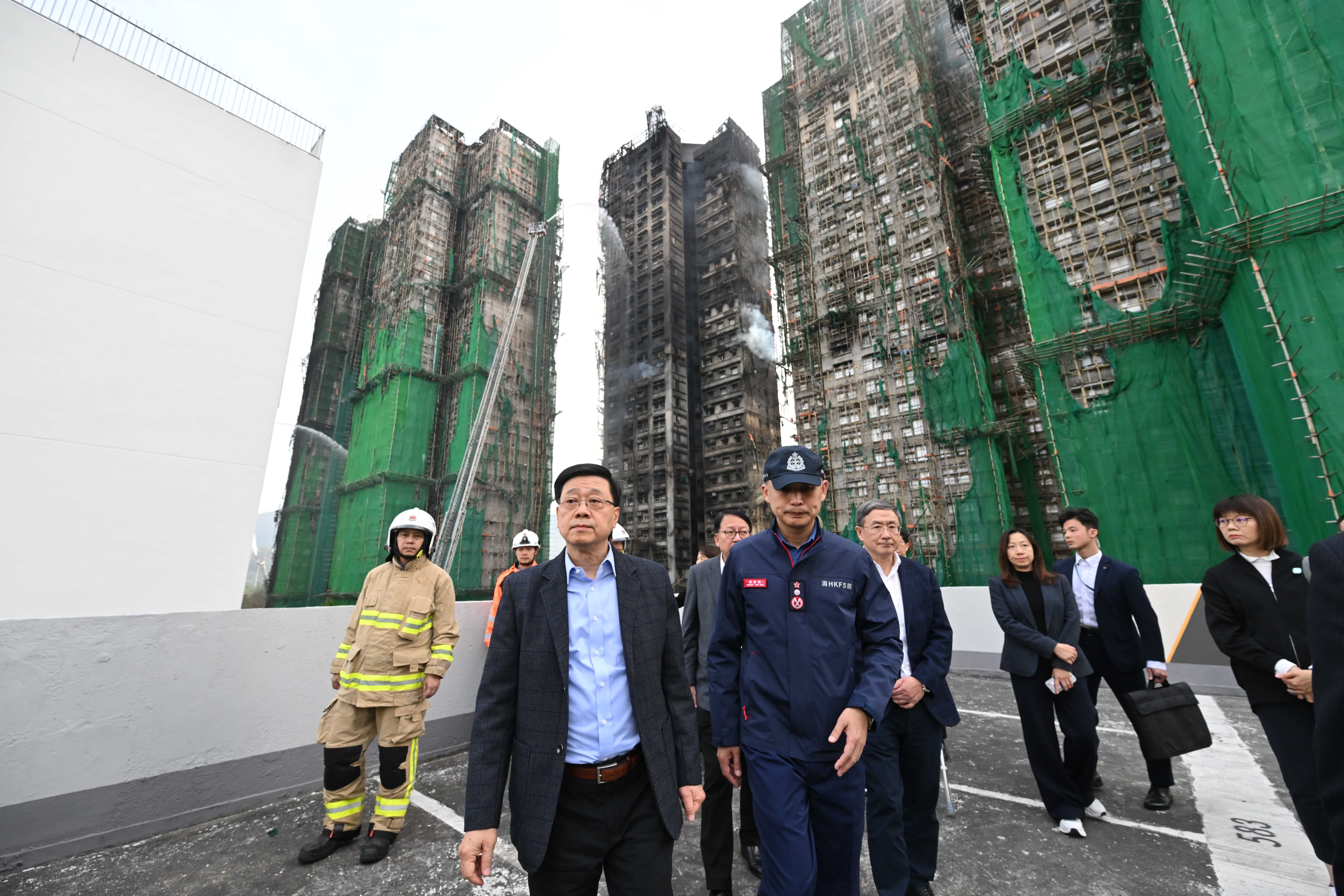
In the aftermath of the deadly Wang Fuk Court fire, experts are calling for better oversight of building material safety, site management, and inspections, and an accountability mechanism that starts at the design phase.
The call comes as preliminary probes point to the use of suspected non-compliant highly flammable materials at Wang Fuk Court.
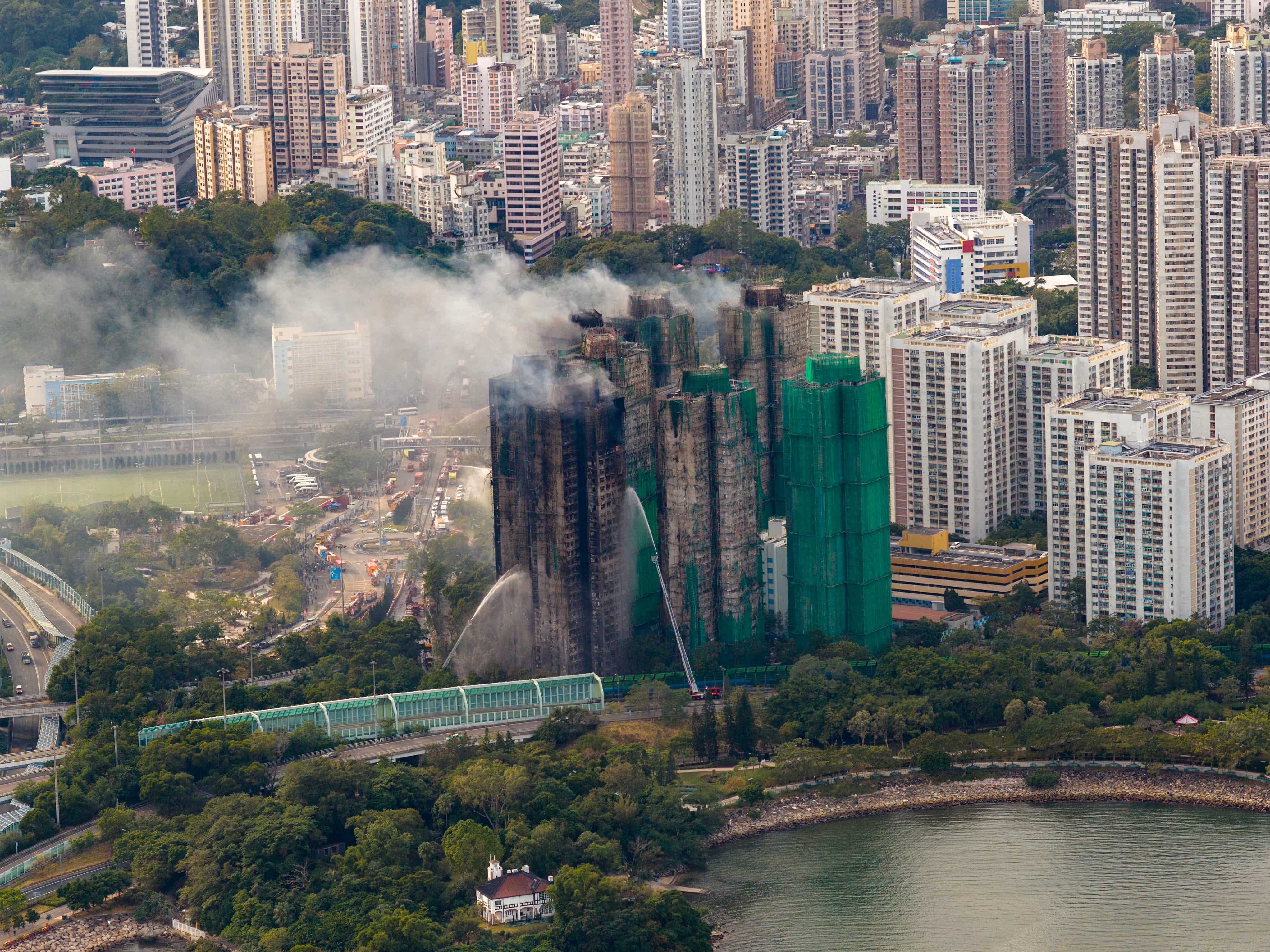
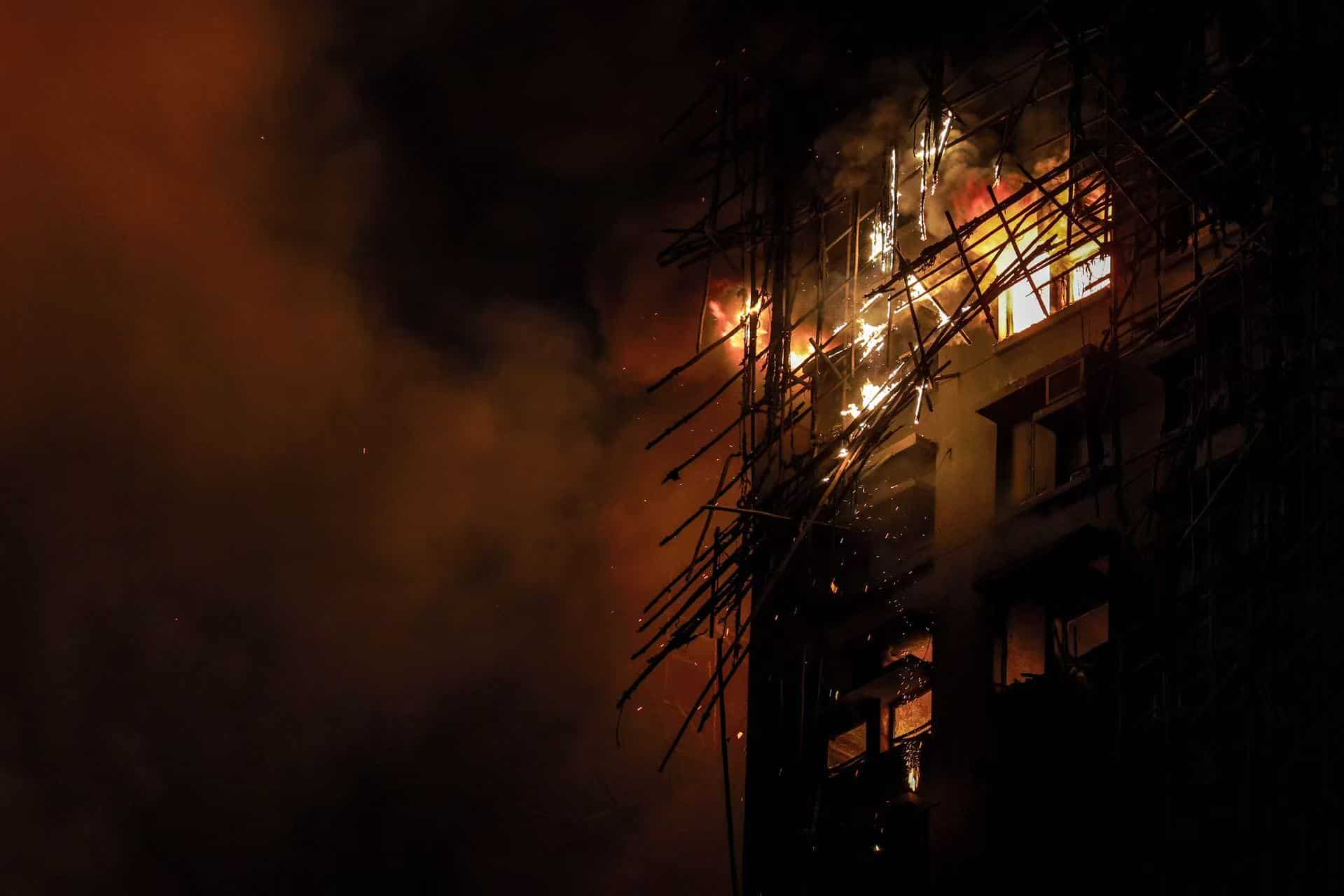
As of 3 pm on Thursday, the blaze that broke out at around 2:51 pm on Wednesday, lasting for nearly a day, had resulted in 55 fatalities, including one firefighter, with 279 people still missing. The flames, which at the height of the fire engulfed seven of the estate’s eight blocks, are yet to be put out. Fires at four of the affected blocks had been contained as of noon on Thursday.
ALSO READ: LIVE: Tai Po fire death toll hits 55, rescue efforts on
The court buildings were undergoing large-scale renovation at the time of the incident. The police said that the protective netting, sheeting, tarpaulins, and plastic covers installed on the exterior of the affected building likely failed to meet fire safety standards.
During a media briefing early on Thursday, Senior Superintendent Eileen Chung Lai-yee of the police force's New Territories North regional headquarters, shared preliminary findings, noting that Styrofoam — a highly flammable material — had been used to seal elevator lobby windows on each floor of the building that was not affected by the fire.
Chung stated that the Styrofoam could have accelerated the spread of the fire and is being considered as a possible factor in determining what caused the rapid progression of the blaze.
READ MORE: Tai Po fire may burn until Thursday evening, 3 held for manslaughter
A resident who escaped from the top floor revealed on social media that his windows were almost entirely sealed with Styrofoam, leaving only narrow gaps that prevented them from opening fully and did not allow for a clear view of outside. This, combined with the fact that many residents kept their windows closed due to construction dust, meant that many people were slow to realize that the bamboo scaffolding outside was engulfed in flames.
In the early hours of Thursday, police arrested three local men aged between 52 and 68 on suspicion of manslaughter. Those detained — two directors and a project consultant from the renovation contractor — are currently in custody. The police also conducted a search of an industrial center in San Po Kong, where they took one man in for questioning and seized multiple documents related to the case.
Speaking on a radio program on Thursday, Ho Ping-tak, chairman of the Kowloon and Hong Kong Scaffolding Workers Union, said that significant cost differences were the key incentive for contractors to use non-compliant materials. While flame-retardant protective netting measuring 18 meters x 2 meters costs from HK$75 ($9.64) to HK$90 per sheet, netting of the same size that has not been treated could cost less than HK$50 per sheet. He also noted that the use of the flame-retardant netting remains a recommendation rather than a legal mandate, and urged the authorities to make it compulsory.
In an interview with China Daily, Vincent Ho Kui-yip, president of the Hong Kong Institute of Building Safety and a seasoned surveyor, explained that protective nets and tarpaulin made from materials like nylon are typically used around traditional bamboo scaffolding during renovations to prevent concrete and debris from falling onto streets.
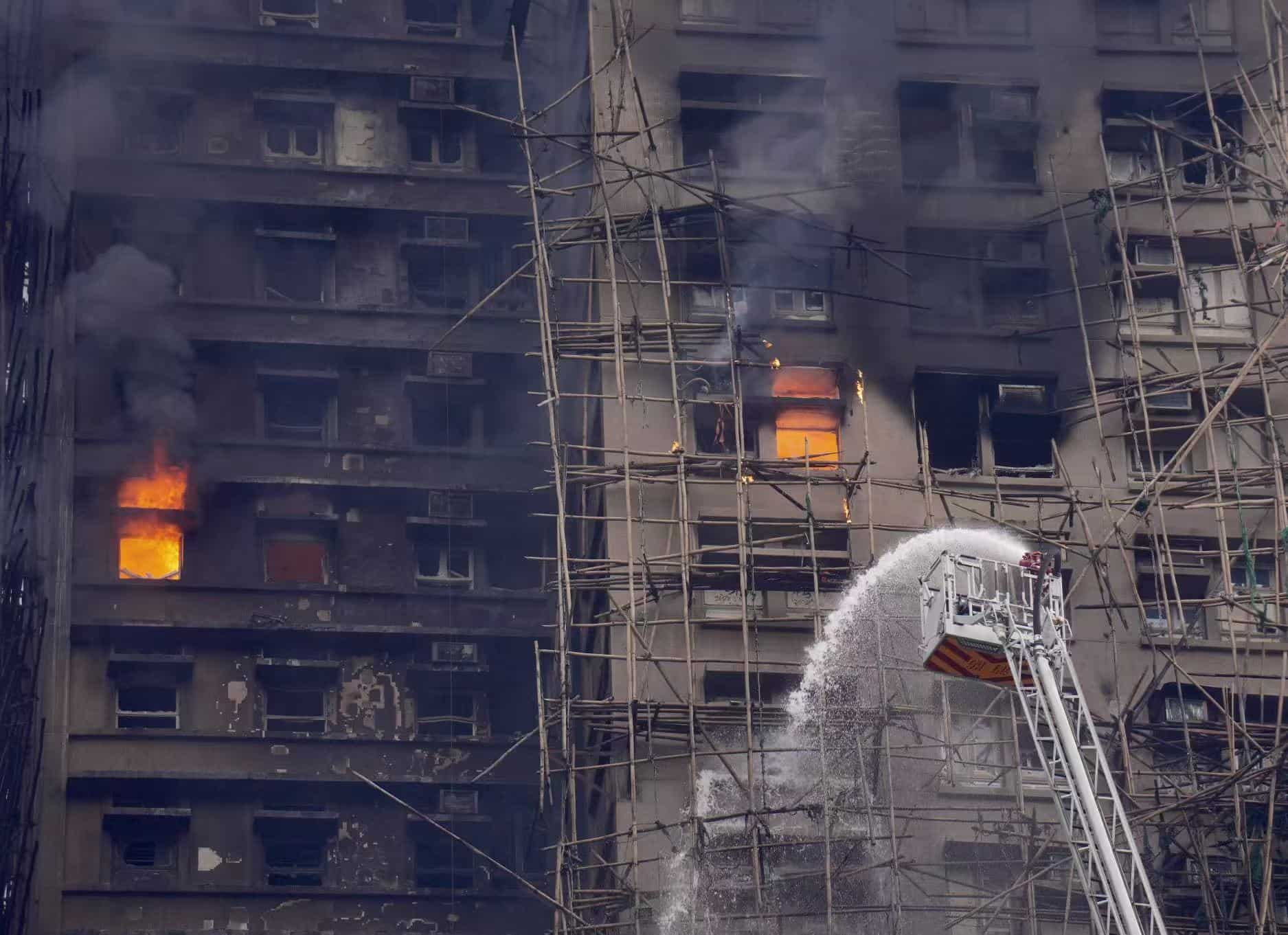
Since many of these materials are flammable, the Buildings Department requires them to be made flame-retardant — a process achieved either by adding fire-resistant substances during manufacturing or by applying treatments including spraying or immersion to ensure they self-extinguish if ignited.
However, Ho said that such materials have been involved in many previous incidents, adding that there is no regular regulatory review mechanism to ensure all materials are in compliance. Even if materials initially meet standards, he explained, damage or aging can reduce their flame-retardant effectiveness.
READ MORE: Companies donate supplies to Tai Po blaze victims
He also suggested that negligent site management could have also contributed to creating the conditions that would accelerate the blaze, noting that construction debris accumulated at the site could have intensified the fire. With Hong Kong entering the winter season — a period of lower humidity and drier air — Ho said that contractors must enforce strict fire prevention measures, including measures to prevent smoking where necessary.

Chau Sze-kit, chairman of the Hong Kong Construction Industry Employees General Union, earlier also told the media that the incident revealed loopholes in site management, particularly concerning the clearance of debris and the supervision of thermal work. He stated that when performing thermal work, sites should adopt additional fire prevention measures, such as moisturizing the protective netting and the scaffolding, removing flammable materials, and deploying adequate firefighting equipment on site.
Aside from the fire safety of the building materials, Lee Kwong-sing, president of the Hong Kong Institute of Safety Practitioner, told China Daily that he believes a fundamental solution would be to introduce an accountability mechanism for construction design and management from a legislative perspective.
The Wang Fuk Court renovation project was flawed from its design phase, with safety factors for the entire site — including the safety needs of residents and workers — not having been adequately considered, Lee said.
Overseas, in countries like the UK and Singapore, such regulations are already quite comprehensive, with clear stipulations about the responsibilities of designers, engineers, and main contractors in place. When accidents occur, assigning accountability — including criminal liability — is straightforward, he said.
"Hong Kong has already fallen behind," he said, adding that legislation is needed promptly.
As legislation takes time, though, he suggested that the Buildings Department, which oversees all registered contractors, should first issue an internal disciplinary code, which would impose severe penalties on contractors who fail to rectify violations in a timely manner.
Contact the writer at amberwu@chinadailyhk.com
