

Hong Kong-based NGO Shell to Sea aims to recycle over a metric ton of discarded seashells it has collected and stored by the end of this year, according to its founder.
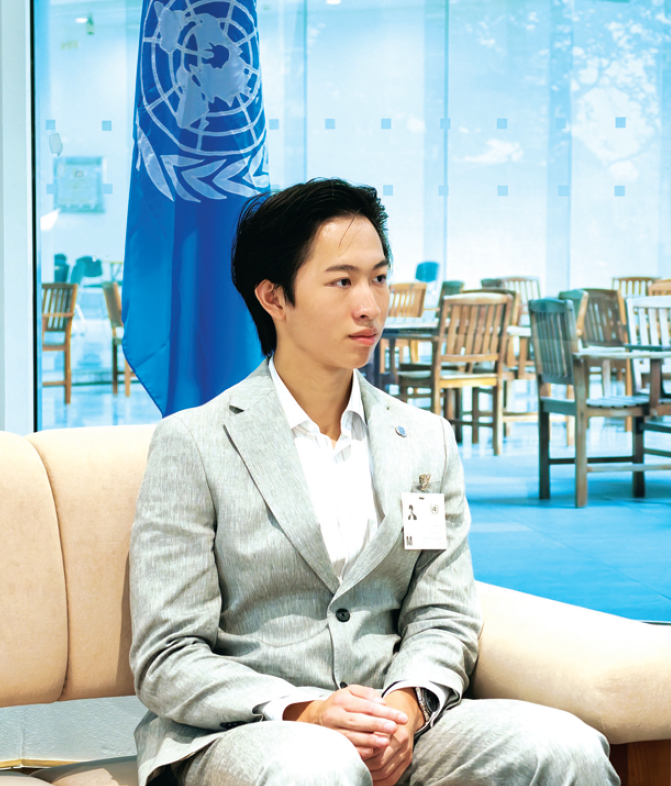
Guided by the belief that seashells belong in the ocean rather than landfills, 16-year-old marine advocate Cameron Ng, who currently studies at the Chinese International School in Hong Kong, shared the project’s progress at the World Future Intelligence Forum 2026 in Bangkok, Thailand.
Organized by the Global ESG Leadership Organization, a signatory to the United Nations-supported Principles for Responsible Investment, the two-day event, held earlier in November, is an annual forum gathering global leaders for high-level dialogue on artificial intelligence; environmental, social and governance (ESG); education transformation; and capital reallocation.
“Conserving and protecting our oceans is a very important priority, especially with global warming, climate change, and the increasing threats to our environment,” Ng said. “I believe that all young people should start advocating and supporting different causes around the globe to help combat this issue and make our planet a much more sustainable place.”
After delivering his speech at the forum, Ng was honored with the Youth Changemaker Award in recognition of his leadership in marine circularity.
Established four years ago, Shell to Sea was inspired by a school chemistry experiment where Ng learned that calcium carbonate neutralizes acid. As a marine enthusiast, he applied this knowledge to combat ocean acidification.
ALSO READ: HK’s Harris Ho clinches historic fencing gold at Youth Olympic Games
Knowing that shells are composed of roughly 94 to 96 percent calcium carbonate, Ng began to explore the practicability of using them to help reduce ocean acidification on a major scale and was eventually motivated to set up an NGO aiming to restore the ocean ecosystem while reducing the number of shells being discarded in landfills.
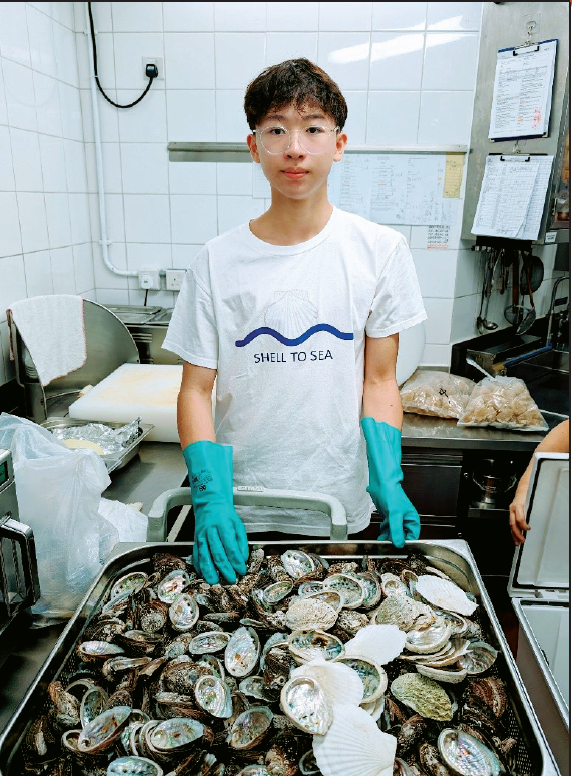
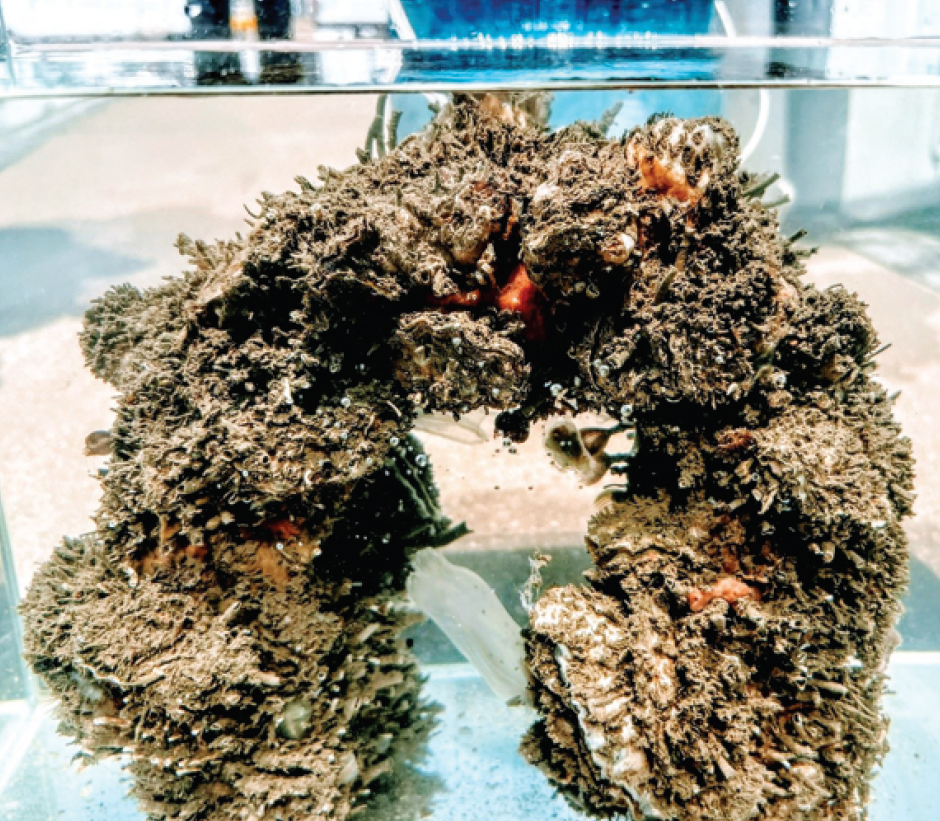
Shell to Sea collects and cleans discarded seashells before grinding them into powder and returning them to the sea directly or transforming them into artificial reefs that are then placed in the ocean.
The dissolving calcium carbonate helps to neutralize seawater acidity, while the arch-shaped reefs serve as habitats for marine life that aid ecosystem restoration.
Ocean acidification refers to the increasing acidity of seawater amplified by human activities like fossil fuel burning and land-use changes. The ocean absorbs about 30 percent of the carbon dioxide produced by these emissions, which alters seawater acidity and lowers its pH value, according to a report from the United Nations Educational, Scientific and Cultural Organization.
Since the late 1980s, 95 percent of open ocean surface water has become more acidic, which threatens the marine ecosystem, including sea creatures and people who depend on marine and coastal biodiversity for their livelihoods, according to the International Atomic Energy Agency.
During early testing of the artificial reefs, Ng was surprised by how quickly nature responded. Within just six months, significant growth was visible, with a wide variety of marine organisms colonizing the structures.
“That brought me a lot of satisfaction and joy to see that my arch was working and promoting marine biodiversity,” Ng recalled.
By partnering with local restaurants and organizing volunteers, Shell to Sea has diverted more than a ton of shellfish waste — including clam and abalone shells — from the food and beverage industry.
As a teen organizer, Ng learned how to earn credibility for his NGO by taking a step-by-step approach to striking up partnerships with restaurants so that he can recycle seashells more efficiently.
“As we are teenagers, we might not be immediately taken so seriously,”
Ng said. “Therefore we have to prove that we are serious about what we do, we are dependable and we will be a good partner who keeps our word.”
Shell to Sea now collaborates with a variety of local restaurants, major hospitality brands including Island Shangri-La, Hong Kong, Kowloon Shangri-La, Hong Kong, Conrad Hong Kong, Hong Kong Gold Coast Hotel, and The Fullerton Ocean Park Hotel Hong Kong, as well as Lei Yue Mun community, a historic local seafood district located in Kwun Tong.
Beyond industry partnerships, Shell to Sea actively engages with the education sector. Ng collaborates with local schools to recruit volunteers, conduct workshops on ocean conservation, and test artificial reefs under the supervision of university professors.
“Shell to Sea should be able to involve the local community, engage schools and students to promote education and develop future leaders, as well as to do environmental action such as returning the shells to the ocean,” he said.
Meanwhile, Ng is working to diversify reef designs. In collaboration with the World Wide Fund for Nature-Hong Kong, the team has developed “coral cookies” — small, circular discs made from compressed shell powder designed to cultivate live corals.
While calling it a “very aggressive” goal, Ng aims to achieve zero shell waste in Hong Kong. “That would take a lot of work, persistence and time,” he said. “But I believe that eventually, that will be attainable one day. It is a large stretch and is a huge goal that I hope to achieve.”
Looking ahead, Ng hopes to introduce Shell to Sea’s artificial reefs to neighboring regions, including Singapore, Malaysia, and Indonesia, with the program eventually going global. He also looks forward to partnering with marine scientists and conservation practitioners to support their ongoing research and conservation efforts.
