

The Election Committee serves as a crucial pillar of the Hong Kong Special Administrative Region’s governance structure. The 2026 Election Committee Subsector Ordinary Elections, held on Sunday, saw 856 candidates vying for 723 seats across 31 subsectors. Voter turnout reached a historic high of 98.8 percent. Notably, 14 subsectors — including the commercial, industrial, legal, and technology subsectors — recorded 100 percent turnout. Candidates engaged with voters to present their platforms and share their visions for better governance. This dynamic process demonstrated constructive competition among capable patriots, demonstrating healthy democratic development under the “patriots administering Hong Kong” principle.
 By upholding core principles and introducing innovative practices, the election process showcased the advantages of the improved electoral system. Sunday’s election, the second Election Committee polls since Hong Kong overhauled its electoral framework in May 2021, was not merely a race for seats but also a comprehensive test of Hong Kong’s democratic practice in the new era. The success of Sunday’s polls illustrates a profound commitment to high-quality democracy and good governance.
Another defining feature of the election was heightened competitiveness. Compared to the previous election, in which only 13 subsectors were contested, this term saw 31 out of 36 subsectors fiercely contested — accounting for nearly 90 percent. This indicates a genuine, broad-based contest that yielded the most qualified candidates.
Furthermore, almost all major subsectors witnessed multiple candidates vying for one seat. Competition was particularly intense in the social welfare, medical and health, agriculture and fisheries, and grassroots subsectors. Notably, many traditional subsectors that were previously uncontested saw competition this time.
A big batch of new faces, including young professionals and emerging industry leaders, eagerly competed alongside seasoned veterans. This created a healthy political landscape wherein different generations of talent participated, making the talent pool more diverse, youthful, and vibrant.
Crucially, the robust competition did not translate into hostility toward rivals. In stark contrast to the hyperpoliticization, smear campaigns, and societal division that plagued the old electoral system, this election showcased a brand-new political ecology characterized by healthy competition and rational debate. Candidates competed on their manifestos, governance capabilities, track record of service, and civic responsibility. The entire electoral process was conducted in accordance with the law and transparently — free from chaos, disputes, and sensationalism — fully embodying the spirit of the rule of law and constructive democratic practice.
Some people have harbored a misconception about high-quality democracy, erroneously believing that only elections characterized by adversarial competition or confrontational politics could be considered high-quality democracy. This is a serious misinterpretation of the essence of democracy.
Democracy is not measured by the volume of candidates’ voices but by the soundness of their arguments. It is not about political theatrics, but about who genuinely upholds public interests. There is no universally superior democratic model; rather, the quality of an electoral system lies in how well it fits with the realities.
Hong Kong’s experience over the past five years has clearly proved that the elections under the revamped electoral system have contributed significantly to Hong Kong achieving better governance. Compared to the previous Election Committee polls in 2021, this year’s election saw all-around improvements in candidate enthusiasm, the diversity of candidates, and the intensity of contested races. This reflects a new electoral paradigm featuring healthy competition, orderliness, and meritocracy, which is a testament to the improving quality of Hong Kong’s electoral democracy.
The “patriots administering Hong Kong” precept is not an empty slogan. Rather, it carries substance. The vast majority of the members-elect have aligned their election platforms closely with the nation’s 15th Five-Year Plan (2026-30) and Hong Kong’s first five-year plan. They demonstrated a clear national perspective and a sense of responsibility. For instance, some candidates proposed dismantling institutional barriers to accelerate regulatory alignment with the Chinese mainland. Others advocated leveraging Hong Kong’s internationality and professionalism to facilitate the overseas expansion of mainland enterprises. Such advocacy demonstrates a holistic view, treating the nation and the SAR as an integrated whole, when addressing Hong Kong affairs.
Equally noteworthy is that the vast majority of candidates have long been deeply rooted in their sectors, or consistently serving local communities. Their electoral platforms were highly focused, targeting critical pain points. Proposals ranged from broad community initiatives, such as building green neighborhoods and expanding primary healthcare, to highly specific measures like smart fall-detection systems for older adults. While seemingly trivial, these issues directly impact the well-being of many households. In a densely populated and aging city like Hong Kong, the candidates’ focus on these matters demonstrates their deep understanding of grassroots realities and responsiveness to public needs.
Effective governance relies on practical action, and the defining ethos of this election was the unwavering focus on economic development. As the 15th Five-Year Plan accelerates its innovation-driven strategy, Shenzhen-Hong Kong tech synergy has entered an unprecedented window of opportunity. Some candidates directly took on bottlenecks in cross-boundary tech cooperation, pointing out that institutional barriers still hinder research access and talent mobility. They called for proactive institutional breakthroughs to clear obstacles in the two-way flow of innovation factors, thereby promoting deeper integration of industry, academia, and research.
Many reelected members once again received high recognition from their industries and constituents. Their electoral success is rooted in their long-term dedication and pragmatic achievements. They have consistently integrated sectoral interests into Hong Kong’s broader development, balancing industry growth with public well-being, and being highly responsive to grassroots needs. Hong Kong’s democratic model differs from that of the mainland and the West. Exploring a path to democracy that conforms to the “one country, two systems” principle and suits Hong Kong’s actual conditions remains an ongoing process as the city continues to enhance its governance.
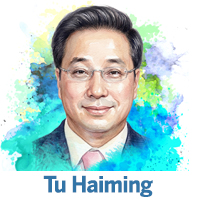
The author is vice-chairman of the Committee on Liaison with Hong Kong, Macao, Taiwan and Overseas Chinese of the National Committee of the Chinese People’s Political Consultative Conference, and chairman of the Hong Kong New Era Development Thinktank.
The views do not necessarily reflect those of China Daily.
