

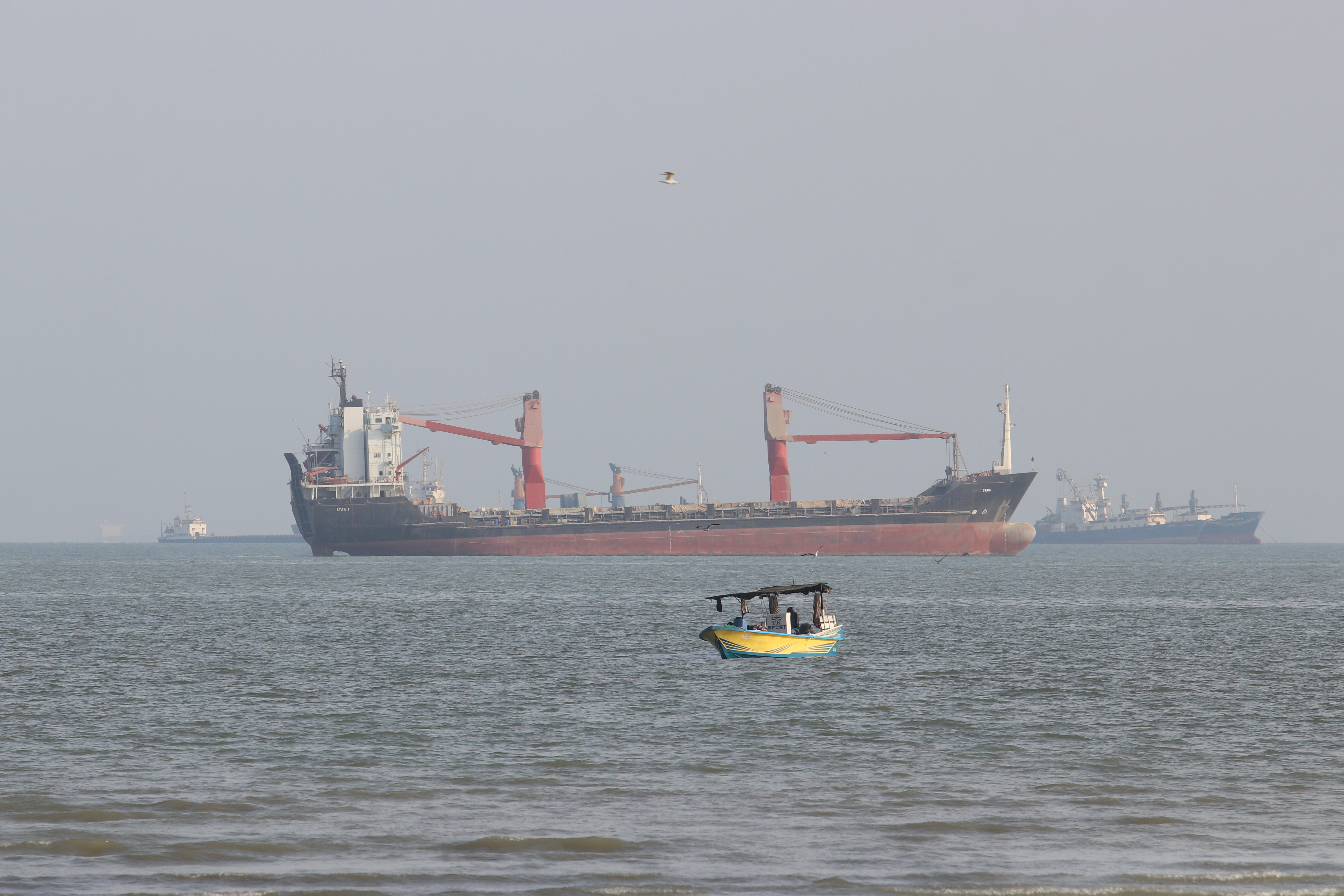
TEHRAN – The navy of Iran's Islamic Revolutionary Guard Corps (IRGC) announced Saturday that a second "violating" supertanker had exploded in the Strait of Hormuz after hitting a naval mine, hours after a similar incident involving another tanker.
In a statement published on the IRGC's official news outlet Sepah News, the navy said the blast occurred on Saturday morning, causing a "huge" fire on the vessel, which was carrying over 2 million barrels of crude oil.
It said the oil tanker had turned off its GPS and radar systems and was seeking to cross the waterway through an "illegal" route, adding that the explosion occurred in the vessel's engine room and brought it to a halt.
ALSO READ: Iran's Navy: 'Violating' oil tanker caught fire east of Hormuz
Earlier in the day, the IRGC Navy said another "violating" supertanker seeking to transit the strait through an "unauthorized" route had suffered a "huge" explosion after hitting a naval mine.
It added that the explosion resulted in a "massive" fire on the oil tanker, which had turned off its GPS and radar systems and was carrying more than 2 million barrels of crude oil.
Iran tightened its grip on the Strait of Hormuz on Feb 28, barring safe passage of vessels belonging to or affiliated with Israel and the United States following their joint strikes on Iranian territory.
Araghchi: Tehran ready for dialogue
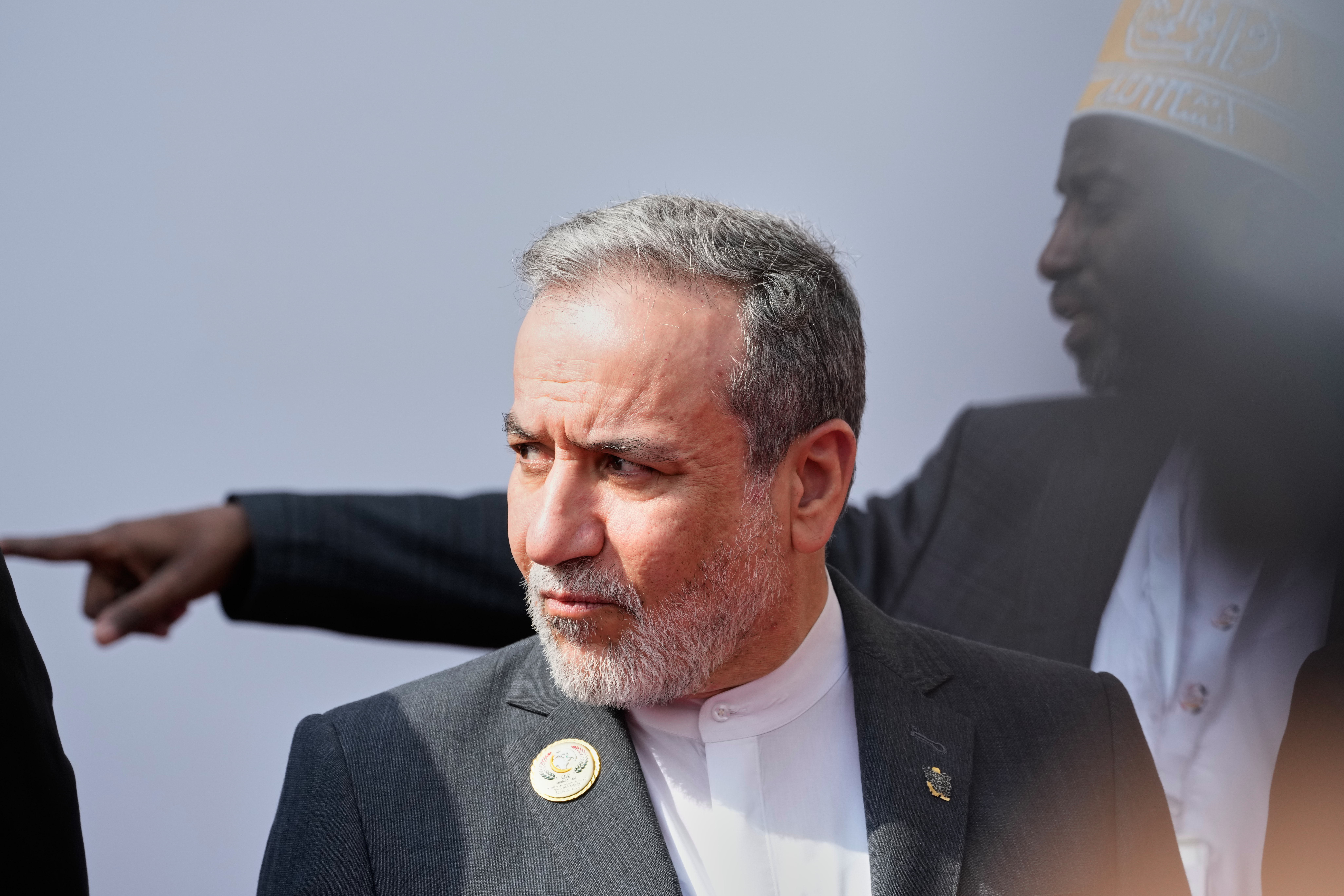
Meanwhile, Iran's Foreign Minister Seyed Abbas Araghchi said Saturday that his country will not surrender its sovereign rights under pressure, but remains "ready for dialogue based on mutual respect and credible guarantees."
Araghchi made the remarks at the 52nd Session of the Council of Foreign Ministers of the Organization of Islamic Cooperation in the Iraqi capital Baghdad, according to a statement by the Iranian Foreign Ministry.
"Iran does not accept coercion, threats or intimidation," he said.
Araghchi reaffirmed Iran's commitment to safe and secure navigation in the Strait of Hormuz, noting the waterway was open before the United States and Israel attacked Iran on Feb 28.
He said Iran has conveyed a "concrete" seven-day plan to the United States through Qatar, under which, if the necessary conditions are met, the strait could be reopened within seven days.
"The choice now rests with the United States," the minister added.
Araghchi stressed that Iran will continue to defend its people, sovereignty and legitimate interests by any means, and that it has never attacked its neighbors, only the US military bases and installations in those states. He stressed that each regional state's territory, airspace and infrastructure should be used only to serve regional security and never as a platform for attacks on a neighbor.
"No state can build lasting security at the expense of the security of others," Araghchi said. "We believe the problems of our region are best resolved within the region, by its own states, before they become a pretext for the wars of distant powers."
READ MORE: Report: Iran's IRGC hit 7 ‘violating’ oilers in Hormuz Strait in 5 days
On Feb 28, Israel and the United States launched joint attacks on Tehran and other Iranian cities. Iran responded with waves of missile and drone attacks targeting Israel and US bases and assets in the region, and tightened its grip on the Strait of Hormuz.
A ceasefire was achieved between the warring parties on April 8. On June 18, Iran and the United States signed a memorandum of understanding (MoU) on ending the war in the region on all fronts.
Under the MoU, the two countries were scheduled to hold negotiations within 60 days, ending on Aug 17, to reach a final agreement on Iran's nuclear program and the removal of sanctions. However, they failed to make sufficient progress toward a deal as tensions continued to escalate.
Iran says border traffic, transactions with Pakistan temporarily suspended
Also on Saturday, Iranian Foreign Ministry spokesman Esmaeil Baghaei said that cross-border traffic and transactions between Iran and Pakistan have been temporarily suspended owing to technical problems.
"Owing to the occurrence of certain technical problems and the need to adopt precautionary measures, border traffic and transactions have been temporarily suspended," Baghaei said in an interview with the official news agency IRNA.
He added that authorities in both countries are in close contact and consulting to resolve the issue as soon as possible and restore normal operations at the border crossings.
