

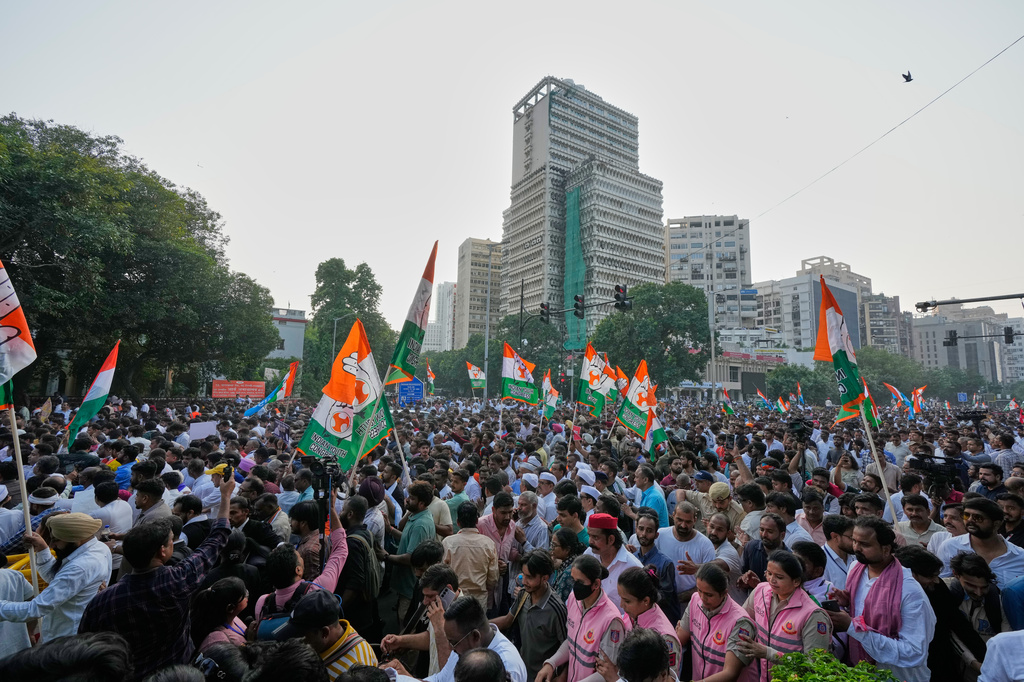
Leaders of India’s youth-led “Cockroach” movement were arrested early Wednesday, the first such move by authorities since protests erupted, in an escalation of tensions over a contentious overhaul of the country’s voter rolls.
Saurav Das, Ashutosh Ranka and Ajinkya Shinde face allegations including trespassing, violating bond conditions and obstructing public officials, the party’s lawyer Ratna Singh said in a post on X. They were taken into custody on Tuesday after jumping barricades to enter Jantar Mantar, a historic protest venue that authorities recently removed from New Delhi’s list of designated demonstration sites.
The three are expected to appear before a magistrate Wednesday, Singh said.
Their arrest comes as legal challenges mount over the voter-roll dispute. India’s opposition bloc, CJP and student unions have held demonstrations mainly in Delhi for several days now, demanding that the voter-roll exercise be halted and Chief Election Commissioner Gyanesh Kumar resign.
Scrutiny of the exercise intensified in late September after the Indian Express newspaper reported that two election commissioners raised objections about the process at least 14 times over a 10-month period. The Election Commission has denied allegations of wrongdoing.
ALSO READ: India detains top 'cockroach' leaders after flash protest
India’s opposition parties have also asked the Supreme Court to halt the revision. The court is expected to take up the challenge Thursday, alongside cases concerning protest restrictions, detentions and alleged police excesses.
The issue is drawing support from farmers’ groups too. Samyukt Kisan Morcha, a coalition of farmers’ organizations, announced nationwide demonstrations on Oct 23 at district and subdistrict levels.
Meanwhile, Delhi police have sought to keep additional armed forces deployed in the capital until Oct 20, citing the risk of further protests, according to local media.
The latest dispute adds to the challenges facing the government of Prime Minister Narendra Modi after thousands of students took to the streets in July over exam irregularities, culminating in the education minister’s resignation.
The unrest also comes at a difficult moment for the economy, with the government seeking to bolster investor confidence and boost growth. Indian equities have slumped, while the rupee is among Asia’s worst-performing currencies this year.
Modi hasn’t publicly commented on the protests. His Bharatiya Janata Party has defended the voter-roll revision and accused opposition parties of attempting to undermine democratic institutions.
On Tuesday, Modi told the Bloomberg New Economy Forum in New Delhi that India was the “mother of democracy,” home to a freewheeling media landscape and hundreds of millions of YouTube and Instagram users who debate issues openly, without directly addressing the protests.
