

As philanthropy takes on greater weight across Asia, a larger question arises: How can private wealth be turned into public good more effectively? Asia does not lack philanthropic resources. What it still needs are better ways to direct them toward lasting social impact.
 That distinction matters because the region’s social needs are growing more complex even as wealth continues to rise and pass between generations. Aging populations, climate risk, pressure on public finances, and widening inequality all call for responses that cut across sectors. Philanthropy cannot meet these challenges on its own. It can still test new ideas, back early action, and help bring government, business, and civil society into closer cooperation.
A new report by the Commission on Asian Philanthropy shows the scale of the opening. The commission, a coalition of 13 leading philanthropic organizations, draws on jurisdictions representing about 70 percent of Asia’s population and 80 percent of its GDP. It estimates domestic giving across the region at $109 billion in 2024. One finding stands out: Mass individual giving accounts for half that total, while giving by ultra-high-net-worth individuals amounts to just $4 billion, or under 4 percent. This should not be read as a rebuke to Asia’s wealthiest individuals. Many already give with seriousness and purpose. Even so, the figures point to large, untapped potential, and to a need for trusted institutions, credible projects, and practical vehicles through which private wealth can do more social good.
The Hong Kong Special Administrative Region is well placed to help meet that need. Its opening is to build on the strengths that have made it a leading international financial center, from capital mobilization and wealth management to professional services, trusted institutions, common law foundations, and global connectivity, and carry those strengths into a fuller philanthropy ecosystem. The city starts from a position of real strength. Its assets under management reached HK$42.2 trillion ($5.38 trillion) in 2025, and it is home to more than 3,380 single-family offices. Those figures show Hong Kong’s depth as a center for private wealth. The next step is to turn more of that strength into leadership in impact. This is why philanthropy should become a more central part of Hong Kong’s family office proposition. Family offices are no longer focused only on investment returns. They are increasingly asked to help families think through succession, governance, reputation, shared values, and long-term legacy. Philanthropy can tie these aims together.
There is already a policy base on which to build. The SAR government’s 2023 policy statement on family offices included measures to encourage philanthropy, and the 2025 Policy Address introduced a funding program to encourage philanthropic family offices to support disadvantaged groups. Approved donations to eligible charities also receive tax deductions. The direction is clear. What is needed now is better connection between these measures and a clearer path for families that want to give with purpose. One practical step would be for FamilyOfficeHK to offer a dedicated philanthropy and impact pathway alongside its existing support for investment, tax, and succession planning. That could include a “philanthropy readiness” service to help families define goals, set governance arrangements, gauge risk appetite, and think through how results should be assessed. It could also connect them to credible charities, co-funding openings, and independent professional advice.
Such support would be especially useful for families that have the means and the intent to give, but lack the time or experience to shape an effective strategy. Unlocking the potential signaled by the commission will take more than just urging wealthy people to donate. It will mean making purposeful giving easier to plan and carry through over time.
Hong Kong’s financial know-how can also help philanthropy move beyond standard grantmaking. Some social and environmental challenges call for patient, flexible capital, whether through guarantees, concessional finance, recoverable grants, or investments that accept lower financial returns in return for clear social benefit. Used well, these tools can reduce risk and help promising models reach a scale that ordinary grants often cannot.
Another pillar should be deeper connectivity with the mainland. Hong Kong could support a structured philanthropic exchange beginning in the Guangdong-Hong Kong-Macao Greater Bay Area and widening over time to other regions. This could bring together foundations, social organizations, universities, hospitals, family offices, and relevant public bodies for reciprocal exchanges and joint projects.
This is also where Hong Kong’s philanthropy ambitions meet national development. As the nation advances Chinese modernization, common prosperity, high-standard opening-up, and the growth of the Greater Bay Area, Hong Kong can help mobilize private resources and international expertise in support of those goals. Philanthropy can complement public policy by taking carefully governed risks, backing experimentation, and building partnerships that can later be expanded.
Nor should Hong Kong overlook its own philanthropic inheritance. Institutions such as the Tung Wah Group of Hospitals, Po Leung Kuk, and Lok Sin Tong show that organized giving has long played a part in the city’s social development. The task now is to join that tradition to Hong Kong’s modern financial and professional strengths.
The real ambition should be larger than attracting more family offices or administering more charitable funds. It should be to make Hong Kong a place where wealth, expertise, and public purpose are brought together smoothly, and where Asian philanthropy can engage both the mainland and the wider world. If Hong Kong can do that, it will strengthen its edge as an international financial center while making a distinct contribution to national and regional development.
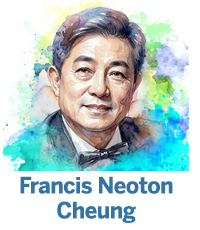
The author is chairman of Doctoral Exchange, a Hong Kong-based think tank.
The views do not necessarily reflect those of China Daily.
