

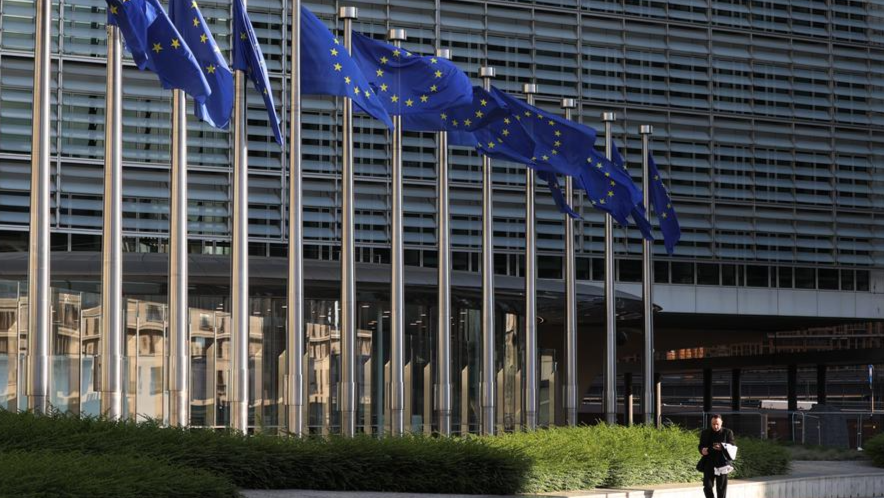
The European Union warned its member states about a potential energy price crisis driven by the Middle East conflict, asking them to consider measures to cut demand and to continue filling gas storage ahead of winter.
In a letter to energy ministers in the 27-nation bloc, EU Energy Commission Dan Jorgensen said the region’s dependence on imported fossil fuels exposed it turmoil in energy markets and called on national governments to urgently prepare for the heating season.
“We are facing a price crisis linking to a supply crisis,” Jorgensen wrote in the letter, which was seen by Bloomberg News on Saturday.
The European Commission wasn’t immediately available to comment.
European gas prices have more than doubled since the start of the US-led war on Iran in late February, reaching their highest level since late 2022 earlier this month. Rising costs have been elevated to the top of the EU’s political agenda, with companies across the bloc blaming them for undermining Europe’s competitiveness. Governments have come under pressure to do more to support voters squeezed by ballooning bills.
ALSO READ: Moscow: EU leaders plunging Europe into crisis by rejecting Russian energy
Gas stockpiling has been particularly difficult this year because the Middle East conflict has driven up near-term prices relative to winter contracts, making summer supply injections economically less viable. The region’s facilities are just over 70 percent full, compared with a seasonal norm of 86 percent for this time of year.
EU rules allow for a 10 percentage point deviation from the goal of filling facilities to 90 percent ahead of the heating season. A further five percentage point flexibility can be used in the event of unfavorable market conditions.
“Making use of the flexibility provided by the Gas Storage Regulation and reducing the filling target to 80 percent can help alleviate immediate pressure on prices and refilling costs,” Jorgensen said. “However, and where relevant, I invite you to consider taking or continuing to take measures that can sustain injections or reduce gas and electricity demand for as long as necessary.”
