

Generative AI revolution cannot come at the cost of hindering human innovation
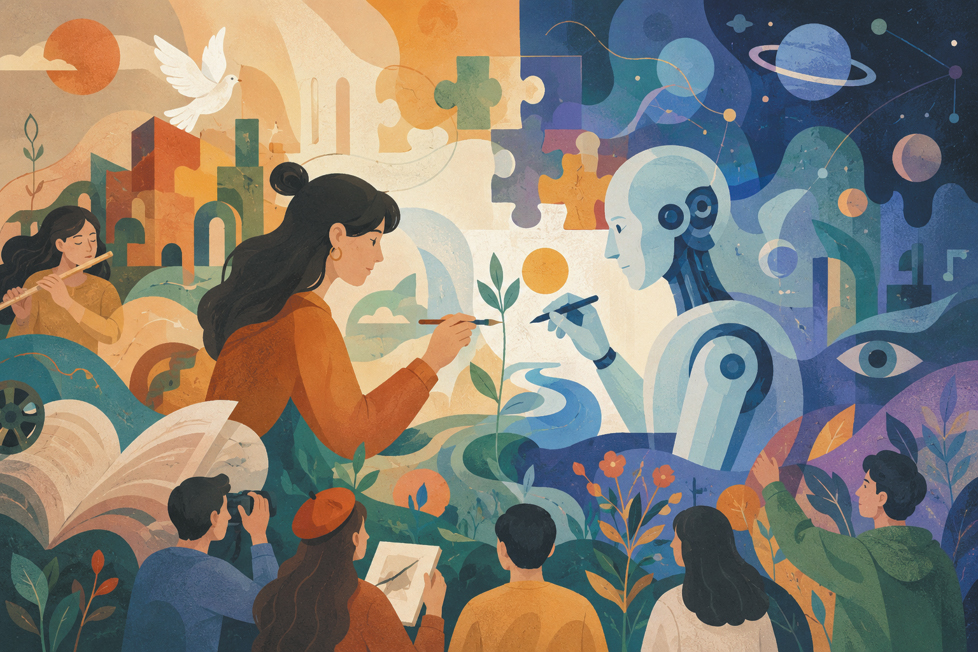
In July, a German court delivered a landmark ruling on a question at the heart of the generative artificial intelligence (GenAI) boom: Can AI companies use copyrighted works to train their models without the creators’ permission?
The case involved AI music-generation platform Suno and Germany’s GEMA, which represents music creators. On July 31, the Munich Regional Court largely ruled in GEMA’s favor, finding that Suno had infringed copyright by using six musical works from GEMA’s repertoire to train its AI models. The ruling prohibited Suno from reproducing the works for model training and ordered it to provide information and pay damages for several works.
Significantly, the ruling shifts the debate over AI and copyright from style imitation to a deeper issue: whether copyrighted works can be training data without authorization or compensation.
AI presents a challenge that is simultaneously technical, social, and political. The copyright framework was built for an analog world, where humans created content and territoriality provided a coherent organizing principle.
AI, however, deepens tensions already present in the digital environment over artist remuneration and transparency in the use of protected content, as AI companies can make immense commercial gain from using it, while leaving rights holders without compensation.
This disregard for copyright leaves authors in a precarious position, undermining the incentives that sustain human creative production and simultaneously exposing them to massive competition from synthetic content, as we are already witnessing in music streaming services.
GenAI as currently structured is a mechanism for transferring value and income from the creative sectors of all countries to a handful of AI companies, a particularly concerning risk for developing countries and their vibrant cultural production.
Despite the disruption posed by AI, copyright history shows that debates over protecting creators’ rights in the face of new technologies are nothing new. With the arrival of each new technology, such as phonograms, radio, and television, international copyright law was updated to cope with the new developments.
While the WIPO Copyright Treaty and WIPO Performances and Phonograms Treaty were negotiated in reaction to the changes brought by the internet, they lack the flexibility to adapt to the contemporary digital landscape.
Fundamental issues such as transparency and fair remuneration for using copyrighted content remain unresolved for streaming services, let alone GenAI.
The principle of technology neutrality holds that existing copyright rules apply to GenAI, including the right of reproduction. But this does not mean that shifts in how protected content is used and managed under GenAI do not require minimum international safeguards. Such safeguards would encourage countries to adopt legal regimes that balance protecting authors and fostering innovation by AI companies.
Despite the urgent need to update the regulatory framework to ensure effective copyright in the face of GenAI, there is a concerning lack of action from the World Intellectual Property Organization.
Whether this stems from pressure from countries opposed to the topic or from actions that fail to address fundamental issues at the core of AI and copyright, WIPO has yet to fully address some unresolved issues at the intersection of copyright and AI.
WIPO initiatives such as the “AI Infrastructure Interchange” have discussed the infrastructure underpinning copyright, overlooking basic questions such as how creators will know if their content has been used and how they will be remunerated for it.
Against this backdrop, platforms such as the World Artificial Intelligence Cooperation Organization have emerged as a strategic alternative for discussing GenAI and copyright. This is particularly relevant for strengthening partnerships among Global South nations, which share historical and social aspects and can potentially build markets and business models that foster a positive relationship between the creative and technological sectors.
We must not wait endlessly for something that never comes, trapped in circular conversations and the perpetual promise that actions will come “tomorrow”, all the while the digital economy advances, indifferent to the interests of the creators who define our humanity.
International copyright law must ensure the sustainability of works born of human ingenuity while providing AI developers with a regulatory framework that preserves mankind’s creativity and cultural diversity as core elements. Reconciling those demands will shape not only the future of intellectual property but society’s participation in the knowledge economy.
The author is the Secretary of Copyright and Intellectual Rights in Brazil’s Ministry of Culture.
The views do not necessarily reflect those of China Daily.
