

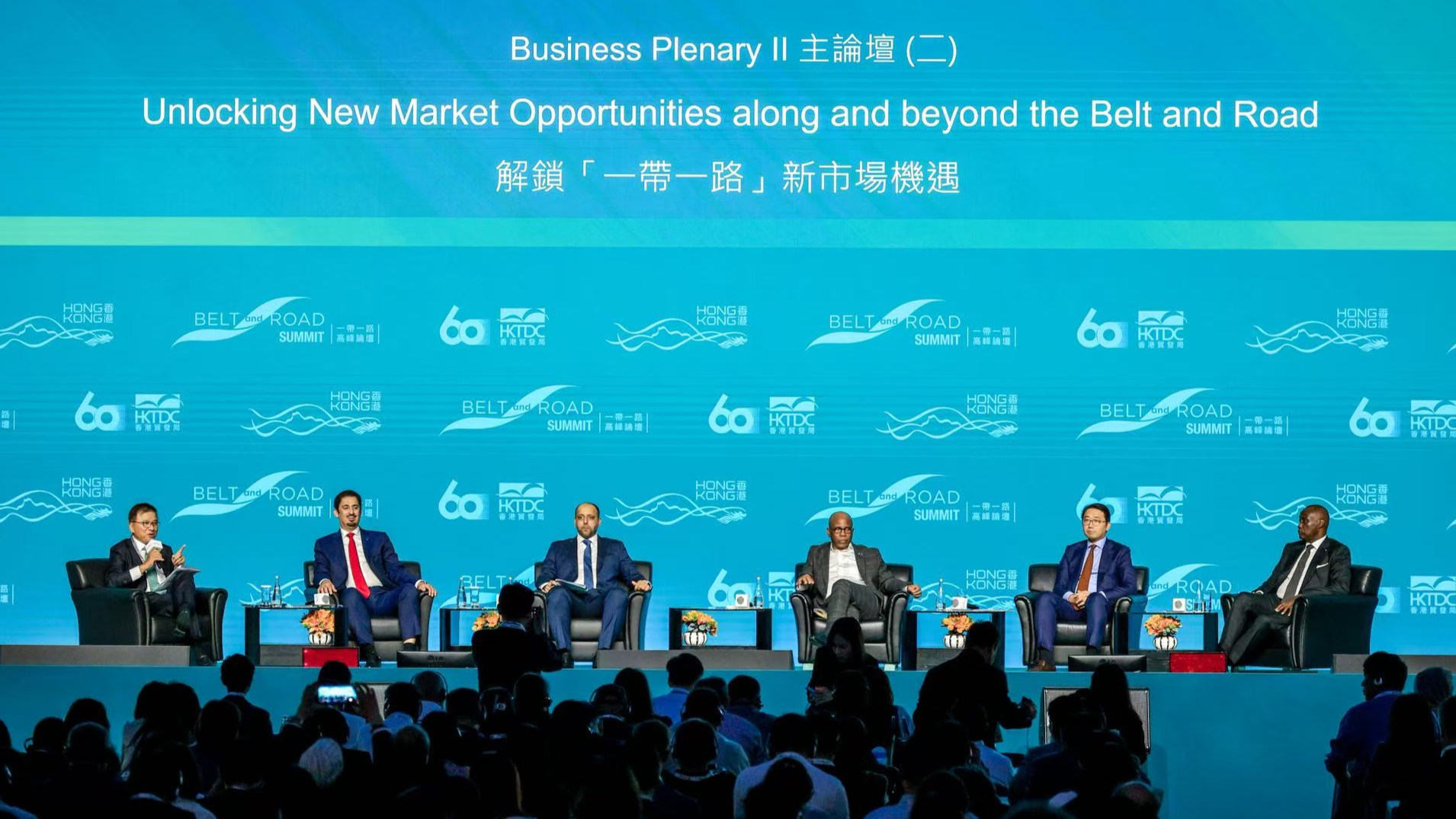
Chinese mainland enterprises, Hong Kong service providers and international markets are forging a dynamic tripartite collaboration which is set for unprecedented success.
Mainland companies are leveraging the Special Administrative Region’s professional services platform to take advantage of emerging business and investment opportunities in Belt and Road countries, especially in Africa and the Middle East.
Government officials and business leaders made their remarks at the second day of the 11th Belt and Road Summit organized by the Hong Kong Special Administrative Region government and Hong Kong Trade Development Council (HKTDC) on Thursday.
The Hong Kong SAR’s Secretary for Commerce and Economic Development Algernon Yau Ying-wah said it is an important strategy mainland companies to embark overseas business expansion to diversify risks, strengthen resilience and pursue new growth opportunities amid shifting geopolitics, rising trade protectionism and the reshaping of global supply chains.
ALSO READ: Belt and Road Summit to see over 60 pacts sealed
“By doing so, ‘go global’ enterprises can bring advanced technologies, investment capital, and quality job opportunities to overseas markets, driving regional economic cooperation and achieving a triple-win outcome for the mainland, Hong Kong, and overseas economies,” Yau said at the summit’s thematic breakout session themed: “Chinese Mainland Enterprises Going Global: Driving Mutual Growth Across Belt and Road Economies”.
The GoGlobal Task Force (Task Force on Supporting Mainland Enterprises in Going Global) was set up by the government last year to provide mainland enterprises with one-stop tailored services. Yau said that since the establishment of the task force, it has assisted over 300 mainland enterprises in setting up or expanding businesses in the special administrative region.
The SAR’s commerce chief added: “First, we attract enterprises with strong growth potential to Hong Kong; second, leveraging our strengths in professional services, we help them set up international corporate structures and meet regulatory requirements for seamless international expansion; and finally, we support them in establishing a presence overseas.”
READ MORE: Belt and Road Summit points to HK’s next chapter of connectivity
“Going forward, the Hong Kong SAR government will continue to step up its ‘go global’ efforts and strengthen the two-way investment flow between Belt and Road economies and Hong Kong,” Yau noted.
The HKTDC surveyed 2,015 Chinese mainland enterprises this year. The survey found that 82 percent of the respondents are considering expanding current business and another 63 percent are looking to explore new business, with the Association of Southeast Asian Nations the top destination for embarking on overseas business expansion.
Mainland companies are looking for opportunities beyond market expansion, the survey found. They are looking for opportunities in supply-chain integration in which procurement as well as scientific and technological research and development/collaboration are their top concerns.
As a result, 83 percent of the interviewed mainland companies cited Hong Kong as the preferred service platform to get market sales information, legal compliance consultancy as well as financing and risk management advice.
ALSO READ: HK can become a bridgehead for Chinese AI going global
“Hong Kong is well positioned to support as the leading global expansion service platform. Plans for professional support services continue to grow as mainland enterprises coordinate with a strategy to supply-chain integration, cross-border investments, and high value-added activities,” said HKTDC Director of Research Bruce Pang.
At the business plenary session on the second day of the summit, government officials and business leaders from Africa and the Middle East highlighted that these two regions already both a consumption and a production market.
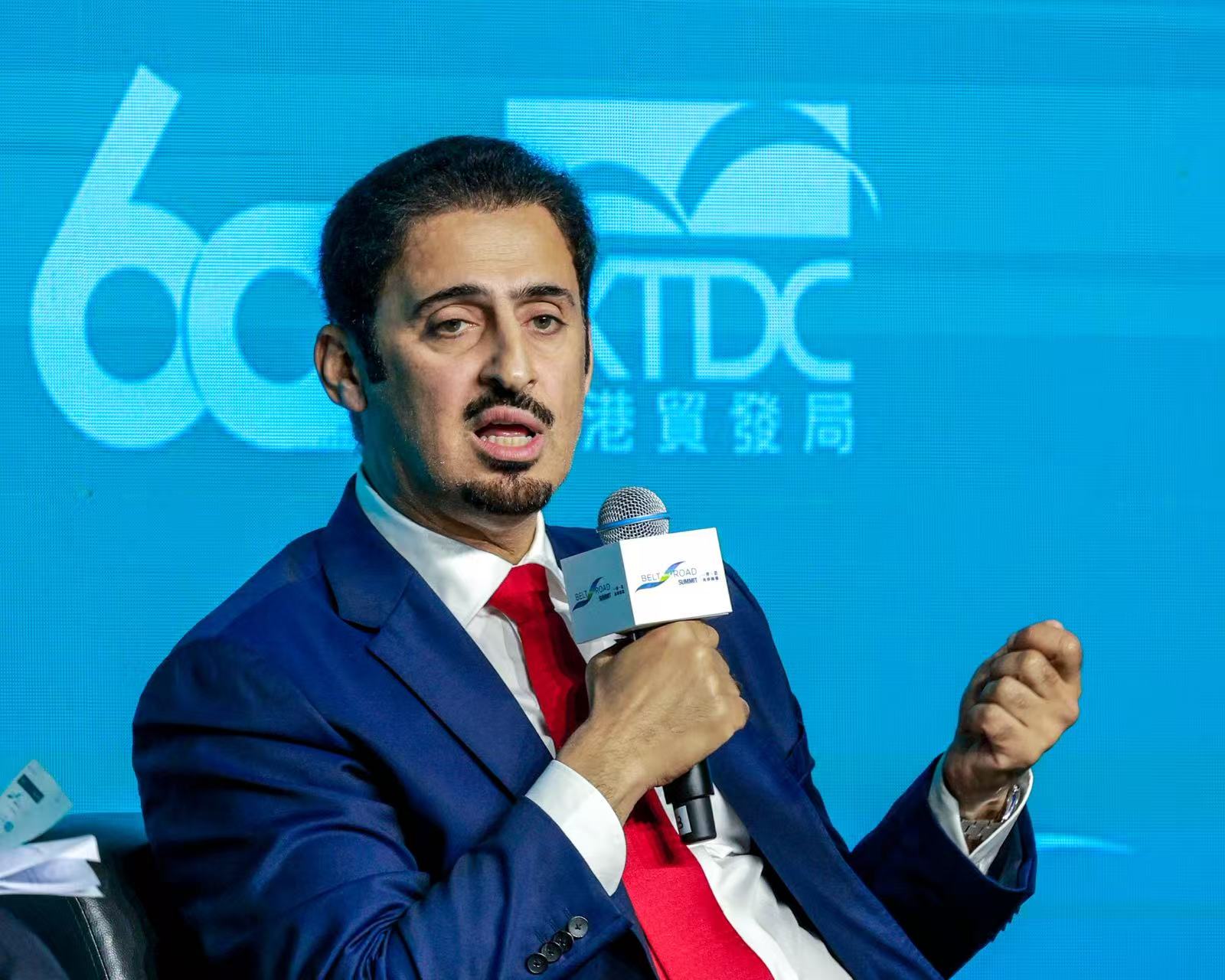
Mansoor Rashid Al-Khater, CEO of Qatar Financial Centre, said Qatar has transformed into a diversified economy empowered by technology and digitalization, therefore he does not want the Middle East to be shaped as an "energy supply region”. The CEO added that the region needs to develop as a global digital trade ecosystem, and different infrastructures should be coordinated to form a complete ecosystem.
“Africa is the market for energy and supply chain. It is not just a consumption market but also a production market. We are looking for all kinds of new corridors, as well as new kinds of value chains for connectivity and trade,” said Samaila Zubairu, president and CEO of Africa Finance Corporation.
READ MORE: Hong Kong’s Belt and Road opportunity is to become indispensable
“With Hong Kong being the financial center offering world-class professional services, the city is the perfect bridge, bridging the industrial capabilities of the Chinese mainland into the vast markets of the Middle East and Africa,” Templewater Hong Kong CEO and Founding Partner Cliff Zhang noted.
WeLab Bank Chairman Ceajer Chan Ka-keung said artificial intelligence and technology, new and green energy, as well as digital trade and supply chain are the most significant development and investment opportunities under the Belt and Road Initiative.
