

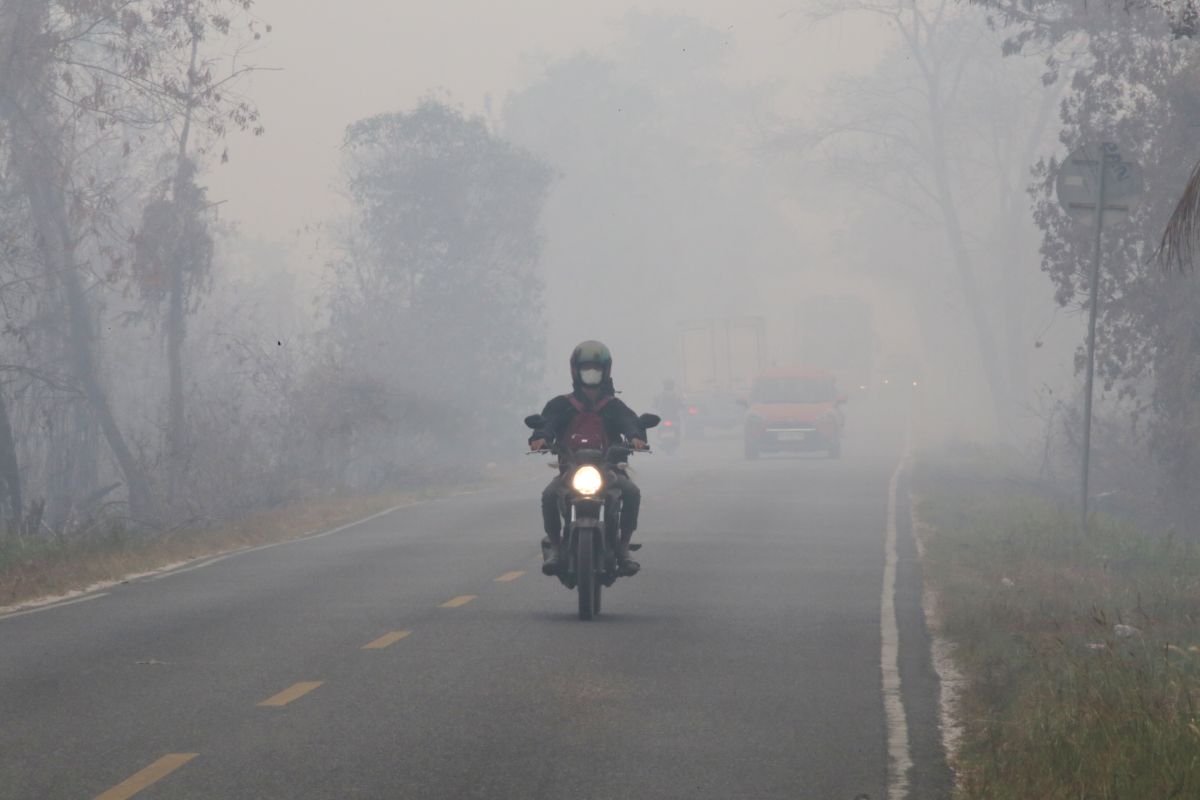
With El Nino intensifying drought, Southeast Asia's haze season is shaping up as a "red alert" year.
But the worsening haze demonstrates that this is no longer a seasonal irritant, analysts said. Rather, it highlights the need for members of the Association of Southeast Asian Nations to push for systemic solutions and demand accountability.
"The bigger question is whether ASEAN can move from cooperation during a crisis to accountability before a crisis," said Heng Kiah Chun, a regional campaign strategist for Greenpeace Southeast Asia.
He cited the ASEAN Agreement on Transboundary Haze Pollution, which was signed in 2002 to prevent and monitor haze from fires. The agreement requires member countries to monitor fires, share information and take action to control them.
But Heng said that the recurring haze shows that coordination alone has not eliminated the underlying problem.
"ASEAN does not lack mechanisms; it lacks sufficiently strong enforcement and accountability. We should not wait until the smoke crosses borders before governments act together," he told China Daily.
Indonesia, in particular, is under mounting pressure to act decisively on forest and peatland fires as haze once again blankets Southeast Asia. For example, Malaysia and Brunei have agreed to use the ASEAN mechanism to address the issue of transboundary haze. Malaysian Prime Minister Anwar Ibrahim said this was among the issues he discussed in his Aug 22 meeting with Brunei's Sultan Hassanal Bolkiah.
Helena Varkkey, an associate professor of political ecology at the University of Malaya in Kuala Lumpur, said Indonesia and other ASEAN countries "have always preferred diplomatic approaches, as it saves face all around".
Boy Jerry Even Sembiring, national executive director of the Indonesian Forum for the Environment, or WALHI, said the agreement on transboundary haze falls short of delivering on enforcement and sanctions, but warned that Jakarta will "face social pressure" from its neighbors regardless.
With a severe El Nino poised to intensify fires, Sembiring said that firm action is critical not only to safeguard Indonesia's diplomatic standing but also to uphold its citizens' right to a healthy environment.
Transboundary haze has long been a problem in Southeast Asia, and it is mostly caused by the slash-and-burn clearing for palm oil and pulp plantations in the Indonesian regions of Kalimantan and Sumatra.
Intensifying fires
The onset of a super El Nino this year is intensifying forest and peatland fires in Indonesia. Oka Karyanto, a senior lecturer on forestry at Gadjah Mada University in Yogyakarta, said that even intact peatlands catch fire during dry seasons when water levels can fall dramatically.
He noted that burning peat, including fires smoldering beneath the surface, produces dense smoke and is extremely difficult to extinguish.
Sesilia Ytu, a 30-something resident of Sukadamai village in West Kalimantan province, reported that people in her area, which is located in a vast oil palm plantation, now have to wear masks because of the haze.
Indonesian authorities have stepped up efforts through cloud seeding and water bombing. Indonesian police said Friday that 112 people had been named suspects in forest and land fire cases since January, while the government has suspended the licenses of five companies over fires in their concessions.
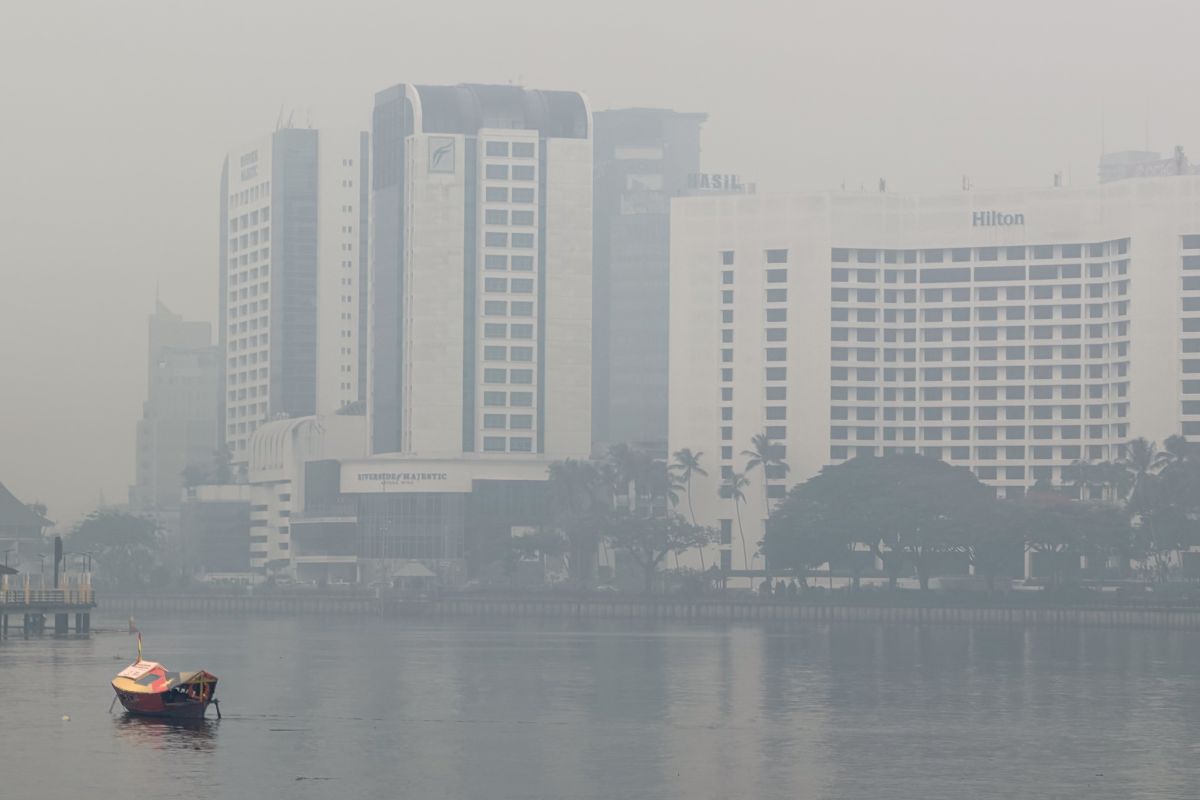
The haze has also spread to neighboring countries. Malaysia declared a state of emergency in Serian, Sarawak, on Friday after its air pollution index exceeded 500, while hazardous air quality was recorded in parts of the Philippines and Singapore.
The ASEAN Specialized Meteorological Center said in a report on Wednesday that moderate to dense transboundary smoke plumes were observed to cover parts of Borneo Island and the Philippines.
The center also forecast that the haze situation may remain elevated in areas experiencing prolonged dry weather, with a continued risk of severe transboundary haze occurrence.
Leonardus Jegho is a freelance journalist for China Daily.
Contact the writers at prime@chinadailyapac.com
