

The revamped Huanggang Port is set to open this month, marking a new chapter for cross-boundary travel and boosting integration and economic growth in the Greater Bay Area. Stacy Shi reports from Hong Kong.
Editor’s note: Driven by a shared vision for seamless regional integration, the new Huanggang Port introduces a landmark model for cross-boundary infrastructure. By combining innovative "vertical stacking" design with a single-checkpoint collaborative clearance system, it not only slashes crossing times between Hong Kong and Shenzhen, but also accelerates the flow of people and capital across the Guangdong-Hong Kong-Macao Greater Bay Area. China Daily presents this pivotal milestone in regional connectivity.
After seven years of construction, the countdown to the opening of the rebuilt Huanggang Port has finally begun, set to herald a new era and mark a turning point in cross-boundary travel between the Hong Kong Special Administrative Region and the Chinese mainland.
More than just an improved checkpoint, the redeveloped port linking the HKSAR and southern mainland technology powerhouse Shenzhen is an architectural marvel itself — a bold experiment in architectural and operational design that answers the urgent need for seamless passenger and vehicular flow between the two cities.
READ MORE: New Huanggang Port to aid single-document travel
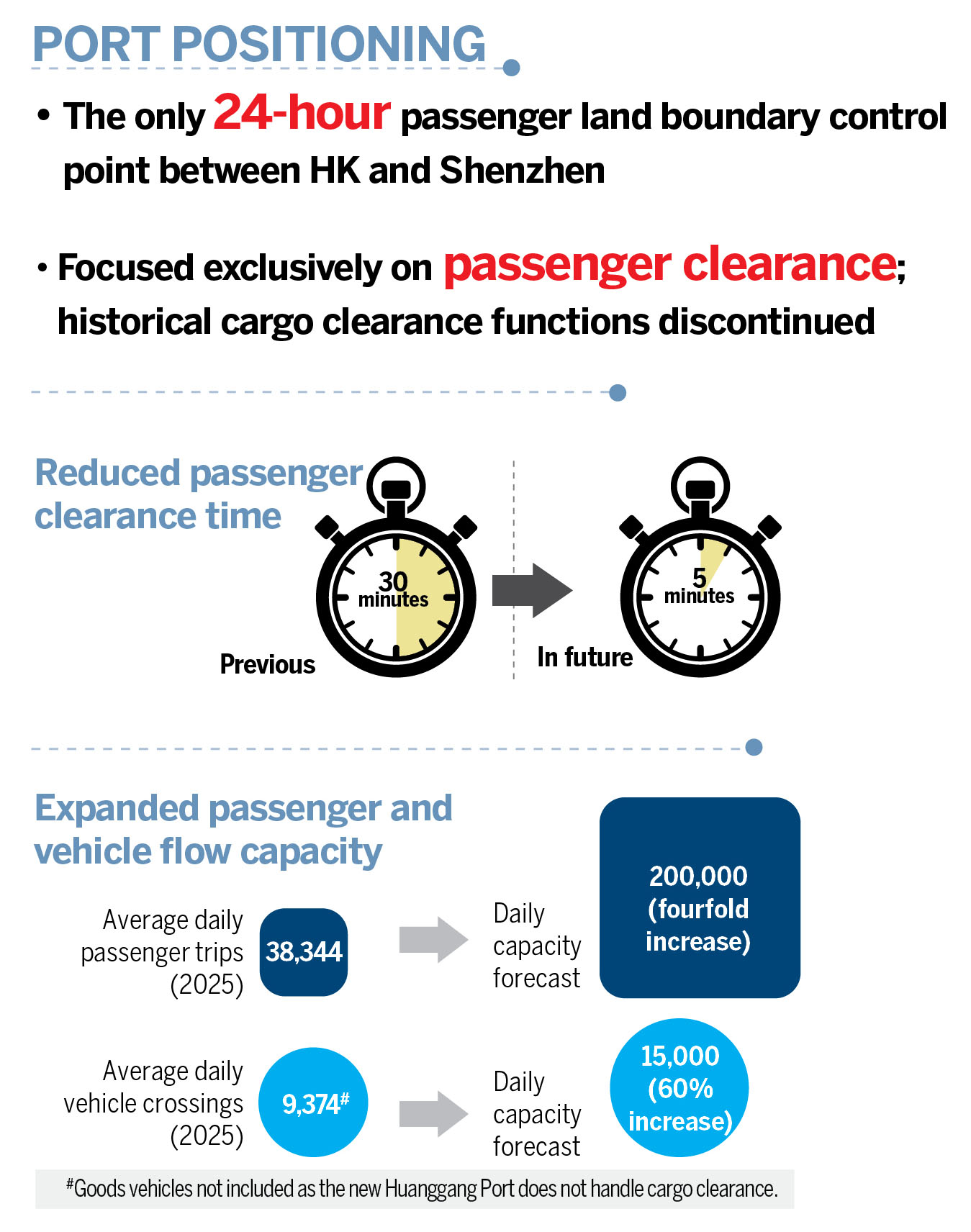
Once in operation, Huanggang Port will bring the tally of land crossings between Hong Kong and the mainland to 10 — seven road-based and three rail-based. As a key land boundary control point between the HKSAR and the mainland, the new facility will provide around-the-clock passenger clearance and will be the sole 24-hour land passenger crossing linking Hong Kong and Shenzhen.
Innovative layout
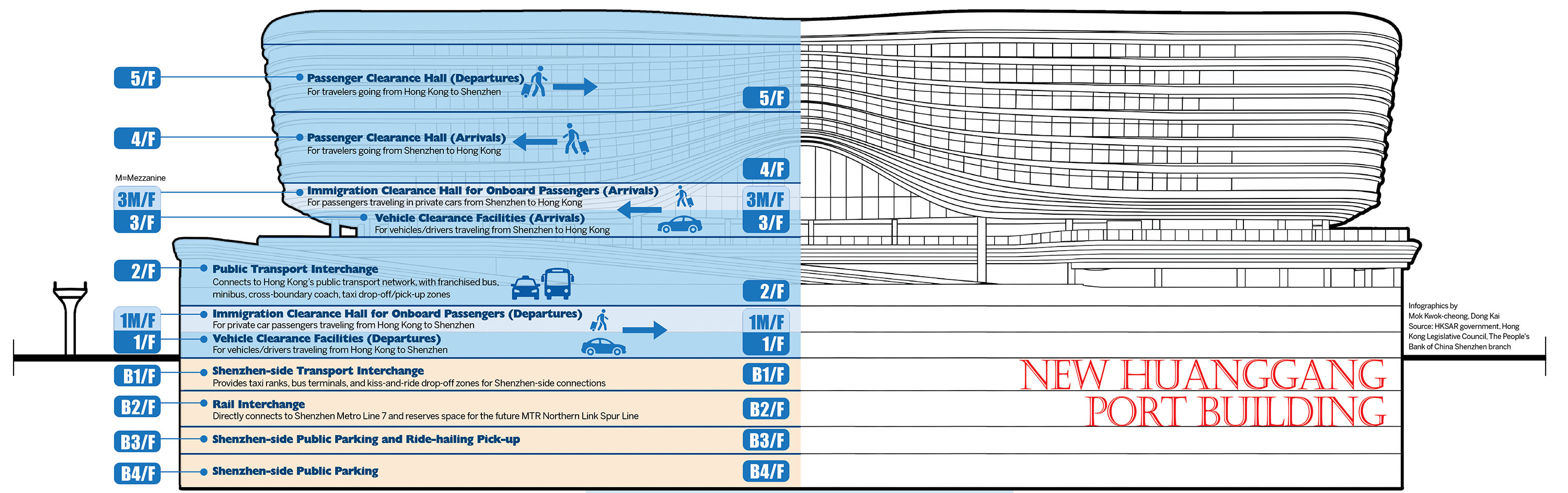
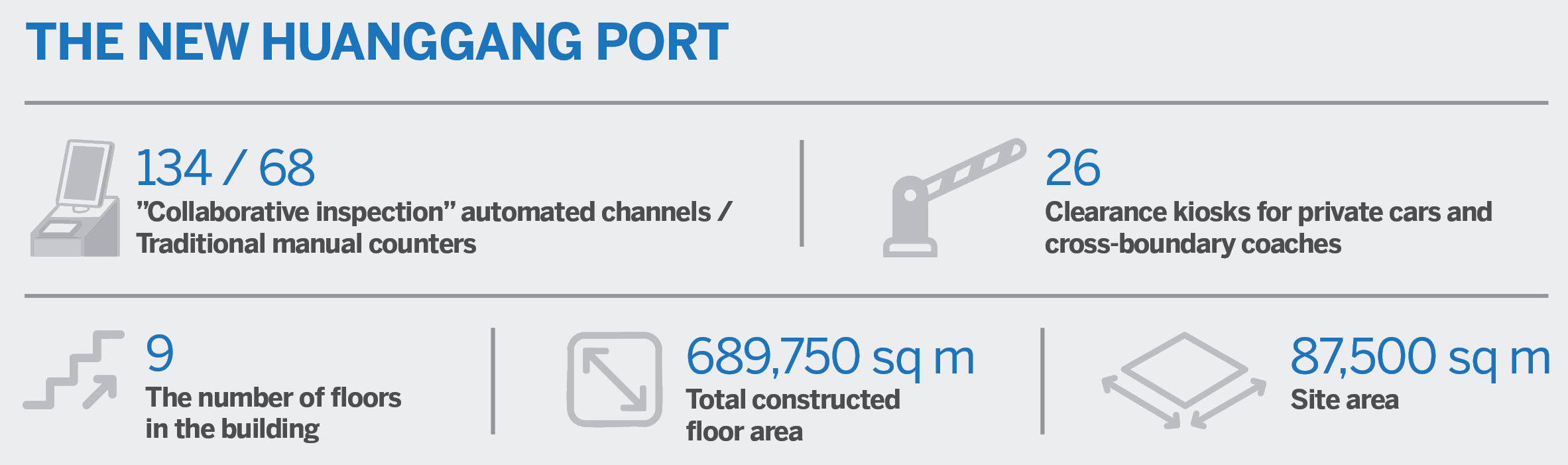
Rather than the sprawling, low-rise layouts for older ports like Luohu and Futian, Huanggang Port adopts a “vertical stacking” strategy. The nine-story joint-inspection building rises on a site of just 87,500 square meters, yet its total floor area reaches nearly 690,000 square meters — a marked increase from the 140,000 square meters at the old port, which first entered service in December 1989. The upward design frees the lower levels for public transport interchanges, eliminating the need for the old cross-boundary shuttle “yellow” buses and allowing direct access by franchised buses.
The design team, led by Aedas — the firm behind Hong Kong’s West Kowloon Station and Hong Kong International Airport’s new Terminal 2 — places processing for outbound travelers on the fifth floor and that for inbound commuters on the fourth. Passengers arriving by bus have to alight at the second floor and travel up to be cleared by both sides in one go under a “collaborative inspection and joint clearance” model.
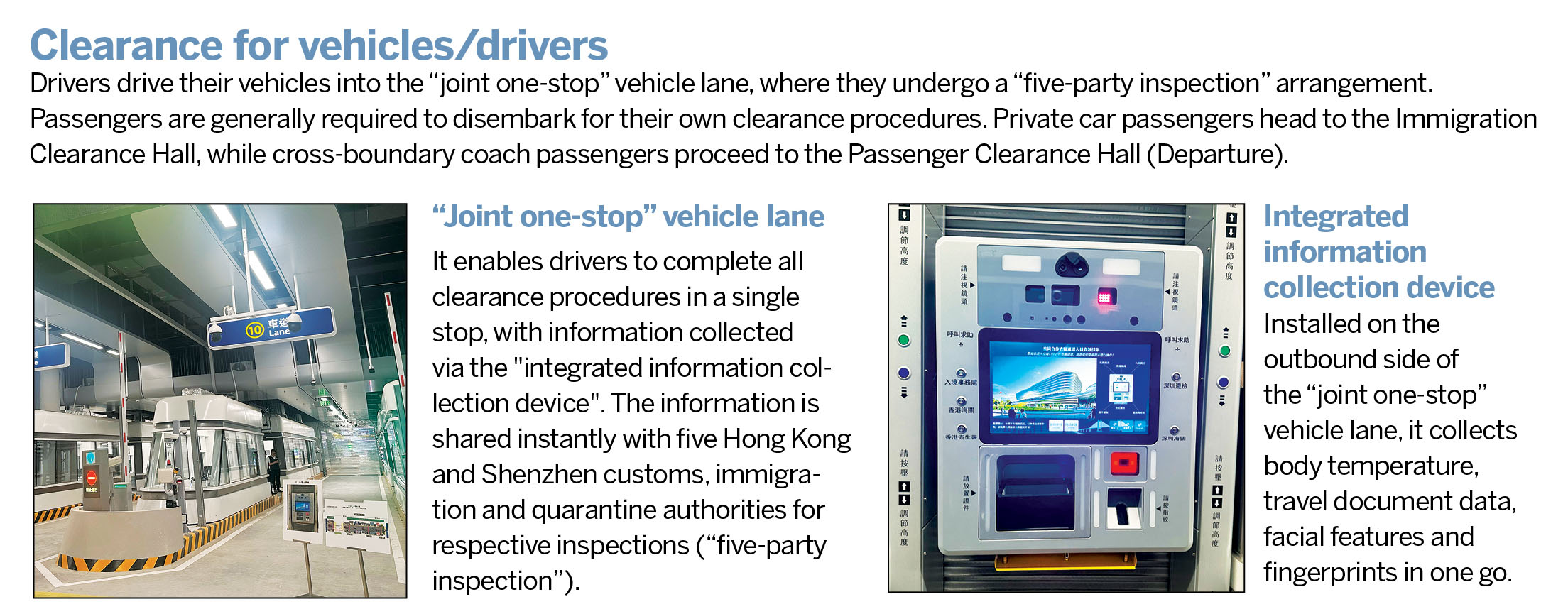
Northbound private car passengers, however, must get off at the first floor, proceed to the Floor 1M for inspection, and then reboard their vehicles, while drivers will need to enter a “joint one-stop” lane on the first floor for a “five-party inspection”, conducted by three HKSAR and two Shenzhen government departments, without having to leave their vehicles. Southbound vehicles and passengers will undergo similar clearance procedures on the third and 3M floors.
Chris Chen, Aedas’ executive director, said that to avoid cross-boundary travelers getting lost in the vertical layout, the building is equipped with 56 escalators and about 40 elevators, the number and design of which have been scientifically calculated based on a projected peak daily traffic of 300,000 people to avoid congestion.
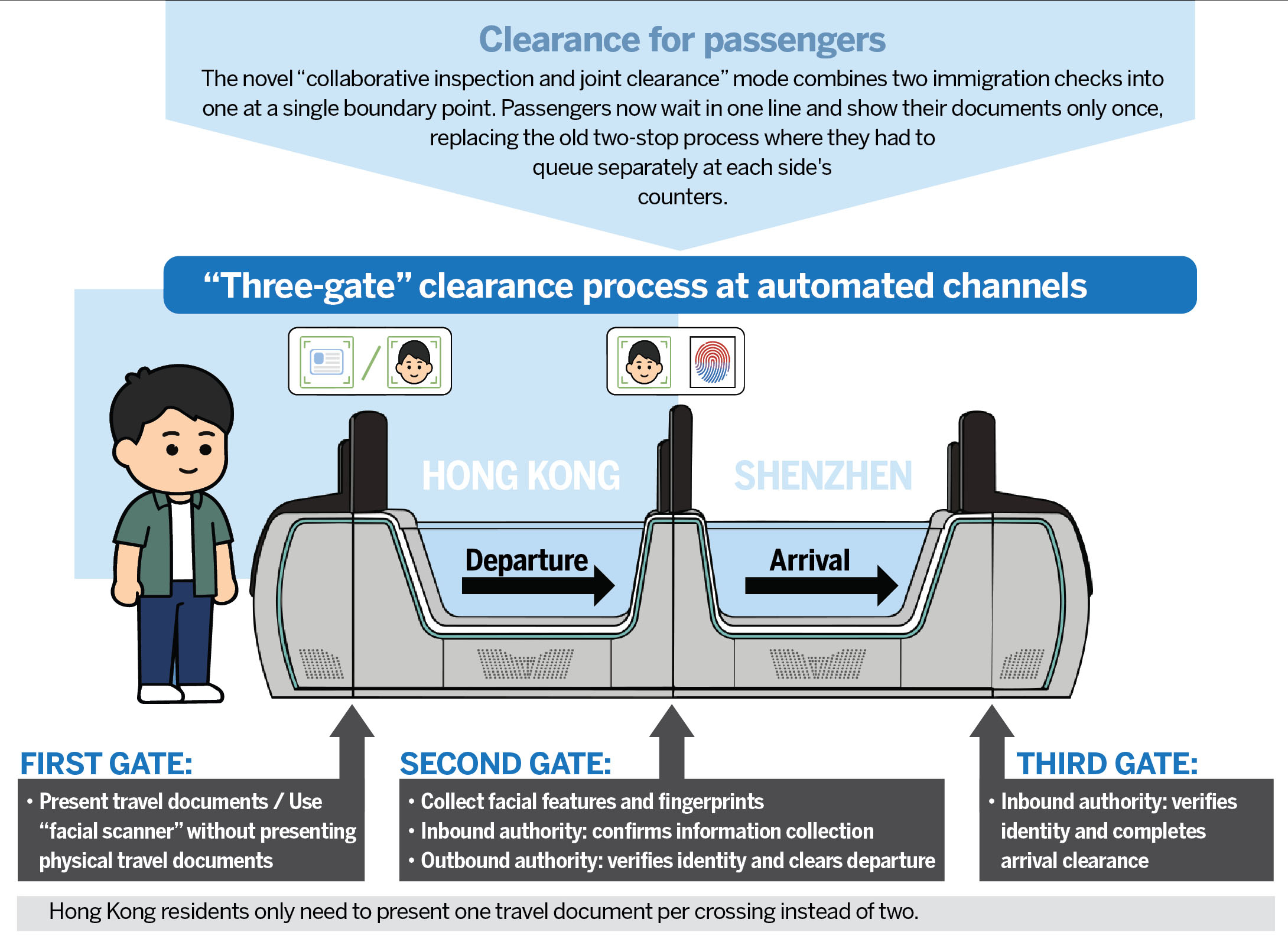
The most talked-about design innovation is the clearance mode. Previously, travelers had to endure a two-stage process — leaving Hong Kong, walking or shuttling to the mainland side, and lining up again before being cleared at the mainland checkpoint.
The new port will implement a “collaborative inspection and joint clearance” model, with both sides setting up automated channels or counters side by side within their respective jurisdictions at the boundary. Travelers need only line up once for document inspection or facial recognition to pass through immigration clearance.
Streamline clearance
This evolution — from the previous separate-location clearance arrangement to co-location arrangement, and now to the “collaborative inspection and joint clearance” process — represents a significant leap in upgrading cross-boundary travel efficiency.
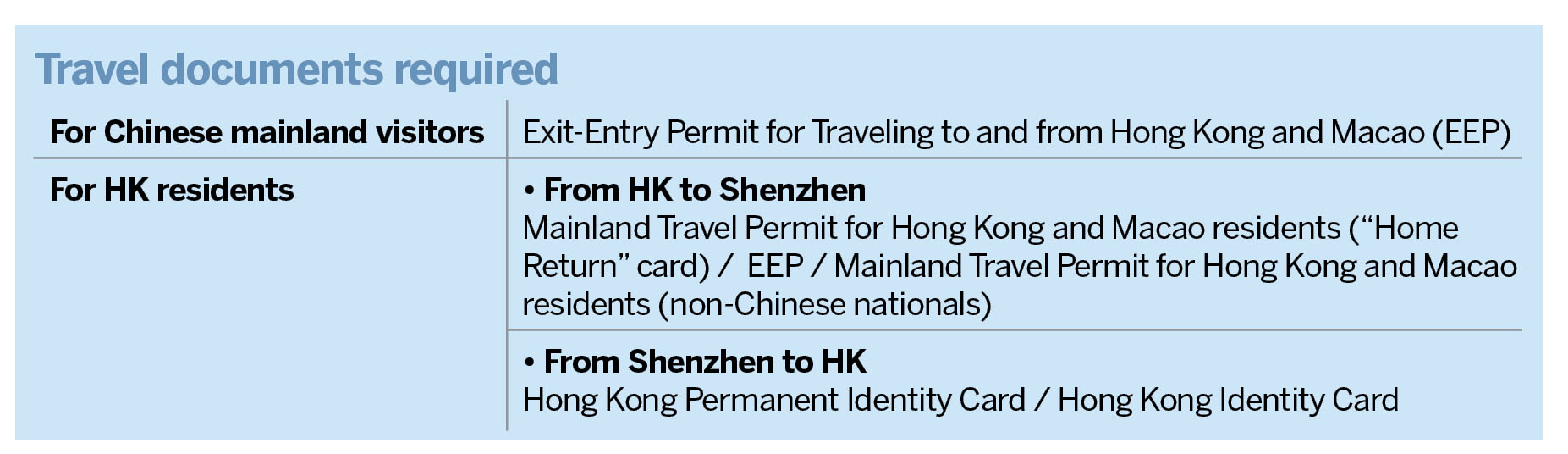
Hong Kong legislator Chan Siu-hung says the practical benefits are already tangible, as commuters will be able to clear both checkpoints with a single travel document, while the facial recognition technology will further enable seamless clearance, improving clearance efficiency.
Chan says the shift is not merely procedural — it demands profound legal and administrative coordination between the different legal systems of Hong Kong and the mainland. “To achieve cooperative inspection and one-stop clearance, we had to break down interface barriers — a very new and bold attempt,” he says.
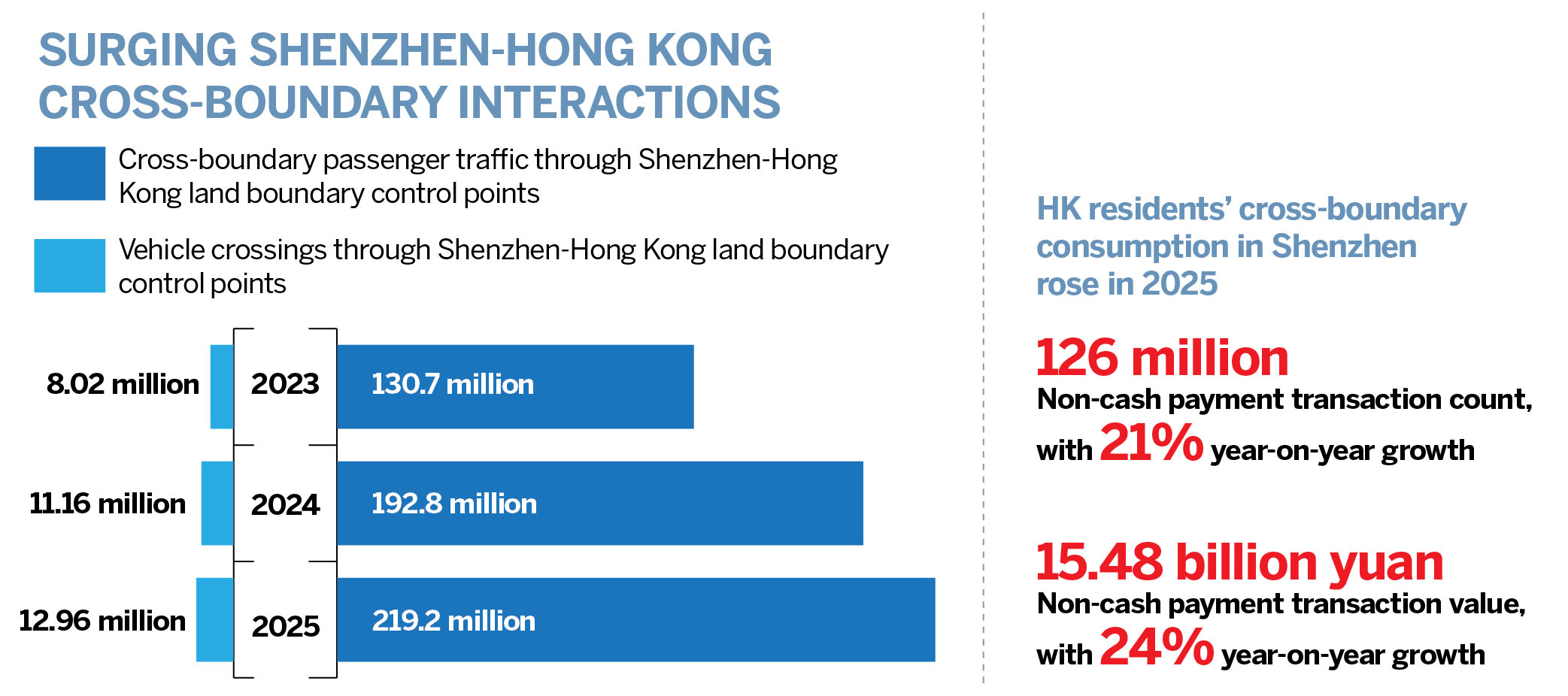
Chan highlights the necessity for a 24-hour operation, adding that a seamless people flow is vital for integration within the Guangdong-Hong Kong-Macao Greater Bay Area. He says that the previous hassles for commuters — undertaking long walks between checkpoints, shuttle transfers and lining up repeatedly — could stretch journeys to one or two hours, discouraging cross-boundary travel.
The drastic cut in boundary crossing time — from 30 minutes to just five minutes — is a direct outcome of such integration and could be extended to other ports if successful, Chan tells China Daily.
Tam Yiu-chung — a former member of the Standing Committee of the National People’s Congress — emphasizes the strategic value of a 24-hour operation. “Having a port open around-the-clock removes time constraints. This is crucial for boosting the flow of people, logistics and capital — the lifeblood of the Greater Bay Area. The result is that many Hong Kong workers living in Shenzhen will benefit immensely.”
Huanggang Port, seen by political and business circles as key to boosting efficiency and consolidating logistics advantages, has also emerged as a powerful engine that gives a boost to a battered property market, reshaping the commercial landscape in the surrounding areas, according to local media reports.
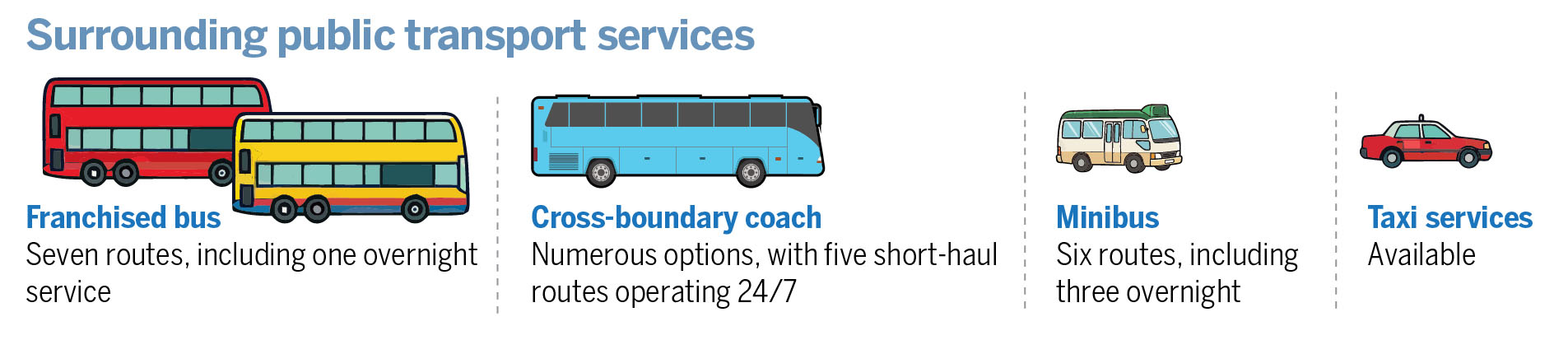
While the new port has drawn praise, experts also point to potential pitfalls. Chan says he is concerned about transport connectivity. Although the interchange can accommodate franchised buses, taxis and cross-boundary coaches, private cars and ride-hailing vehicles are barred from entering the restricted area.
He supports allowing ride-hailing vehicles to enter the Huanggang Port area as Hong Kong prepares to roll out licenses for operators. These services could start late this year in a bid to promote passenger flow and avoid congestion, with the time saved in clearance.
Ringo Lee Yiu-pui, honorary life president of the Hong Kong, China Automobile Association, believes that once the new port is in full operation, it will boost travel between the HKSAR and the mainland, making it more convenient for pedestrians and drivers, especially those from Hong Kong and Guangdong province, to travel back and forth, with the crossing time for vehicles drastically reduced by five to 30 minutes.
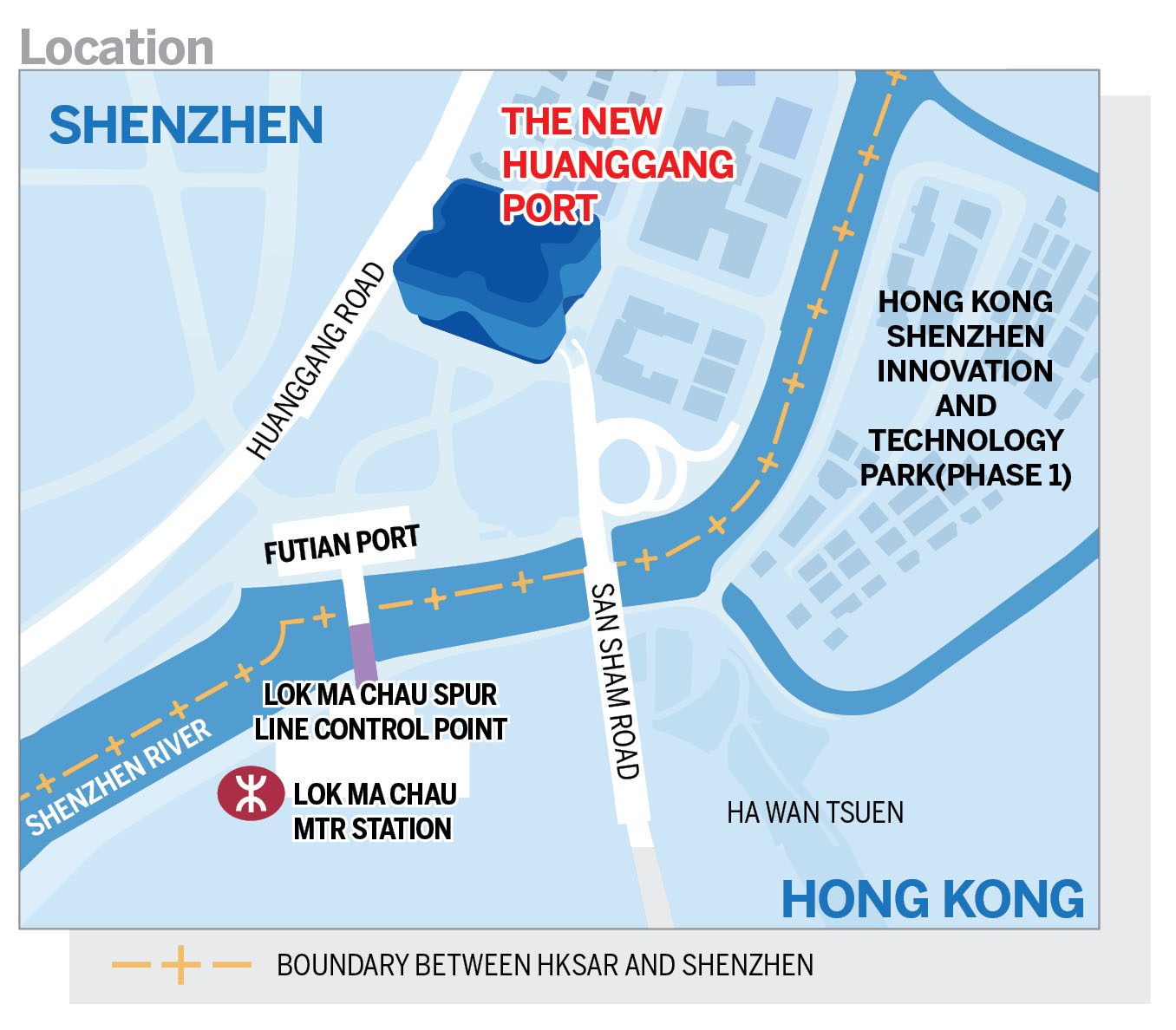
Lee says that under the old port design, the access road from the Hong Kong port area to the inspection building was less than 1 kilometer long, while the exit route to Shenzhen had to traverse large residential estates, with taxis and ride-hailing vehicles often having to wait outside for passengers, causing congestion even before travelers could enter or leave the building.
The new design integrates taxi pick-up areas within the port building, extends the access road on the Hong Kong side to more than 2 km, and reroutes the Shenzhen exit away from the residential areas, all of which, combined with the suspension of cross-boundary goods truck clearance, are expected to significantly reduce bottlenecks and ease traffic flow.
The HKSAR government is actively conducting large-scale drills and stress tests at the facility’s Hong Kong port area in preparation for its official opening. This will ensure that the port’s systems, facilities and personnel can handle high volumes of traffic efficiently and safely.
Four major drills were completed on Aug 13, 15, 22 and 29, with around 36,000 participants involved. The exercises covered passenger flow handling at the joint inspection building, counterterrorism scenarios, passenger emergencies and major traffic accidents.
ALSO READ: Huanggang Port: HK deploys 20,000 personnel for biggest stress test
Summarizing the drills undertaken so far, Secretary for Security Chris Tang Ping-keung says it is all systems go — the overall operation has gone smoothly and the authorities have dealt with problems in a timely manner.
He says that both the HKSAR and Shenzhen governments are banking on an early opening for Huanggang Port, but any decision must be taken responsibly.
The port will be inaugurated only when operations are seen to be safe and smooth, and the passenger experience is satisfactory, he adds.
Contact the writer at stacyshi@chinadailyhk.com
