

Huo Kam-kio and Azina, both 16, are founding captains of the first girls’ soccer teams at their respective schools — one in the Macao Special Administrative Region and the other in Urumqi, capital city of the Chinese mainland’s far northwestern Xinjiang Uygur autonomous region.
Huo was part of a team from Macao’s Hou Kong Middle School joining a delegation under the second edition of a youth exchange program involving 40 teenagers from the Guangdong-Hong Kong-Macao Greater Bay Area, who traveled over 3,200 kilometers to Xinjiang in late August for soccer and cultural activities.
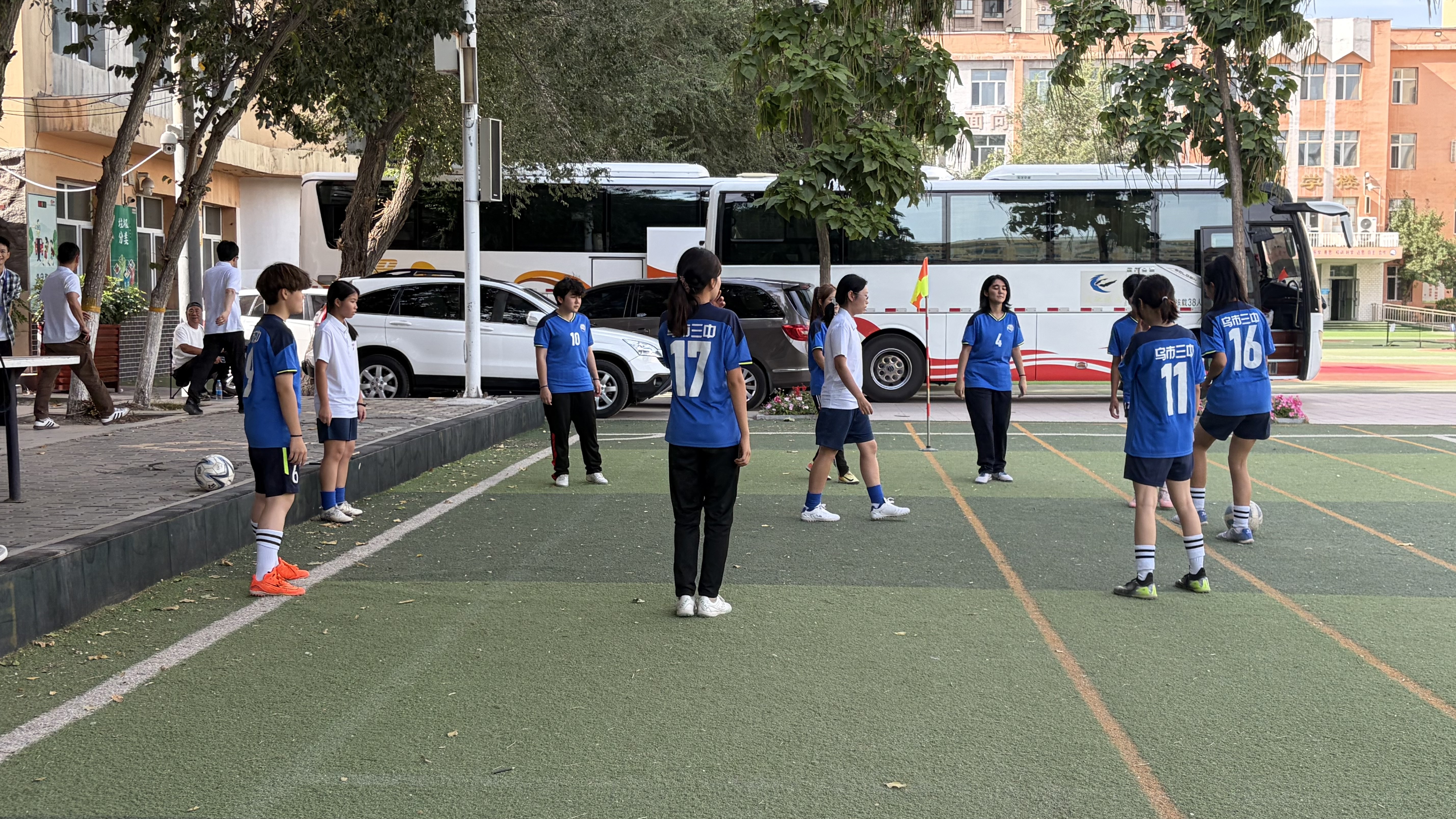
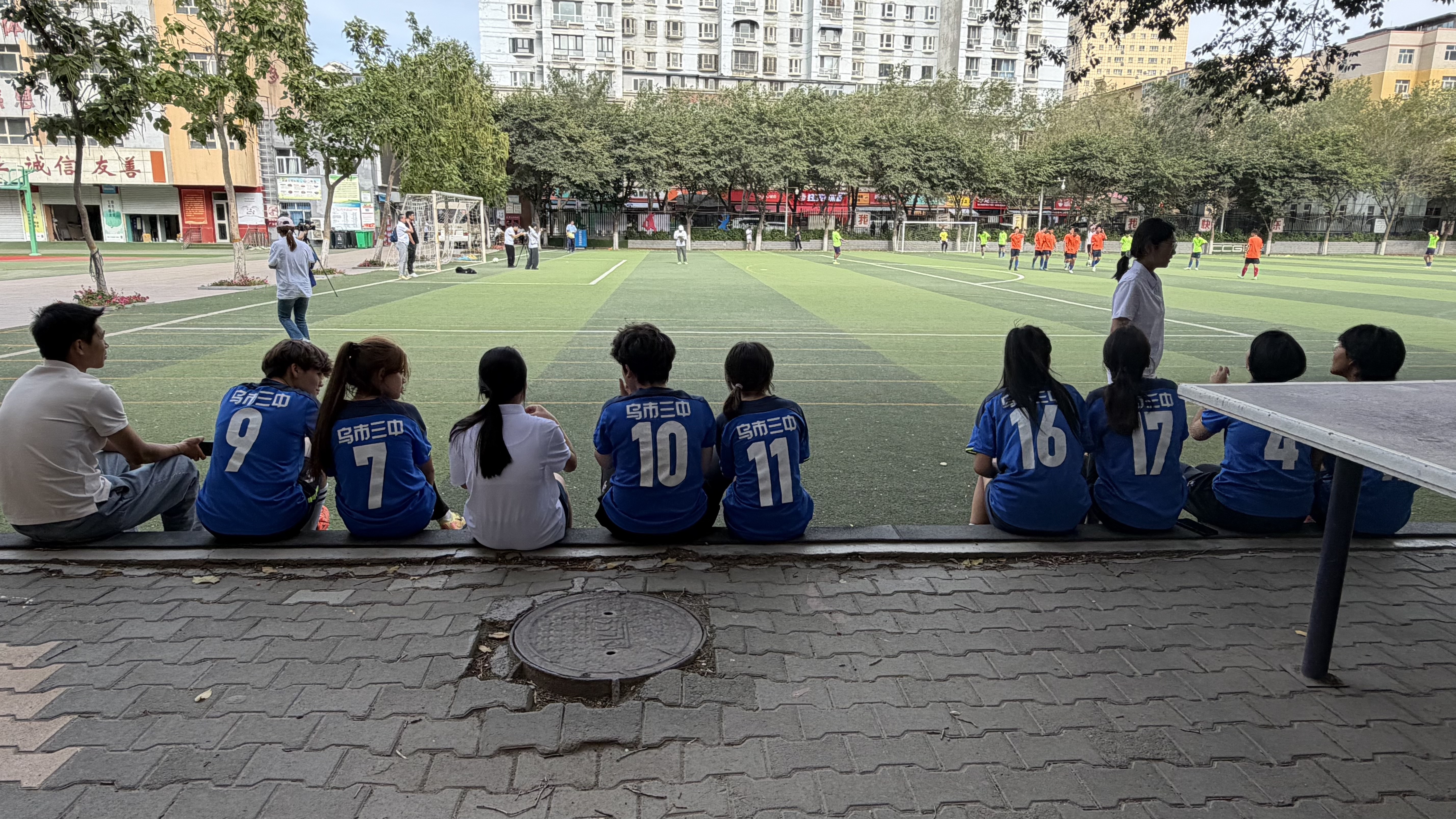
She and her teammate Lam Si-chai were the only two girls on the Macao team. Before the match, both joined Xinjiang girls of Urumqi No 3 Middle School in a soccer rondo — a ball possession type of drill. During breaks, they sat together on the bench and compared school life. Azina was surprised to learn that students in the Macao SAR are often graded on their PowerPoint presentations, which is rare in her hometown.
The second half of the friendly match, a special session, featured the two Macao players, four Xinjiang girls, and 16 boys from the two regions, as well as Guangdong province and Hong Kong, divided into two mixed teams.
The game ended 4-2. None of the girls scored, but scoring was not the point. Alkamjan, a 16-year-old Xinjiang player who scored twice, praised Huo. “She dared to carry the ball forward and make breaks,” he said.
Huo’s biggest chance came on the left wing when she knocked the ball past a defender and sprinted into open space — a move that reminded some spectators of Argentinian soccer superstar Lionel Messi. But, Huo’s shot was blocked by the goalkeeper.
Huo had grown up in Foshan, Guangdong, and began playing soccer as a child. When she enrolled at Macao’s Hou Kong Middle School in September last year, she was determined to keep playing. She signed up for the sport in a physical education class, and spent months joining pickup games with friends.
In April, she approached Pun Veng-keong, a coach of the boys’ team, saying she had formed a girls’ squad with about eight others and needed his instruction. She began training with the boys after school although she often had to wait until the track-and-field team had finished using the space.
As there had been no girls’ team at her school before her own initiative, Huo had searched online for information and approached ADRAM — a local nonprofessional women’s club — to become a member. She didn’t know then that Macao would soon hold its first 11-a-side women’s league. ADRAM and three other teams participated in the inaugural competition last year. Huo’s team was undefeated and won the championship. She played off the bench in five of the six matches. Although she did not score, she said she had played her part.
Her ambition is to follow her elder sister, now a university sophomore, onto a college team. In Macao, her best route is through the city’s 1,400-spot annual school recommendation program to a mainland university or a strong performance in the Joint Admission Examination — a standardized test for admission to local higher education institutions. Soccer isn’t yet a formal pathway to college admission. For Huo, it remains a passion she must sustain alongside an academic schedule that leaves limited room for sports.
Pun, a former player who has coached for more than three decades and now heads youth training at the Football Association of Macau, China, has watched the association’s women’s program grow from a 2017 initiative with 30 members to a roster of 300 players across all age groups. But he is candid about the limits. Macao’s academic pressures, shortage of pitches and injury concerns have placed restrictions on how far students can commit themselves to the game. Pun hopes Macao girls will one day be able to compete in a Greater Bay Area regional league that could offer them more opportunities through exchanges and mutual improvement.
Azina’s landscape is different. In Xinjiang, soccer is woven into daily life. Children grow up playing in neighborhoods during class breaks and through a range of school and after-school programs. The region has a reputation as a rising soccer powerhouse and passionate grassroots nursery for the sport’s talent, having recently hosted Jiangchao — the first prefecture-level amateur league of its kind in the region.
Azina was among the first eight girls admitted to Urumqi No 3 Middle School’s inaugural soccer special class in September 2025 — all of them Uygur. Each day, they studied standard academic subjects in the morning and early afternoon before training for two hours. The class also includes 40 boys from various ethnic backgrounds. As the girls still lack enough players for a full side, they have yet to play a standard match on their own.
That will change in October when nine new female freshmen join the program in the new semester, and the team travels to a nearby prefecture for its first 11-a-side fixture. Azina is mindful of the challenge. Regional rivals in Urumqi, Changji and Turpan are already well established. “We’re taking it one step at a time,” she says.
For Azina and her teammates, strong sports performance could directly lead to athletic certification, opening the door to university admission or even professional contracts. Coaches and managers from across the region and other parts of the nation could travel to observe their matches and training sessions. This model has helped produce players like 23-year-old Behram Abduweli — the first Xinjiang-born player to score for China’s senior men’s national soccer team in a 2024 FIFA World Cup qualifier, and has become a role model for many young boys and girls in Xinjiang.
Their teacher, Bo Shaojie, who leads the soccer class and also teaches art, says such designated classes, already established in many leading schools to harvest the region’s strongest teams, are becoming an “additional social ladder for students”. Competition for a place in the inaugural class was intense, with nearly four applications for one spot, he recalls.
According to Bo, the class shows that “ethnic unity is more than a slogan”. Through studying, training and competing together, students have built a campus life in which ethnicity and gender matter much less than friendships and shared efforts.
Alpha, a 16-year-old classmate of Azina’s, is already the only high school student representing Urumqi in Jiangchao, which concluded earlier in August. During the tournament, girls in the soccer class worked as ball kids. Bo urged them to remain neutral and professional, although he admitted they could not resist cheering for the hometown team.
As fledgling teams, both girls’ squads face a common challenge — a smaller pool of peers and, inevitably, less attention for their efforts. Unlike the boys, Huo still doesn’t have an official jersey and plays in her school’s standard uniform. Azina and her teammates, meanwhile, have fewer leagues and competitions than the boys, limiting their chances to earn credentials through titles and rankings.
For the teenagers, however, this imbalance hasn’t dulled their focus. For now, playing alongside — and, sometimes against — boys is less an obstacle than an opportunity. They both hope that through the narrow path they have chosen, they will meet more peers, share bigger pitches and, someday, meet each other again.
Contact the writer at mollychen@chinadailyhk.com
