

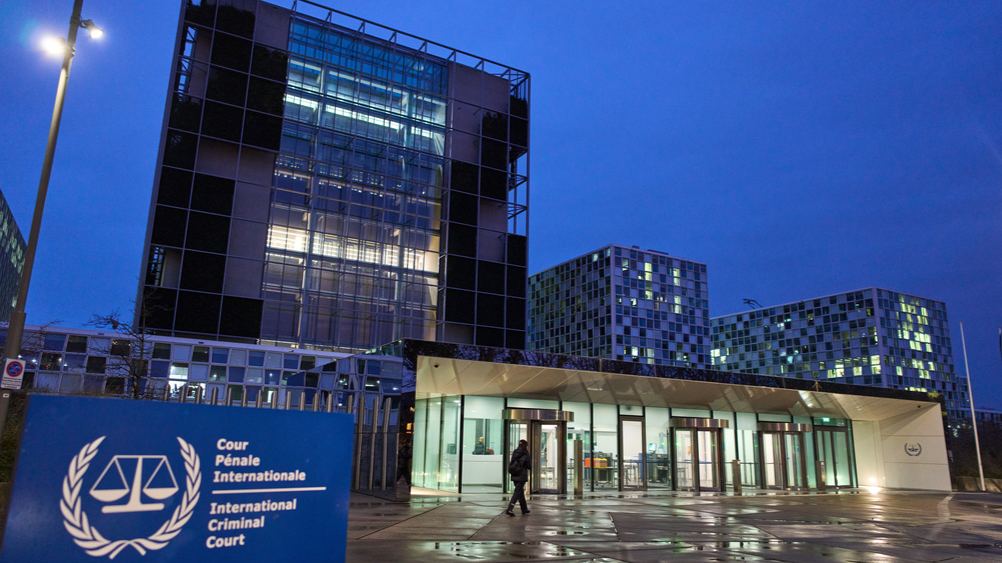
The Trump administration announced sanctions on the president and senior trial lawyer of the International Criminal Court, further escalating pressure against an institution that it says has unfairly targeted the US and Israel.
The court is “a corrupt and fatally politicized supranational court that has maliciously abused its authority and exceeded its mandate,” Secretary of State Marco Rubio said in a statement. He threatened more measures to “systematically dismantle the ICC until it is incapable of threatening American sovereignty.”
Rubio’s statement and the sanctions targeting ICC President Tomoko Akane, who is from Japan, and Senegal’s Abdoulaye Seye, its senior trial lawyer, amount to the clearest indication yet that the US wants to cripple the institution rather than simply sideline it.
ALSO READ: US sanctions two more ICC judges over Israel
Trump and his allies have long accused the ICC of interfering in US affairs. During his first term, he slapped sanctions on an ICC prosecutor and one of her aides for investigating accusations of American war crimes in Afghanistan.
The court issued an arrest warrant for Israel’s Prime Minister Benjamin Netanyahu in 2024 over allegations of war crimes in Gaza. The Israeli government has denied the accusations, and the Biden administration rejected the court’s authority.
Neither the US nor Israel is a party to the court, which was established in 2002 in The Hague, Netherlands, to prosecute war crimes, genocide and other atrocities. It has issued 60 arrest warrants and has detained 21 people.
READ MORE: ICC judges reject Israel's request to withdraw Netanyahu arrest warrant
Seye, who was recently nominated to be an ICC judge, has worked on the prosecutorial team of the court’s Israel-Palestine proceedings.
Netherlands Foreign Minister Tom Berendsen condemned the latest action, saying in a social media post that “international courts and tribunals must be able to freely carry out their mandates.”
Last week, four leading US human rights organizations filed a lawsuit over the Trump administration’s campaign against the ICC, arguing the sanctions limit “access to justice for victims of serious international crimes around the globe.”
