

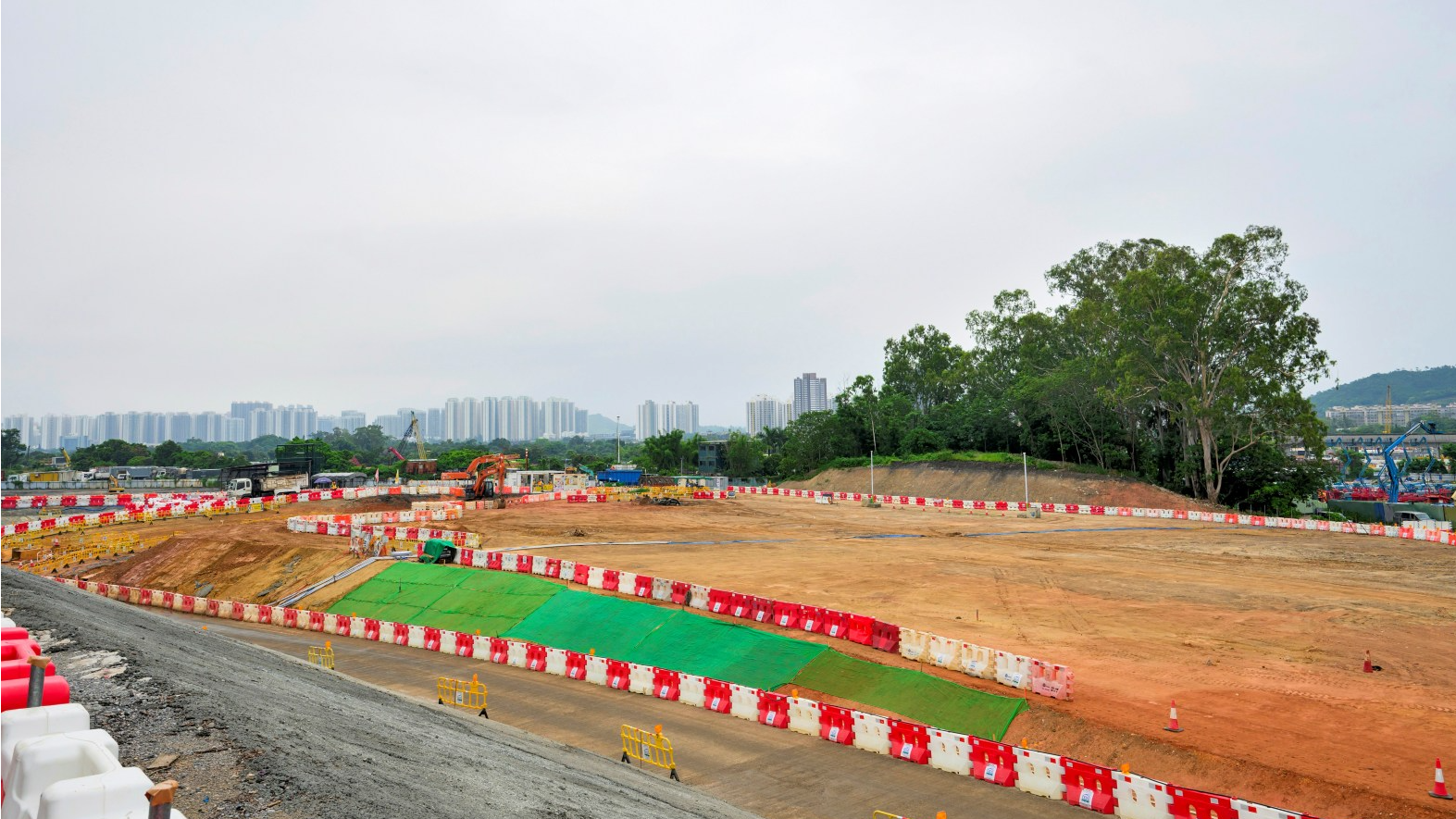
Accelerating Northern Metropolis development, cementing the advantages of the professional services sector, and enhancing social welfare, including birth incentives, are key themes in proposals submitted by Hong Kong community leaders for the city’s first local five-year plan and the annual Policy Address.
The special administrative region government is currently collecting views on both the city’s five-year blueprint, which is scheduled for release by the third quarter of this year, and Chief Executive John Lee Ka-chiu’s fifth Policy Address, expected to be delivered in September or October.
The New People’s Party on Friday submitted a proposal containing 29 suggestions, covering high-quality economic growth, greater openness, and social welfare enhancements.
Regina Ip Lau Suk-yee, the party’s chairwoman and the Executive Council’s convenor, told reporters that as a regional intellectual-property trading hub, Hong Kong should provide more support to small and medium-sized enterprises struggling with patent management, and help universities offer specialized programs to nurture relevant professionals.
Ip’s fellow party members elaborated on their proposals. Lawmaker Judy Chan Ka-pui urged the government to increase the current newborn-baby bonus from HK$20,000 ($2,551) to HK$30,000 for families having a second child, with each subsequent child receiving a progressive increase of 30 percent.
ALSO READ: Northern Metropolis Development Bill sent to HK LegCo for debate
Barrister Eunice Yung Hoi-yan urged the government to establish a high-level “artificial intelligence governance strategy” to keep pace with AI’S rapid advancement, and formulate a long-term plan for Hong Kong.
Lai Tung-kwok, a former lawmaker, focused on disputes involving owners’ corporations. He proposed a three-tier mediation mechanism in the city modeled on Singapore’s approach. The first tier would involve community mediation for daily complaints such as noise and hygiene issues; the second tier would have a tribunal composed of professionals to handle disputes involving compensation, such as water leakage cases; and the third tier would have a higherlevel court for more serious or large-scale disputes.
Lai said he believes this system would help reduce friction among owners and residents, preventing minor issues from accumulating and escalating into structural problems.
The city’s largest political party in the legislature, the Democratic Alliance for the Betterment and Progress of Hong Kong, submitted 54 recommendations on Thursday, focusing on Northern Metropolis development, industry diversification, quality of life, urban livability, and domestic and external connectivity.
On the same day, the Liberal Party submitted 139 proposals across 13 thematic areas, covering Northern Metropolis development, talent and employment, innovation and technology, and Guangdong-Hong Kong-Macao Greater Bay Area cooperation.
ALSO READ: Northern Metropolis university town tender to open
The party also suggested distributing special consumption vouchers to celebrate the 30th anniversary of Hong Kong’s return to the motherland next year.
Earlier in the week, the G19 group of lawmakers, comprising Legislative Council members from the Election Committee and functional constituencies, submitted 100 proposals, including research on the “NEETS” — young people not in education, employment, or training — and compiling an Ai-affected occupation list.
Speaking on a local TV and web media program on Wednesday, Lee said that in planning Hong Kong’s future governance, the city should consider not only its own interests but also how to better integrate into and contribute to the nation’s development under the 15th Five-year Plan (2026-30). He said that efforts should focus on two key areas: clearly recognizing Hong Kong’s existing strengths; and exploring opportunities for complementary cooperation with the mainland.
Contact the writer at stacyshi@chinadailyhk.com
