

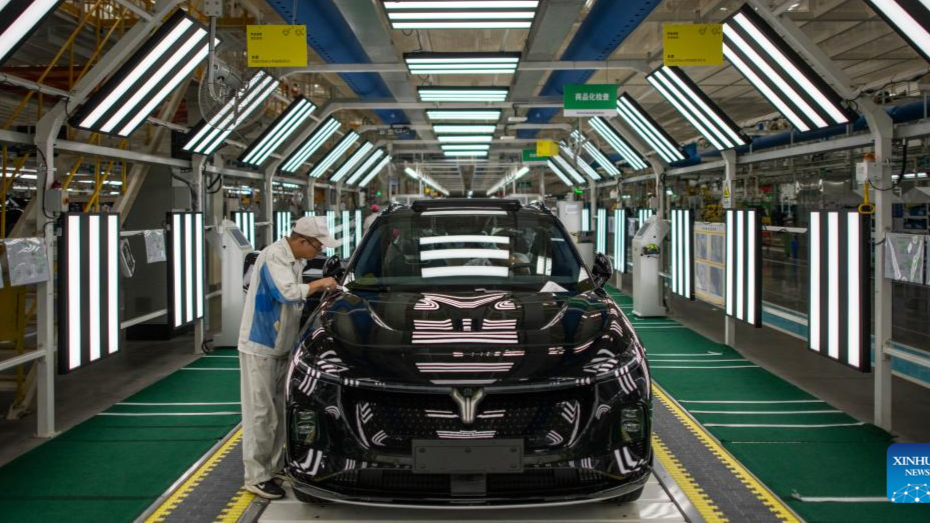
Chinese carmakers underscored the pivotal role of the Guangdong-Hong Kong-Macao Greater Bay Area in boosting electric vehicle brands’ growth and globalization, citing the region’s international connectivity and automotive-savvy consumers.
They made the remarks at the 2026 Guangdong-Hong Kong-Macao Greater Bay Area Auto Show, which runs from May 29 through June 7 in Shenzhen.
First-tier markets remain an indispensable battleground for premium brand development, and the Greater Bay Area serves as a key bellwether shaping market trends, said a spokesperson from Dongfeng Motor’s premium arm Voyah.
“The Greater Bay Area market is crucial in our overall strategy. Besides from driving sales growth, it also underpins the brand’s efforts to boost public recognition, cultivate user reputation and build its premium positioning,” he said.
The spokesperson explained that consumers in the Greater Bay Area have long been exposed to premium automotive cultures from overseas, equipping them with sophisticated automotive know-how and higher requirements for riding comfort, premium craftsmanship, smart features and branding.
Meanwhile, blessed with its inherent links to Hong Kong, Macao and global markets, the Greater Bay Area also puts Voyah in a prime position to quickly decode global consumer preferences. The insights gained will lay solid groundwork for its long-term global expansion, he added.
The Chinese new energy vehicle brand has announced plans to march into the global right-hand drive market in the second half of the year by launching the right-hand drive version of its Dream models in Hong Kong.
The right-hand drive vehicles will be designed based on local laws and regulations, road conditions, driving habits, and users’ demands, according to the company.
Voyah has been stepping up presence in the Greater Bay Area. It currently operates 58 sales outlets in Guangdong province and plans to increase the number to 74 by the end of the year.
Li Bin, founder and chairman of Chinese electric vehicle maker Nio, said Guangdong is one of the core markets that has seen the fastest growth for the company. Total sales of its EVs in the province hit 17,000 in the first four months of the year, a year-on-year surge of 123 percent.
Guangdong is also the province that has the most Nio charging and battery swapping stations. As of late last month, there were 993 such stations in the province, of which Shenzhen accounted for 211.
The auto show has also attracted a large number of overseas visitors, including from Russia, France, Kazakhstan and Nepal.
Timur Zhambakina, an auto trader from Kazakhstan, expressed a strong interest in Chinese electric vehicle brands such as BYD, Geely and Leapmotor.
“Because of the new regulation, vehicles can only be exported under the premise that they have stayed in China for over 180 days, but my customers want them as soon as possible, so here I am, trying to find traders with spot commodities,” he said.
The Chinese mainland government issued a guideline in November on further strengthening the management of used-car exports. The guideline, which aims to prevent new cars from being exported under the guise of used cars, requires car firms to provide additional documents if vehicles filed for export are registered 180 days or less than 180 days prior to the application date.
“The Chinese auto industry keeps moving forward and it has shown amazing results. The hardware and software of these cars are absolutely impressive. I’m looking forward to witnessing more innovations in the future,” Moroccan dealer Hamza Chandid said.
Chen Ziyu contributed to this story.
