

Artists from two countries perform in a work that draws from ancient philosophy while embracing modern artistic expression, Chen Nan reports.
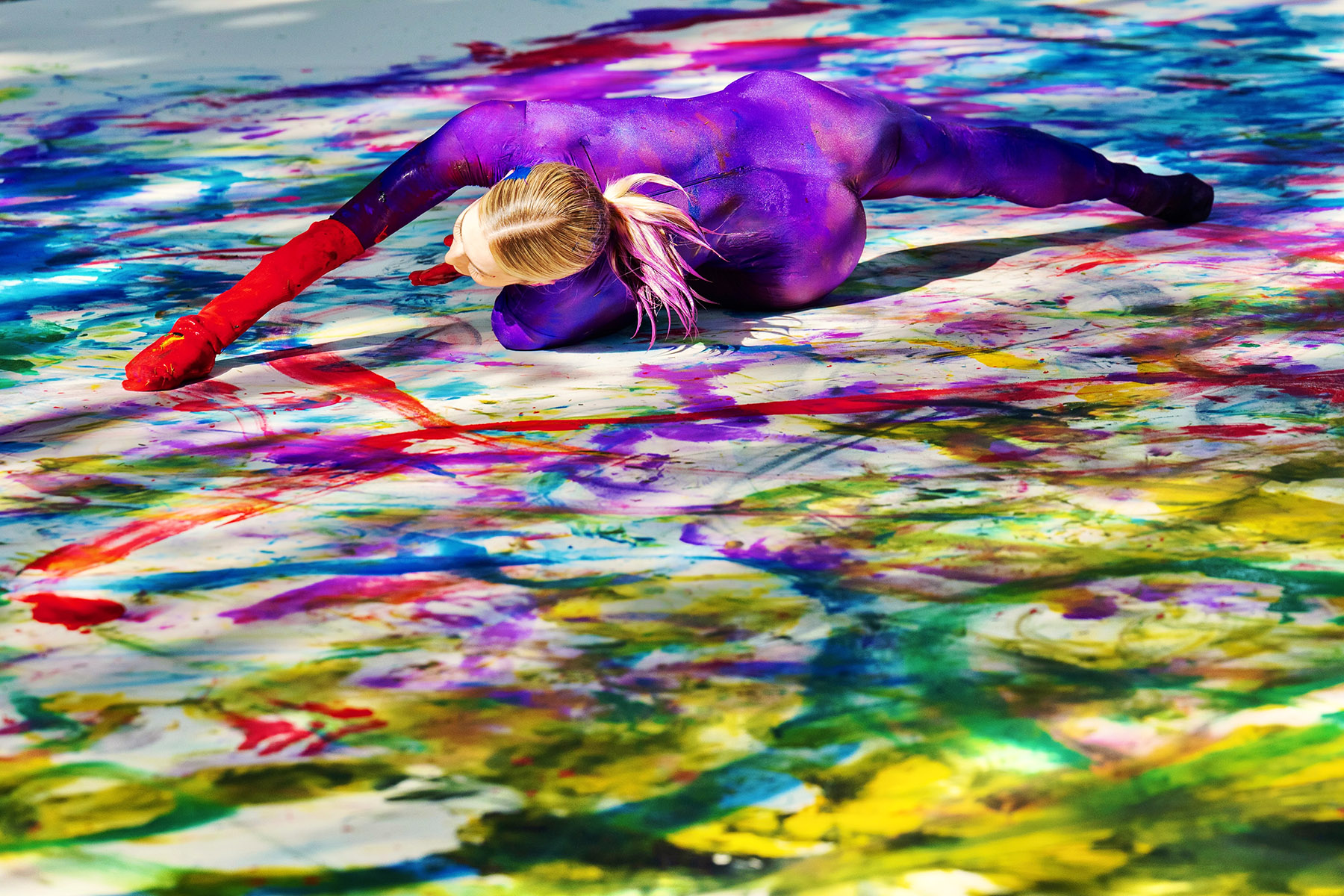
In the luminous spaces of the Guangzhou Grand Theatre, internationally acclaimed artist Shen Wei will unveil his latest work, MindScape, a collaboration between the Guangdong Modern Dance Company and Shen Wei Dance Arts. The work will premiere on June 5 and 6, before traveling to the American Dance Festival at Duke University in Durham, North Carolina, in July and later to Lincoln Center's Summer for the City in Dance Encounters, a new outdoor series, during Chinese Arts Week in New York from July 22-25.
MindScape is the latest chapter in Shen's decades-long artistic exploration, blending modern dance with poetry, painting, calligraphy, and live music.
READ MORE: Blurring the line between movement and paint
But this work is perhaps one of his most introspective yet, drawing on the philosophical ideals of Chinese literati and the spiritual pursuit of harmony between humanity and nature.
"MindScape is about my inner landscape," says Shen, a choreographer, painter and visual artist. "It reflects how I face life — success, hardship, and the balance needed to keep moving forward. This series is about the power of thought and spirit over material concerns."
The production merges traditional Chinese music with contemporary soundscapes, featuring guqin (a seven-stringed Chinese zither) virtuoso Zhao Xiaoxia, xiao (Chinese vertical bamboo flute) player Liu Xiaogang, percussionist Chen Shijie, and electronic music.
"I want people to feel happy, uplifted," Shen says. "This project is about making traditional instruments, like the guqin and xiao, feel contemporary, fresh and pleasurable."
The genesis of the work spans two continents. Last year, Shen began experimental workshops in the United States, developing movement vocabularies with American dancers while collaborating with Chinese musicians on an original score.
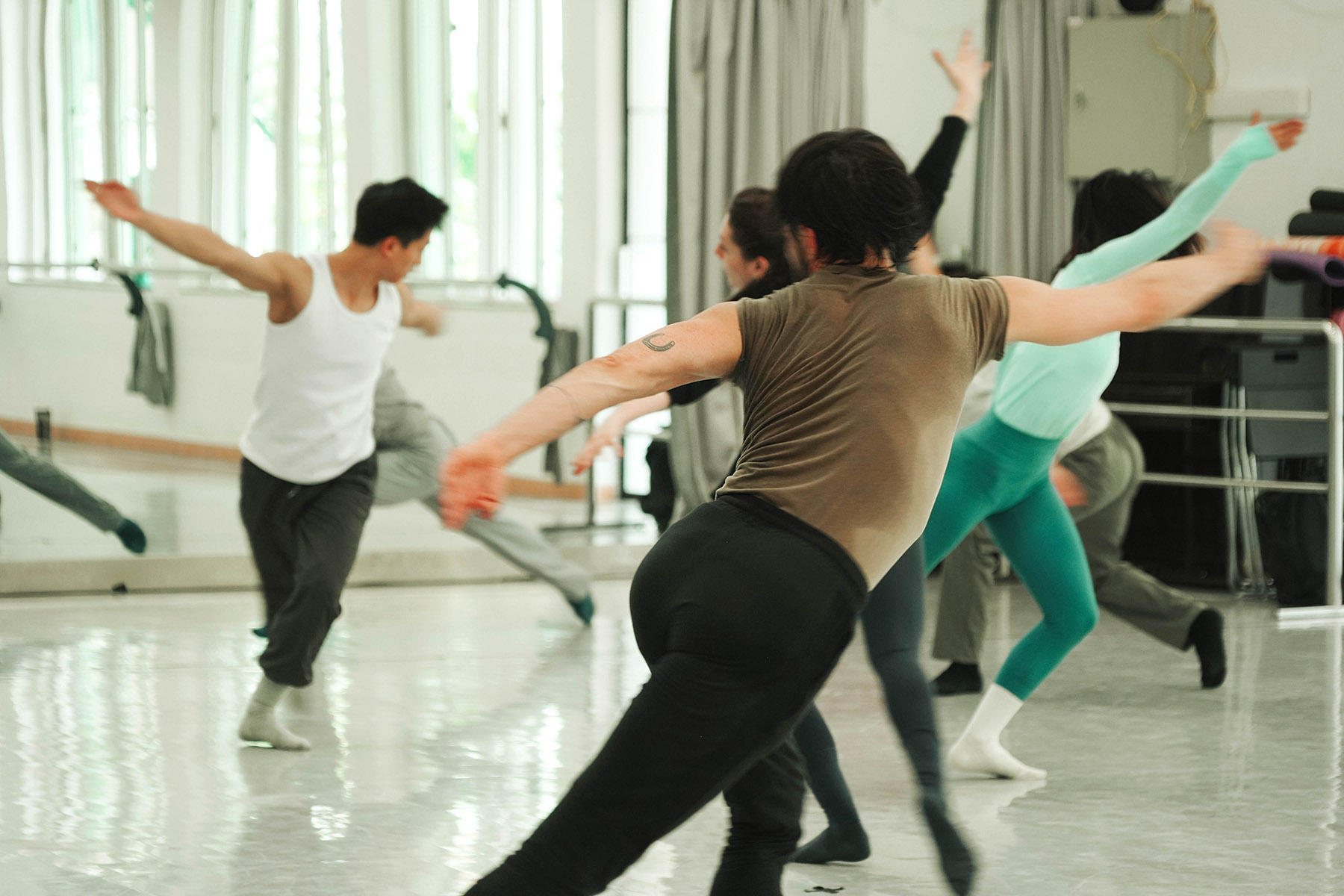
This year, five dancers from the US joined seven from China and worked together in the studio in Guangzhou, while the traditional instruments were reimagined in a modern context. "I've long been exploring contemporary expression of ancient instruments," Shen notes. "This is an international project — artists from China and the US collaborating to create a shared vision."
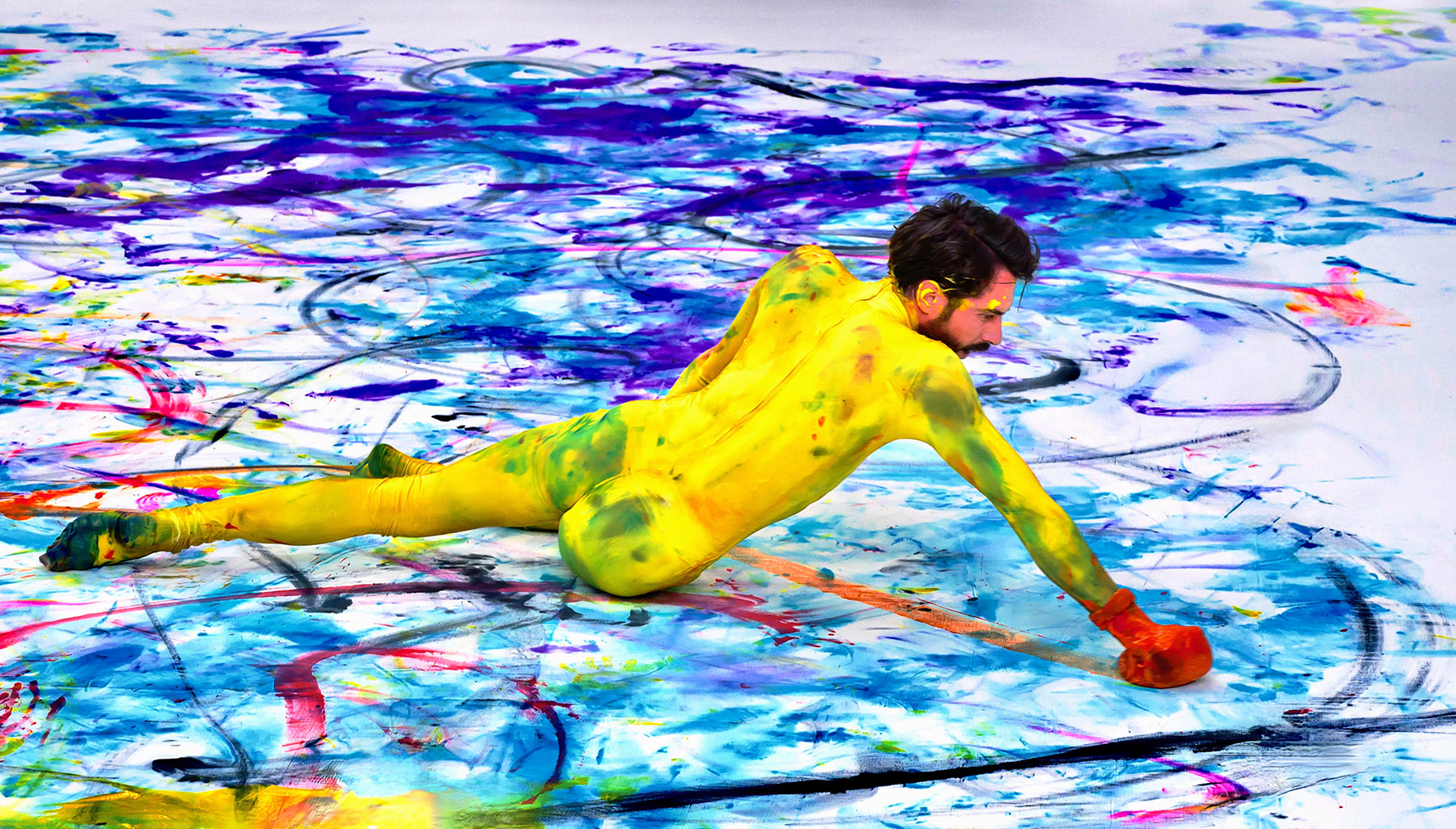
The choreography reflects Shen's signature approach, encouraging movement to emerge organically from dancers' internal impulses. But this time, the work also incorporates live painting and calligraphy: the stage floor will be covered in canvas, allowing dancers to leave traces of color and ink through movement. "Every performance becomes a 'mindscape' painting," he says. "It's about life, joy, struggle, and the energy we create together."
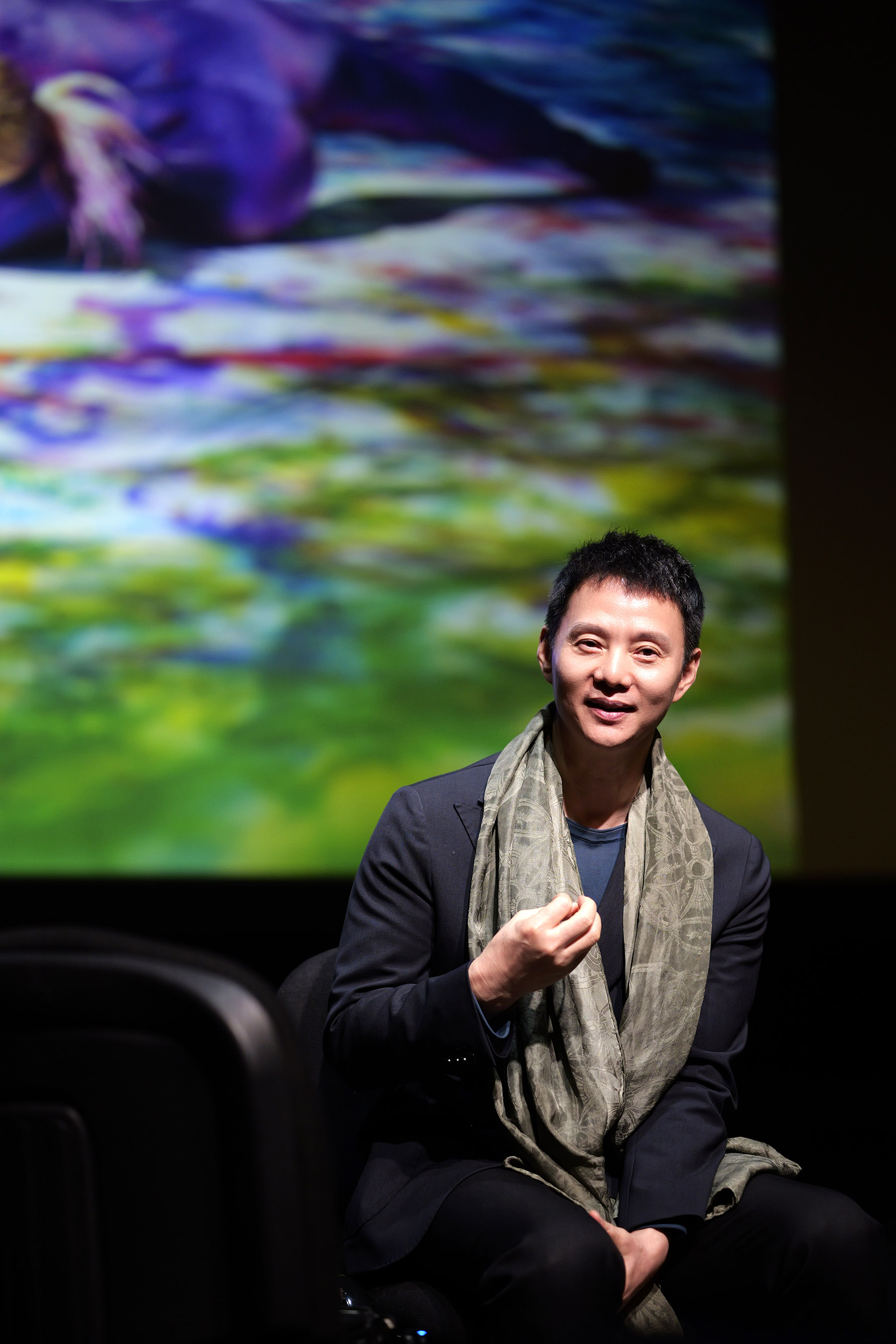
Traveling around the world to work with international artists on diverse art projects, Shen, a New York and Paris-based artist, is known for his work at the opening ceremony of the 2008 Olympic Games in Beijing. He choreographed the breathtakingly beautiful dance piece, Scroll Painting, in which dancers performed on a constantly changing LED scroll of Chinese ink-and-wash paintings, depicting the evolution of China since ancient times.
Shen's relationship with the Guangdong Modern Dance Company is deeply personal. "This is my mother troupe," he says. "I arrived here over 30 years ago, in 1989. Returning to create this work is both a homecoming and an opportunity to reconnect tradition with the present."
The costumes in MindScape reflect the same philosophy. Inspired by southern Chinese craftsmanship, the designs incorporate bamboo elements that merge heritage with contemporary aesthetics.
"I once received a gift from Yang Meiqi, a founding member of the Guangdong Modern Dance Company. It was a vest made from small bamboo pieces instead of fabric," recalls Shen.
Bamboo, naturally breathable and cooling, suits the humid climate of southern China such as Guangdong province. Symbolically, it also represents resilience, flexibility and the moral integrity of a scholar in Chinese culture — qualities central to the philosophy behind Mind-Scape, Shen says.
The work is also accompanied by Shen's own writings and visual art. Eight texts written over decades in China, the US and Europe will be released alongside the premiere, reflecting on resilience, joy and observation.
Shen will also release a new book, When the Rose Kisses the White Cloud, named after a poem he wrote in Paris, which reflects his fascination with fleeting beauty and enduring optimism.
"Life contains both pain and joy," he says. "I want people to feel the energy of living fully, to be inspired by the spirit rather than material concerns."
Born in Xiangyin county, Yueyang, Hunan province, in 1968, Shen began training in local opera at age 9, studying singing, dancing, acting, and martial arts. He had already started traditional Chinese painting at 7. In 1989, he turned to modern dance at the Guangdong Dance Academy and became a founding member of the Guangdong Modern Dance Company in 1991. After winning a national choreography award in 1994, he moved to New York on a scholarship and founded Shen Wei Dance Arts in 2000, while continuing to innovate across dance, painting, and filmmaking.
American dancer Zak Ryan Schlegel, 36, who has worked with Shen for 11 years, reflects on the premiere of MindScape: "Bringing this work to the stage feels like opening a collective dream state — a common consciousness." The piece, described by Schlegel as a culmination of Shen's visual, physical, and spiritual vocabularies, expands the choreographer's legacy into a deeply human exploration of interconnectedness.
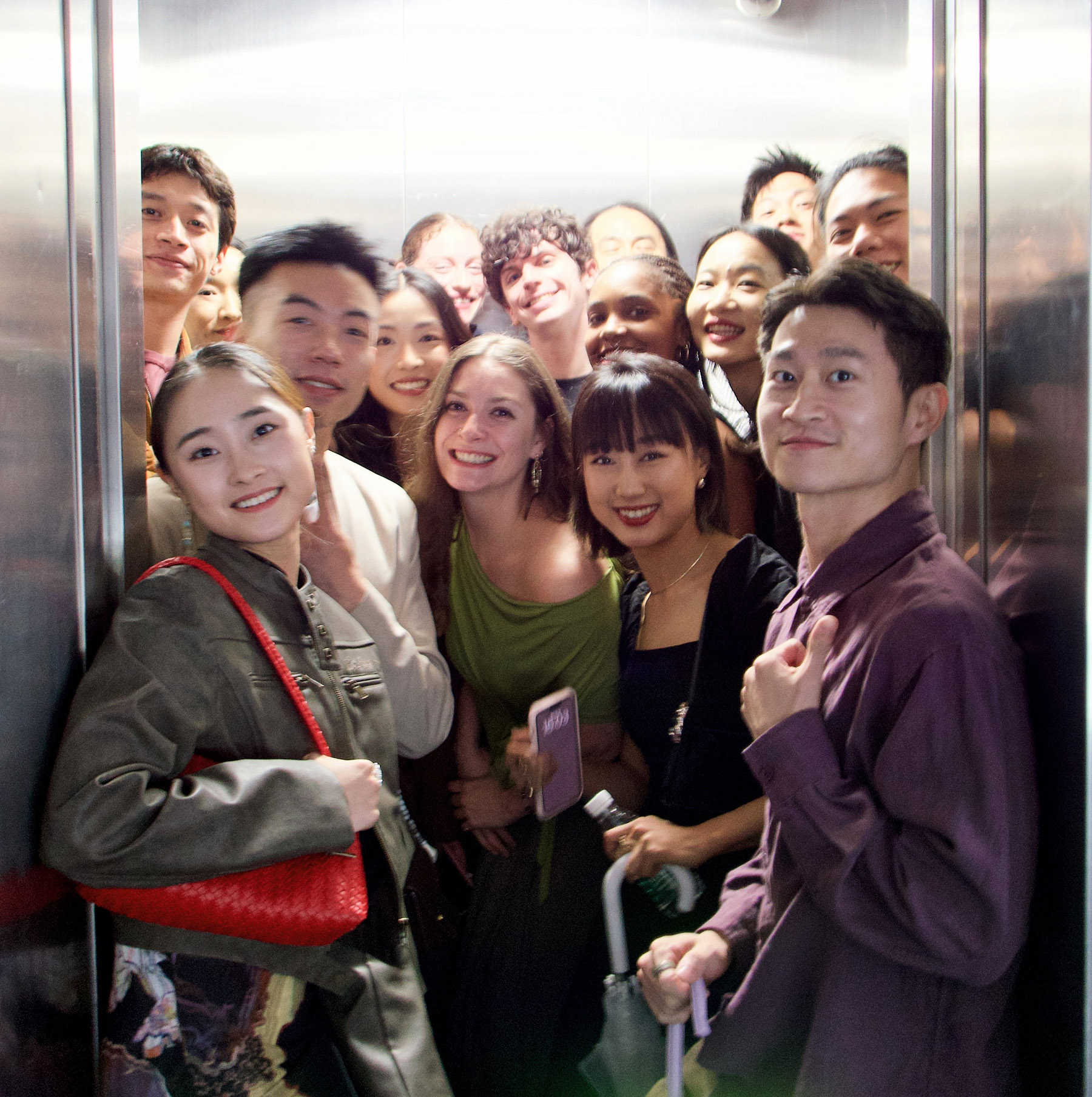
During rehearsals, dancers were encouraged to explore their inner worlds — memory, emotion, perception, and imagination — to build a shared dimension onstage.
"From feeling sunlight on our faces to recalling memory-triggered visions with closed eyes, the challenge was in meeting ourselves through new lenses and returning to our most intimate perceptions," Schlegel says. "This process shaped the work's living spaces, evolving with each performance."
One moment that resonates deeply with him came during a sextet set to a flute solo. "We become the wind. I feel transported to the New Mexican desert of my ancestors, moving in harmony with the other five. Though we are six onstage, we are one in landscapes of memory," he says.
Collaboration lies at the heart of MindScape. "Connection is the oxygen the dance must breathe. Shared breath and intuition allow us to harmonize emotionally and physically, meeting one another through all our different experiences," he explains. The work becomes not only a performance but also an act of humanity.
ALSO READ: Rising from the ashes
Guo Fan, 30, a Guangdong Modern Dance Company dancer since 2019, says: "MindScape is rooted in Eastern philosophy, expressed through an international dance language. Its essence is inward observation — moving with restraint, guided by breath and emotion. Eastern subtlety meets Western physicality; Chinese and international dancers inspire each other, letting philosophy flow beyond borders. For the audience, it's not spectacle — it's a space for reflection, resonance and the quiet power of shared humanity."
"After more than 30 years abroad, Shen Wei returns to the Guangdong Modern Dance Company to create MindScape," notes Xiong Jian, the troupe's director. "This is not only an emotional homecoming but also a reconnection with artistic spirit and history. The production blends movement with poetry, music and visual design into a 'total art' experience. Young dancers, aged 24 to 30, represent a new generation, building a uniquely Chinese contemporary dance language grounded in cultural experience and global awareness."
Contact the writer at chennan@chinadaily.com.cn
