

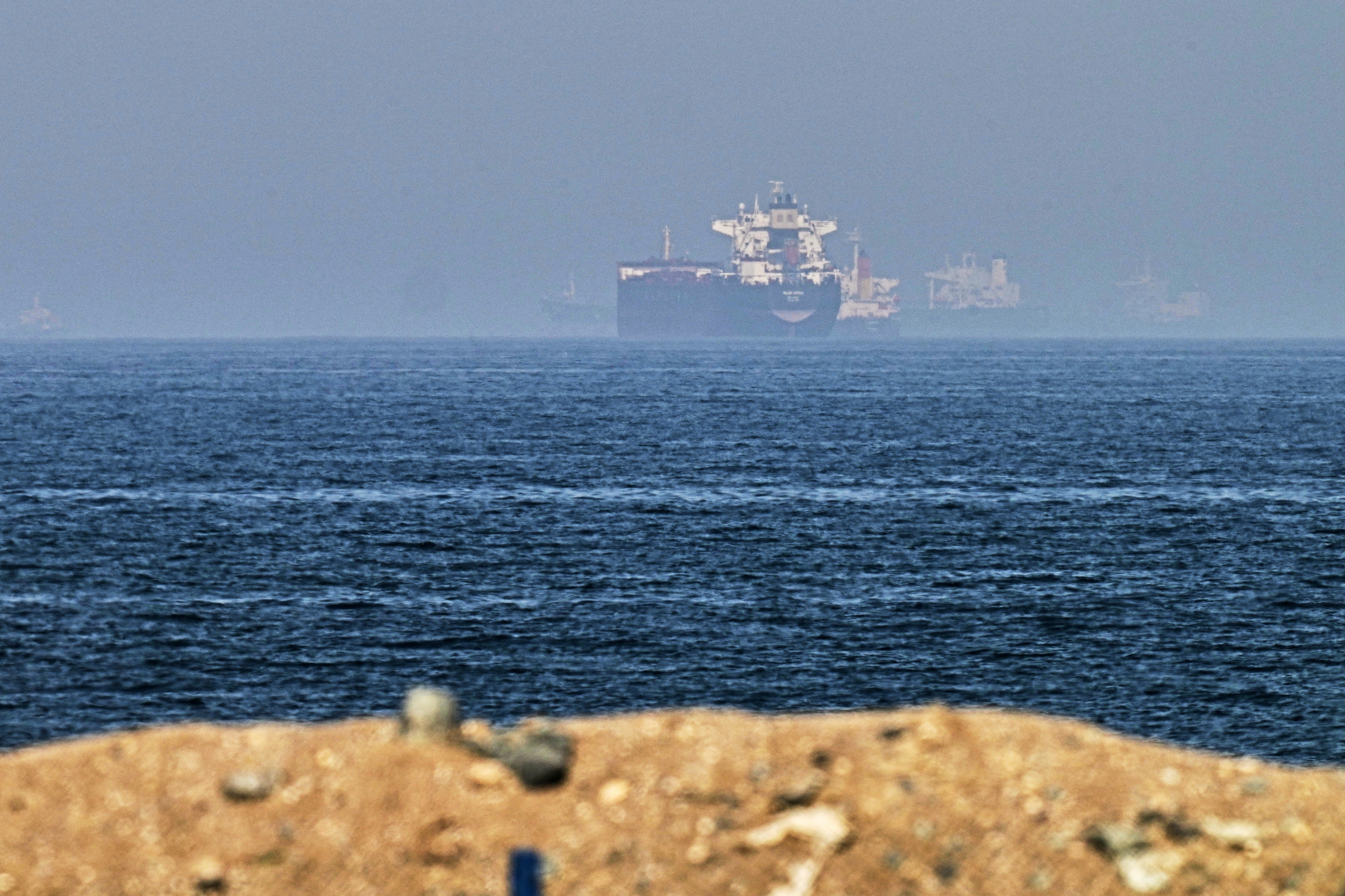
TEHRAN/WASHINGTON/LONDON - Iran on Monday warned the US army against entering the Strait of Hormuz.
"We warn that any foreign armed forces, especially the aggressive US army, will be attacked if they intend to approach and enter the Strait of Hormuz," said Iran's main military command, Khatam al-Anbiya Central Headquarters, in a statement.
The warning came after the United States announced it would start on Monday to free ships stranded in the waterway.
"We have repeatedly said the security of the Strait of Hormuz is in our hands and that the safe passage of vessels needs to be coordinated with the armed forces," the Iranian army said.
Trump: US to guide ships out of Strait of Hormuz
US President Donald Trump said Sunday that the United States will begin guiding ships out of the Strait of Hormuz on Monday morning, Middle East time.
Calling the action "Project Freedom," Trump said it is "a humanitarian gesture."
"Countries from all over the World, almost all of which are not involved in the Middle Eastern dispute going on so visibly, and violently, for all to see, have asked the United States if we could help free up their Ships, which are locked up in the Strait of Hormuz, on something which they have absolutely nothing to do with -- They are merely neutral and innocent bystanders!" Trump said on Truth Social.
"For the good of Iran, the Middle East, and the United States, we have told these Countries that we will guide their Ships safely out of these restricted Waterways, so that they can freely and ably get on with their business," he said.
ALSO READ: Tehran condemns Trump's ‘brazen’ remarks about seizure of Iranian vessels
Many of these ships are running low on food and everything else necessary for large-scale crews to stay on board in a healthy and sanitary manner, Trump added.
He warned that if "this Humanitarian process is interfered with, that interference will, unfortunately, have to be dealt with forcefully."
The US Central Command (CENTCOM) said Sunday that its forces will begin implementing Trump's "Project Freedom" by guiding ships on Monday.
"The mission, directed by the President, will support merchant vessels seeking to freely transit through the essential international trade corridor," CENTCOM said in a statement on X.
US military support for the effort will include guided-missile destroyers, more than 100 land- and sea-based aircraft, multi-domain unmanned platforms, and 15,000 service members, the statement said.
The statement added that the Maritime Freedom Construct, an initiative announced last week by the State Department, "will be critical during Project Freedom." The initiative aims to enhance information sharing in support of security in the key strait and combines "diplomatic action with military coordination."
Iran says reviewing US response to peace proposal
Trump's announcement also came as Iran said Sunday it has received and is reviewing the US response to its 14-point peace proposal, though Trump said Saturday he "can't imagine that it (the plan) would be acceptable."
In an interview with state-run IRIB TV, Iranian Foreign Ministry spokesman Esmaeil Baghaei stressed that Iran's proposal exclusively focused on ending the war, and "nothing pertaining to the nuclear field's details exists in it."
ALSO READ: Iran says new rules to be enforced for Persian Gulf's management
"At present, we are focused on the parameters related to ending the war in the region, including Lebanon," Baghaei added, stressing "we have no nuclear negotiation at this stage."
Also on Sunday, Iranian Foreign Minister Seyed Abbas Araghchi briefed his Omani and German counterparts on Iran's latest diplomatic efforts and initiatives to end the war.
In separate phone calls, Araghchi exchanged views with Omani Foreign Minister Sayyid Badr bin Hamad bin Hamood Albusaidi and German Foreign Minister Johann Wadephul on the latest regional and international developments, according to statements released by the Iranian Foreign Ministry.
UKMTO: Tanker hit off UAE coast
On Sunday night, a tanker was hit by unindentified projectiles off the coast of the United Arab Emirates (UAE), the United Kingdom Maritime Trade Operations (UKMTO) agency has said.
The agency wrote in an X post that it received the report at around 1940 GMT on Sunday from the vessel. The report said the vessel was struck while traveling about 144.45 km north of the UAE city of Fujairah, which is near the Strait of Hormuz.
All crew aboard the tanker were safe, and no environmental impact were reported, the UKMTO said in the warning.
Authorities were investigating the incident. Vessels were advised to transit with caution and report any suspicious activity to UKMTO, the agency said.
READ MORE: Singaporean PM warns Mideast crisis to raise recession risks
Media reports on Monday also said that British military has said a vessel has been hit by projectiles in the Strait of Hormuz.
On Feb 28, Israel and the United States launched joint strikes on Tehran and other cities, killing Iran's then-Supreme Leader Ali Khamenei, senior commanders, and civilians. Iran responded with waves of missile and drone attacks targeting Israel and US interests in the region.
A ceasefire took effect on April 8, followed by talks between Iranian and US delegations in Islamabad that failed to produce a deal
