

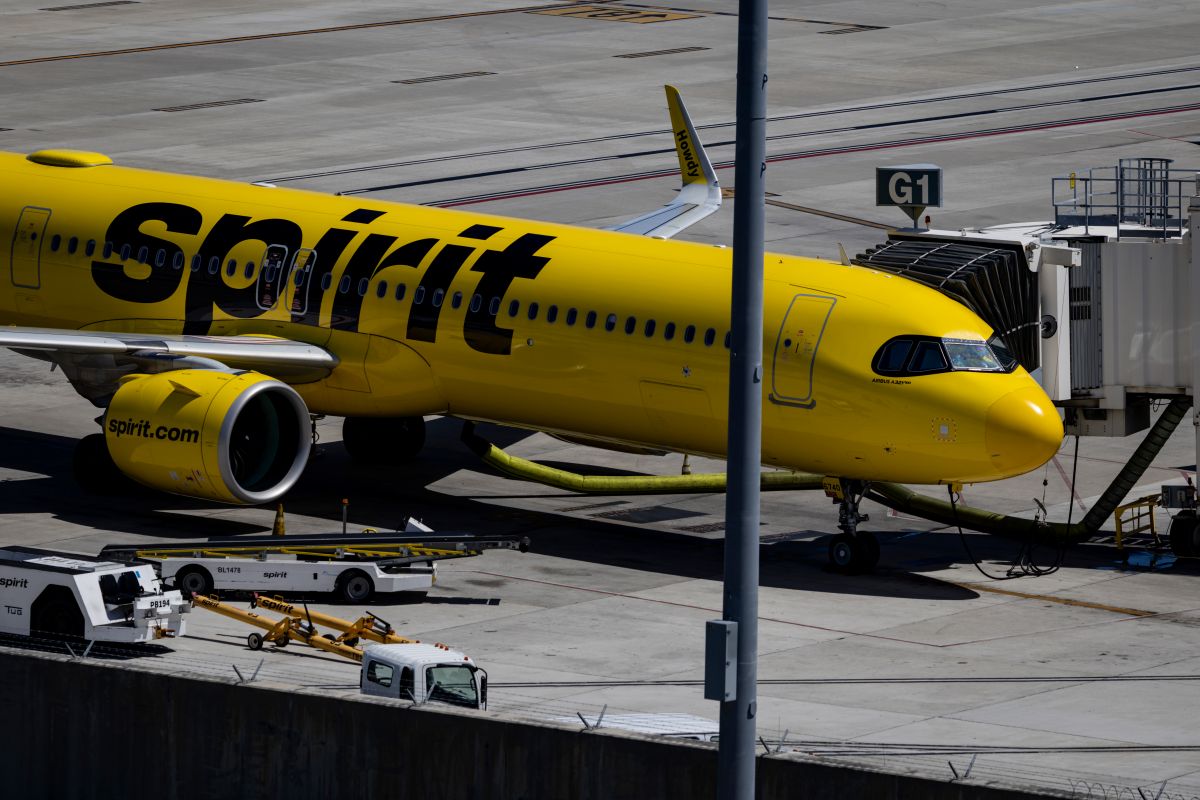
Spirit Aviation Holdings Inc is winding down operations after the troubled US discount carrier buckled under the weight of surging fuel prices and a government bailout dangled by US President Donald Trump fell through.
All Spirit flights have been canceled, and passengers have been advised not to go to the airport, after the airline failed to secure a deal with the Trump administration for funding.
“Sustaining the business required hundreds of millions of additional dollars of liquidity that Spirit simply does not have and could not procure,” said Dave Davis, Spirit’s chief executive officer, in a statement on Saturday. “This is tremendously disappointing and not the outcome any of us wanted.”
The US government had been considering providing Spirit with $500 million in exchange for warrants to purchase up to 90 percent of the airline once it emerged from bankruptcy. But key creditors wouldn’t agree to the deal, which would have given the government’s claims priority if the carrier were to fail in the future.
Transportation Secretary Sean Duffy announced measures to support ticketholders and employees, and said several carriers, including United Airlines Holdings Inc, Delta Air Lines Inc, Southwest Airlines Co and JetBlue Airways Corp, agreed to cap prices or reduce fares for Spirit customers impacted by the shutdown.
“We’ve activated our airline partners to ensure passengers are not stranded, communities maintain route access, fares do not skyrocket, and Spirit’s workforce is connected to new job opportunities,” Duffy said in a statement.
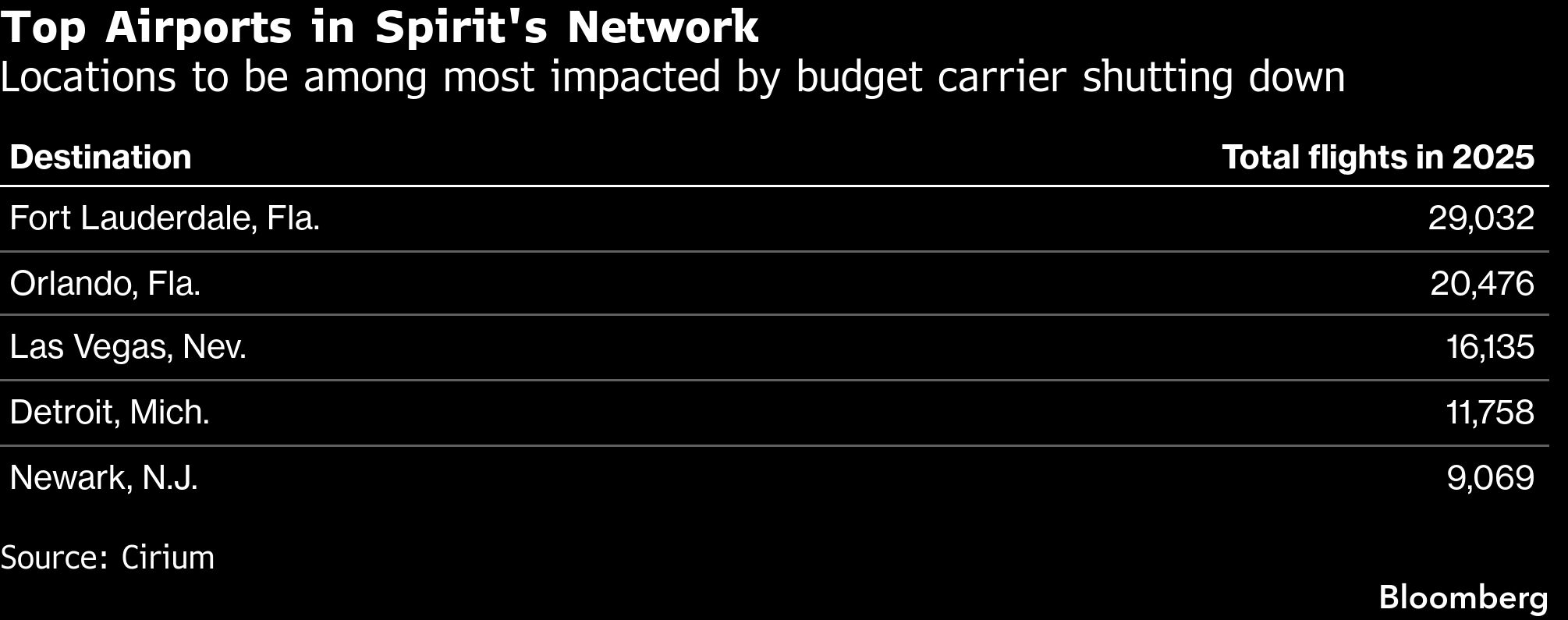
The airline, whose biggest hubs include Fort Lauderdale and Orlando in Florida as well as Las Vegas, has been struggling for years but its problems were compounded by rising jet fuel prices prompted by the US and Israeli war on Iran, now into its third month. The conflict has largely shuttered the Strait of Hormuz, a key passageway for energy flows, leading oil and gas prices to spike.
A bailout for Spirit would have been the latest attempt by President Trump to intervene in a beleaguered US company.
A prior decision to take a 10 percent stake in Intel Corp has paid off so far, but while the US chipmaker faced difficulties, it wasn’t on the brink of collapse like Spirit. US Commerce Secretary Howard Lutnick was a central player in both the Intel and Spirit talks.
The Spirit rescue discussions followed a tumultuous stretch for the airline. The company filed for Chapter 11 bankruptcy protection in August, the second time it had done so in under a year.
Prior to the start of the Iran war in late February, the airline had been expected to exit bankruptcy over the summer after reaching an agreement with creditors on a plan to trim billions of dollars in debt and reduce the cost of its fleet. Higher fuel costs instead put the carrier at risk of liquidation.
The Trump administration has sought to blame former President Joe Biden’s administration for Spirit’s troubles, noting that his Justice Department sued to stop a merger between Spirit and JetBlue on antitrust grounds. That deal was eventually blocked by a federal judge in 2024.
Spirit, however, isn’t the only airline that’s suffering as a result of the conflict in the Middle East. CEOs of other budget carriers met with Secretary Duffy and other senior government officials on April 21 to discuss the challenges they face.
The Association of Value Airlines, which represents low-cost carriers including Frontier Group Holdings Inc and Allegiant Travel Co, has asked the government for $2.5 billion to help its members combat increasing jet fuel prices.
Trump on April 23 said he was considering having the US purchase Spirit. On Friday, following reports that Spirit was laying the groundwork to cease operations, Trump said the administration had sent a final proposal to the airline but that it wouldn’t proceed unless it was a good deal for the government.
Plans for the administration to intervene to rescue Spirit drew sharp backlash from lawmakers on both sides of the aisle.
Senator Ted Cruz, the Republican chair of the Senate Commerce Committee, called the prospect of a government bailout for Spirit a “TERRIBLE idea” in social media post when reports about the discussions first emerged.
Across the aisle, Democratic Senator Elizabeth Warren has also questioned the potential use of government money.
“Donald Trump’s war with Iran caused the sky-high fuel prices that finally did Spirit Airlines in,” she wrote on April 22 on X. “What do the American people get out of this taxpayer bailout?”
