

Real GDP growth rises 5% from 4.5% in Q4, exceeding market expectations
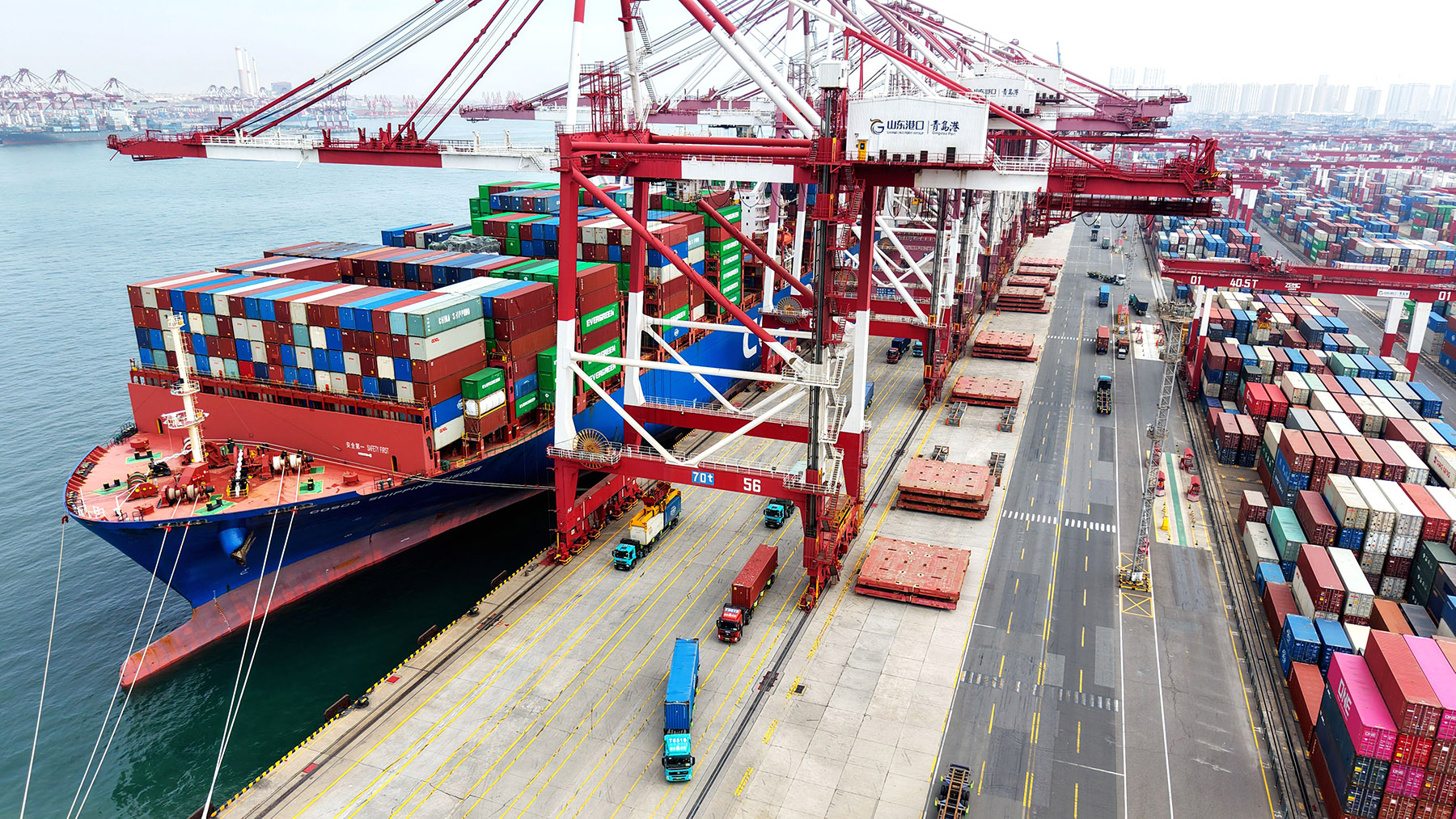
China's economy delivered a stronger-than-expected start to the year, with first-quarter data highlighting its resilience in the face of mounting uncertainties in global trade and geopolitics, experts said.
Jeremy Zook, lead analyst for China at Fitch Ratings, noted that the economy "has managed to weather these headwinds quite well".
He added that China is relatively well positioned to withstand the current energy shock, thanks to its sizable oil reserves, strong refining capacity and current energy mix. As a result, the risk of energy supply shortages seems minimal in the near future.
READ MORE: China logs 5% growth in Q1, offering stability amid global volatility
"We've run some stress tests that show that in a period of sustained high oil prices, the impact on China's economy is one of the smallest in the set of 20 economies that we looked at," he said.
China's real GDP growth accelerated to 5 percent in the first quarter from 4.5 percent in the previous quarter, exceeding market expectations.
Zook pointed to robust exports as a key driver of growth, noting that China has weathered the shock from US tariffs without significant damage to its overall economy. Companies have successfully diversified export destinations beyond the United States, supported by competitive pricing and a depreciation in the real trade-weighted exchange rate.
Meanwhile, a rebound in imports during the first quarter suggests that China may be deepening supply chain integration with other countries, which in turn is supporting domestic production. It could also signal early signs of a recovery in consumption and investment, he said.
Xiong Yi, chief economist for China at Deutsche Bank, said the economic expansion in the first quarter was primarily driven by domestic investment and exports, while the property sector also began to show encouraging signs of stabilization.
Reflecting stronger-than-expected external demand and early signs of a turnaround in the real estate sector, Deutsche Bank has raised its forecast for China's 2026 real GDP growth to 4.9 percent, an upward revision of 0.4 percentage point.
Following the upgrade, the bank now expects nominal GDP growth to reach 6.5 percent — its highest level since 2022 and notably above the 4.5 percent average of the past four years.
David Chao, global market strategist for Asia-Pacific at Invesco, said China's economic growth in the first quarter was mainly driven by trade, with the scale of goods trade reaching a record high compared to the same period in previous years.
Meanwhile, China's new economy sectors have remained resilient, with particularly strong performance in high-tech and green manufacturing. The country's value-added industrial output expanded 6.1 percent year-on-year in the first quarter, effectively offsetting the pressure from relatively weak domestic demand, he said.
China's Producer Price Index, which measures costs for goods at the factory gate, returned to year-on-year growth in March, ending a 41-month streak of declines. This reflects favorable cyclical factors as well as the initial effects of anti-involution policies, marking the beginning of a gradual normalization of prices, Chao said.
ALSO READ: China's PPI returns to growth in March, ending 41-month decline
Lian Ping, director and chief economist at the Guangkai Chief Industry Research Institute, said that China's macroeconomic performance in the first quarter was characterized by stable industrial output and robust export growth.
He noted that more proactive and effective macroeconomic policies were implemented in the first quarter, with continuous strengthening of both countercyclical and cross-cyclical adjustments. Fiscal policy, in particular, progressed as planned, with intensified implementation and a clear front-loading effect that helped support economic stabilization and recovery.
Looking ahead, Lian said that in the face of a complex and evolving global environment, fiscal policy should become even more proactive, with sustained efforts to reinforce countercyclical measures. Expanding domestic demand will remain the central focus of fiscal policy throughout the year.
Contact the writers at jiangxueqing@chinadaily.com.cn
