

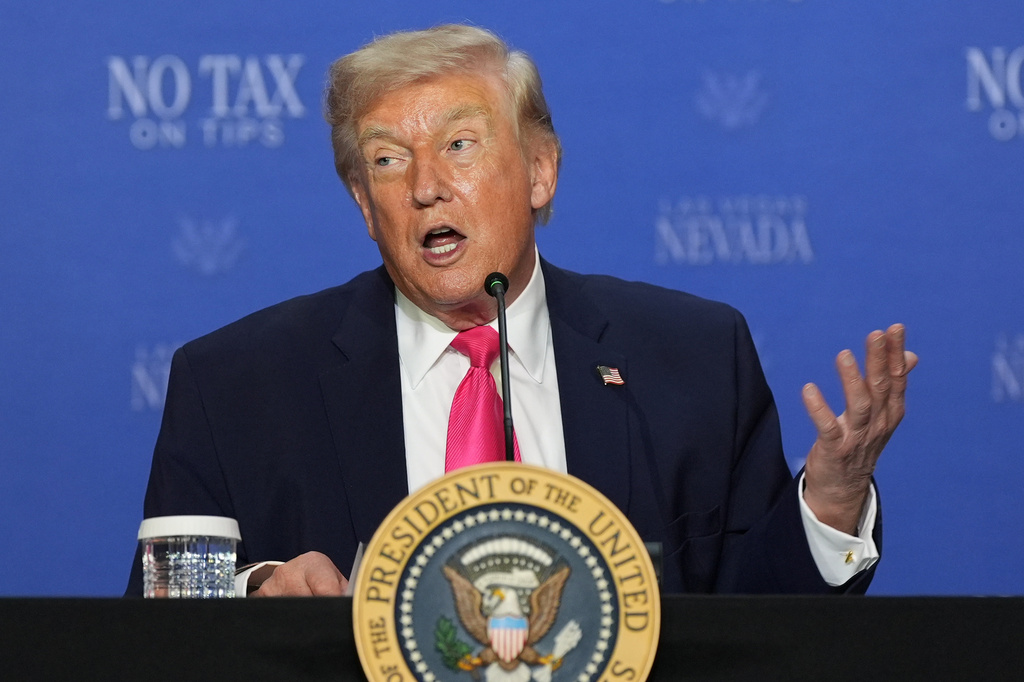
WASHINGTON/TEHRAN/MOSCOW- US President Donald Trump said on Thursday at an event in Las Vegas, Nevada, that the conflict in Iran was going "swimmingly" and could end "pretty soon".
Meanwhile, he told reporters at the White House that the United States and Iran will "probably, maybe" resume in-person talks over the weekend.
"It's looking very good that we're going to make a deal with Iran and it's going to be a good deal, it's going to be a deal with no nuclear weapons," he said. "We have a lot of agreement with Iran."
"Iran wants to make a deal and we're dealing very nicely with them. We've got to have no nuclear weapon ... that's a big factor," Trump claimed. "And they're willing to do things today that they weren't willing to do two months ago."
Trump said he may not need to extend the current two-week ceasefire with Iran, which expires next week.
"We're doing well, I can tell you," Trump said. "I'm not sure it needs to be extended."
However, Trump reiterated his threat to resume bombing if the talks fail. "If there's no deal, fighting resumes," he said.
He dismissed the reportedly US 20-year timeline to suspend Iran's uranium enrichment.
ALSO READ: Mediators push diplomacy as Iran port blockade continues
"We have a statement, very powerful statement, that they will not have, beyond 20 years, that they will not have nuclear weapons," Trump said, "There's no 20-year limit."
He also claimed that Tehran has "agreed to give us back the nuclear dust that's way underground because of the attack we made with the B2 bombers", referring to Iran's enriched uranium.
Trump said he would consider visiting Pakistan if a peace deal is reached. "I would go to Pakistan, yeah," he told reporters. "If the deal is signed in Islamabad, I might go."
Tehran's commitment to peace
Also on Thursday, Iranian Parliament Speaker Mohammad Baqer Qalibaf said Tehran is determined to ensure complete peace and security in West Asia, accusing the United States of undermining such efforts by repeatedly breaking its promises.
Qalibaf made the remarks during a meeting with Pakistan's Army Chief Asim Munir, who arrived in Tehran on Wednesday, leading a high-level delegation as part of ongoing efforts to mediate US-Iran talks.
"I hope those who started the war and are now desperately seeking to stop it will truly end their past distrust-building behaviors through their actions and deeds," Qalibaf said.
Bombing Iran's infrastructure
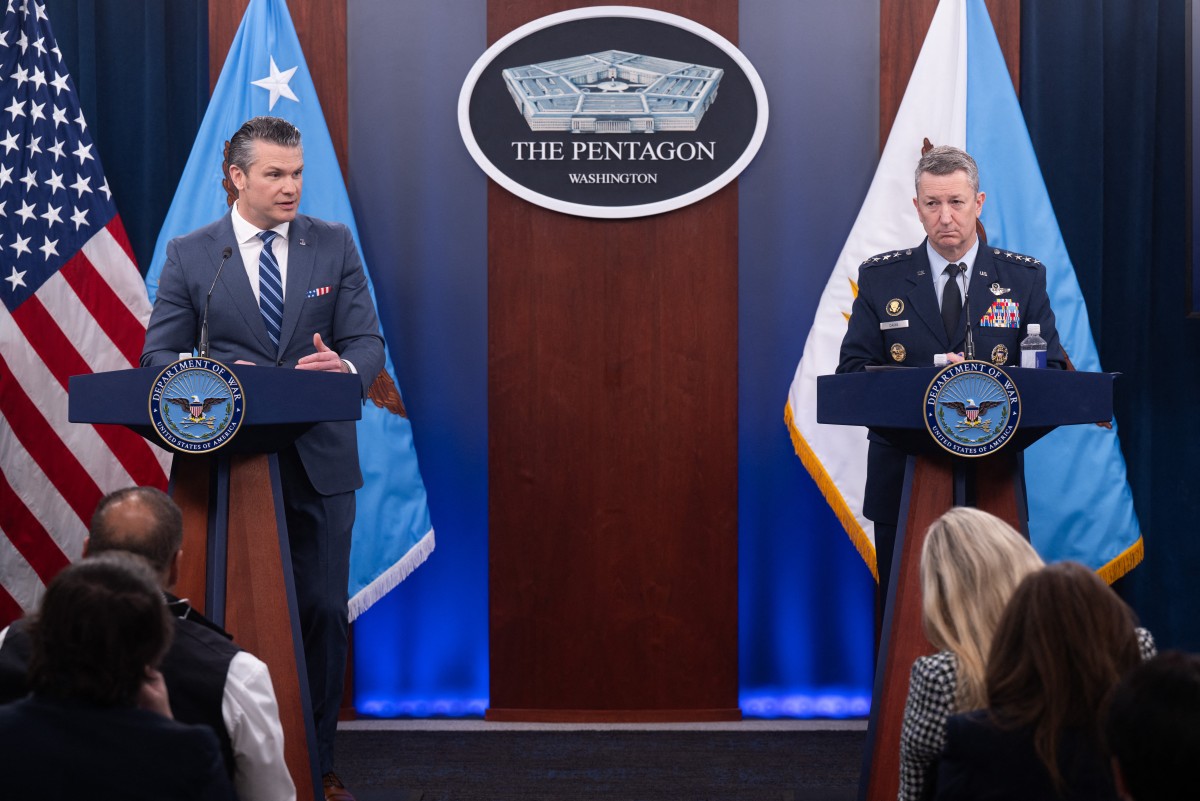
At a Pentagon press briefing, US Defense Secretary Pete Hegseth warned that if Iran does not accept a deal, the US military will strike Iran's "infrastructure, power and energy".
The US naval blockade of Iranian ports would continue as the White House is "maximizing economic pressure" unless Iranian leaders "choose wisely," Hegseth said.
"In the meantime and for as long as it takes, we will maintain this successful blockade. But if Iran chooses poorly, then they will have a blockade and bombs dropping on infrastructure, power and energy," he said, calling the blockade "the polite way to go".
The US troops deployed around the world "will actively pursue any Iranian-flagged vessel or any vessel attempting to provide material support to Iran", Chairman of the US Joint Chiefs of Staff Dan Caine said at the same press briefing.
The US Navy has announced a blockade on all vessels heading to or departing from Iranian ports, starting on Monday, following the weekend US-Iran talks in Islamabad that yielded no agreement.
ALSO READ: Iranian envoy: Islamabad only venue for talks with US
The blockade applies to all ships, regardless of nationality, sailing to or from Iranian ports, and extends to vessels subject to US sanctions or carrying suspected contraband, he said.
"If you do not comply with this blockade, we will use force," Caine warned.
Russia: US blockade of Hormuz unlawful
Speaking at a press briefing, Russian Foreign Ministry spokesperson Maria Zakharova said the US blockade on the Strait of Hormuz violates the UN Charter and international law and only serves to escalate tensions.
Zakharova said measures such as intercepting vessels or blocking Iranian ports "must be viewed as strictly unilateral and illegal", both under the UN Charter and the international maritime law.
"This is yet another arbitrary interpretation by Washington of the international legal framework, which only contributes to the further escalation of the conflict and, naturally, leads to corresponding economic consequences," she said.
READ MORE: Trump says Israel-Lebanon talks to take place on Thursday
The spokesperson stressed that according to the UN Charter, the imposition of a naval blockade is only possible by decision of the UN Security Council as one of the collective measures to restore and maintain international peace and security.
