

Fresh US-Iran talks reported to take place in Pakistan in coming days despite silence from Tehran
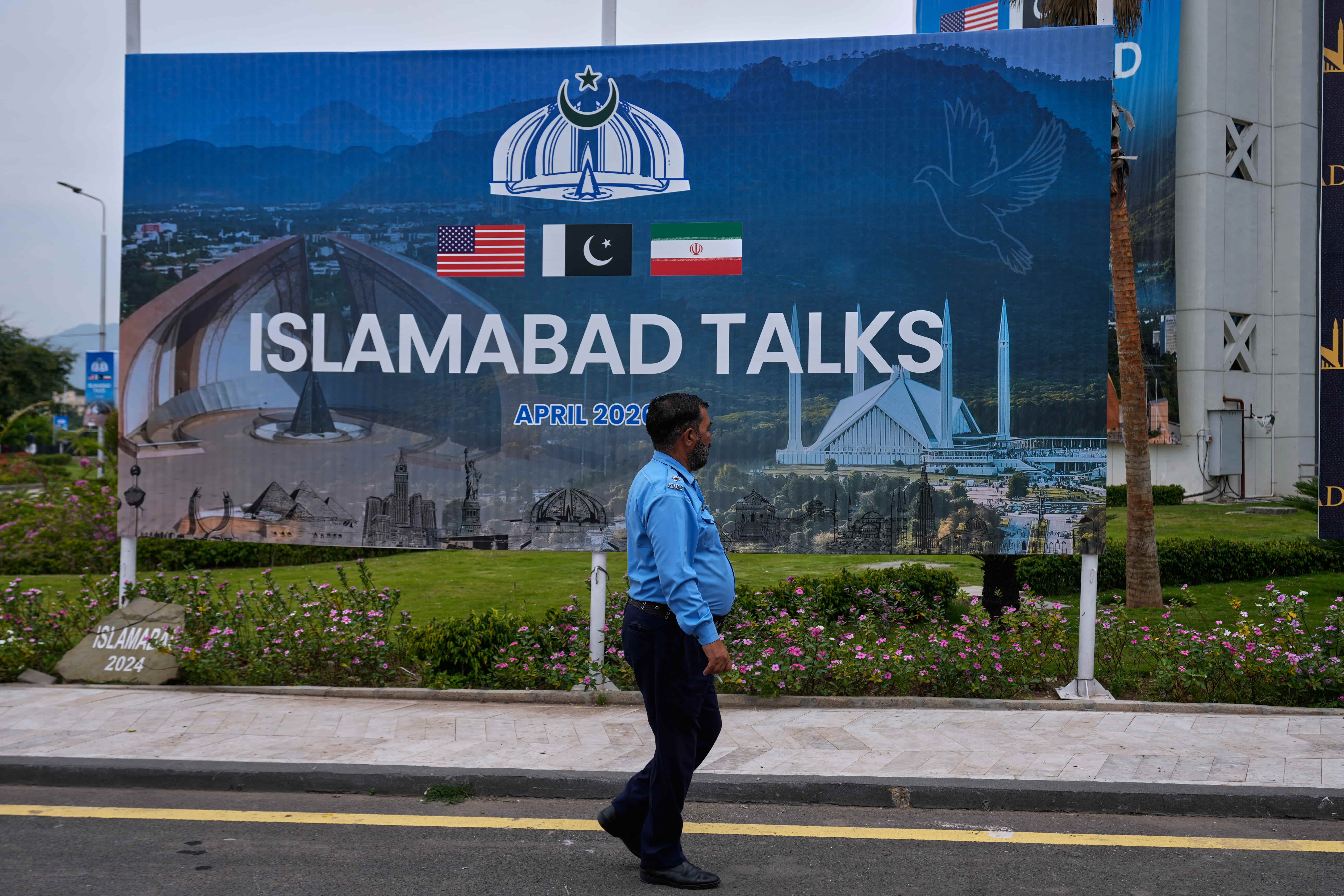
United States President Donald Trump said that Washington's war with Tehran is “close to over” as he hinted at a possible second round of talks between the two in Pakistan in the coming days.
"I think it’s close to over … I view it as very close to being over," Trump told Fox Business anchor Maria Bartiromo on Mornings with Maria on April 15 and said he thinks Iran wants to “make a deal very badly”.
While Iran has yet to confirm or comment on more talks, the Ministry of Foreign Affairs of Pakistan released a statement on April 15 saying that Pakistani Prime Minister Muhammad Shehbaz Sharif would be visiting Saudi Arabia, Qatar, and Turkiye from April 15 to 18.
The statement said the visits to Saudi Arabia and Qatar “will be in the bilateral context” to discuss ongoing bilateral cooperation, regional peace, and security.
Sharif’s visit to Turkiye includes his participation in the Fifth Antalya Diplomacy Forum, where he is also expected to hold bilateral meetings with Turkish President Recep Tayyip Erdogan and other key leaders.
ALSO READ: Trump says not thinking about extending ceasefire with Iran
The statement also said that Sharif would be accompanied by Deputy Prime Minister and Foreign Minister Senator Mohammad Ishaq Dar, Minister of Information and Broadcasting Attaullah Tarar, and Special Assistant to the Prime Minister Syed Tariq Fatemi, and other senior officials.
During his press briefing at the United Nations headquarters on April 14, UN Secretary-General Antonio Guterres said the indication they have was that it was highly probable the US-Iran talks would restart, following his phone call with the deputy prime minister of Pakistan.
Guterres expressed his “enormous admiration” for Pakistan and the initiative it has assumed to bring peace to the Middle East.
The UN chief also reiterated that there “is no military solution to the crisis in the Middle East”.
“Serious negotiations must resume. The ceasefire must be preserved — and extended as necessary. And international navigational rights and freedoms — including in the Strait of Hormuz — must be respected by all parties,” said Guterres.
Currently, the US has imposed a blockade on the Strait of Hormuz.
READ MORE: Israel seeks Hezbollah disarmament, Lebanon calls for ceasefire in talks in US
In a post on X on April 15, the US Central Command said that the US Navy guided-missile destroyers are among the assets executing a blockade mission impacting Iranian ports, and the blockade is being enforced impartially against vessels of all nations entering or leaving coastal areas in Iran.
It said a typical destroyer has a crew of more than 300 sailors who are highly trained in conducting offensive and defensive maritime operations.
In a statement, US Central Command chief Admiral Brad Cooper said a blockade of Iranian ports has been “fully implemented as US forces maintain maritime superiority in the Middle East”.
“An estimated 90 percent of Iran’s economy is fueled by international trade by sea. In less than 36 hours since the blockade was implemented, US forces have completely halted economic trade going into and out of Iran by sea”.
But on April 14, at least two vessels transited through the Strait of Hormuz en route to Iranian ports after altering their Automatic Identification System (AIS) destination data, following a US blockade on ships entering and leaving Iran, according to a report by Xinhua News Agency, citing the British shipping media Lloyd's List.
ALSO READ: NYT: Tehran for 5-year halt in nuclear program as US seeks 20-year pause
The two Iran-flagged container ships previously indicating sailing to the southern Iranian port of Bandar Abbas changed their AIS messages to the more general designation of "PG Ports," meaning "Persian Gulf ports". They were able to continue their journey toward Bandar Abbas on April 14.
The Xinhua report also said such actions could complicate the intelligence collection phase of the US blockade and require additional resources to track and identify vessels involved in maritime traffic to Iranian ports.
Reza Amiri Moghadam, Iranian Ambassador to Pakistan, called the US naval blockade “a reckless misstep meant possibly for a dignified exit and face-saving”.
“It's meant to gain credibility by creating this mentality that things are imposed by force and thereby justifying deployment of ammunition, rhetoric, loss of lives, and costs on US taxpayers,” said Moghadam.
“Still, the miscalculation adds up to the inventory of faults with dire consequences for the whole region and beyond,” he added.
Meanwhile, as parties hammer out the next potential date and venue for the next US-Iran talks, several countries issued a joint statement on Lebanon.
Canada, the United Kingdom, Australia, Japan, Brazil, Colombia, Indonesia, Jordan, Sierra Leone, and Switzerland said they remained “deeply concerned” by the humanitarian situation and displacement crisis in the country.
“We welcome the ceasefire agreed between the United States, Israel, and Iran. We call for an urgent end to hostilities in Lebanon. Civilians and civilian infrastructure must be protected from the effects of hostilities,” they said.
Israel and Lebanon are currently holding direct talks at the ambassador level at the US State Department in Washington.
Contact the writers at jan@chinadailyapac.com
