

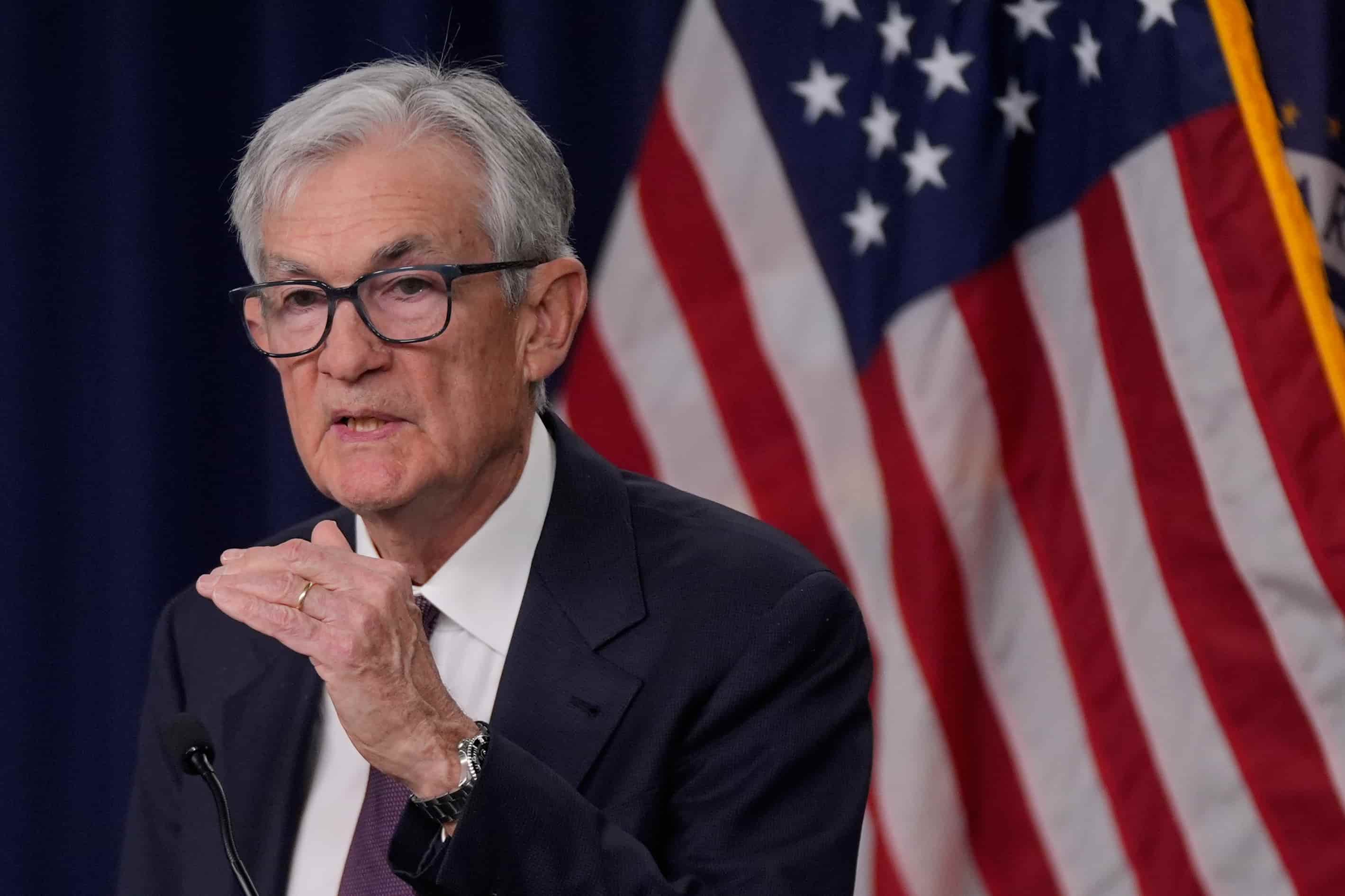
WASHINGTON -- US Federal Reserve Chair Jerome Powell has hinted that the central bank might keep interest rates steady in the short run, as the US-Israeli war with Iran stretches into the fifth week.
"Monetary policy works with long and variable lags, famously, and so, by the time the effects of a tightening in monetary policy take effect, the oil price shock is probably long gone," Powell said during a talk at Harvard University on Monday.
In simple terms, he meant that it often takes months to feel the impact of a change in interest rates, and changing rates to offset an oil spike -- which could be temporary -- might be short-sighted.
The remarks indicate that the Fed is continuing to take the same "wait-and-see" approach that it has been known to take over the past couple of years.
Many economists agree with this approach.
ALSO READ: FT: Hegseth's broker looked to buy defense fund before US-Israeli attack on Iran
Dean Baker, co-founder of the Center for Economic and Policy Research, told Xinhua, "They really need to wait and see."
This comes as US President Donald Trump vowed on Monday to "obliterate" Iran's energy infrastructure if the two sides fail to reach a deal to end the conflict and reopen the Strait of Hormuz.
The price of oil increased on Monday after Trump's threats, with the cost of Brent crude -- the world's benchmark -- rising over 116 US dollars per barrel during the morning.
A continuous rise in oil, over time, could contribute to inflation and, in turn, cause the central bank to consider raising rates -- to the chagrin of markets that have been eagerly awaiting rate cuts.
The Iran conflict has pushed the price of oil over 100 dollars per barrel -- a major psychological and economic benchmark, often signaling high inflation and increased transportation costs.
READ MORE: Oil spill fears as Iran hits tanker in Dubai
Gary Hufbauer, a nonresident senior fellow at the Peterson Institute for International Economics, told Xinhua, "My guess is that oil prices will stay near 100 (dollars) per barrel for most of this year."
"Accordingly, I expect inflation to approach, or even exceed, 4 percent," Baker said.
One-fifth of the world's oil supply -- as well as myriad other goods -- traverses through the Strait of Hormuz.
Nationwide, US gas prices have risen due to the strait's closing, which has also contributed to a rise in fertilizer prices.
The conflict has influenced consumer sentiment, with March's consumer sentiment index dropping 6 percent to its lowest level in three months, according to the University of Michigan Surveys of Consumers.
Moreover, US citizens' expectations of inflation have risen, according to the index, although long-term expectations remain stable.
While less than two weeks ago, Fed officials forecast one rate cut later this year, those predictions are looking less likely to come to fruition as the war continues, according to media and analysts.
