

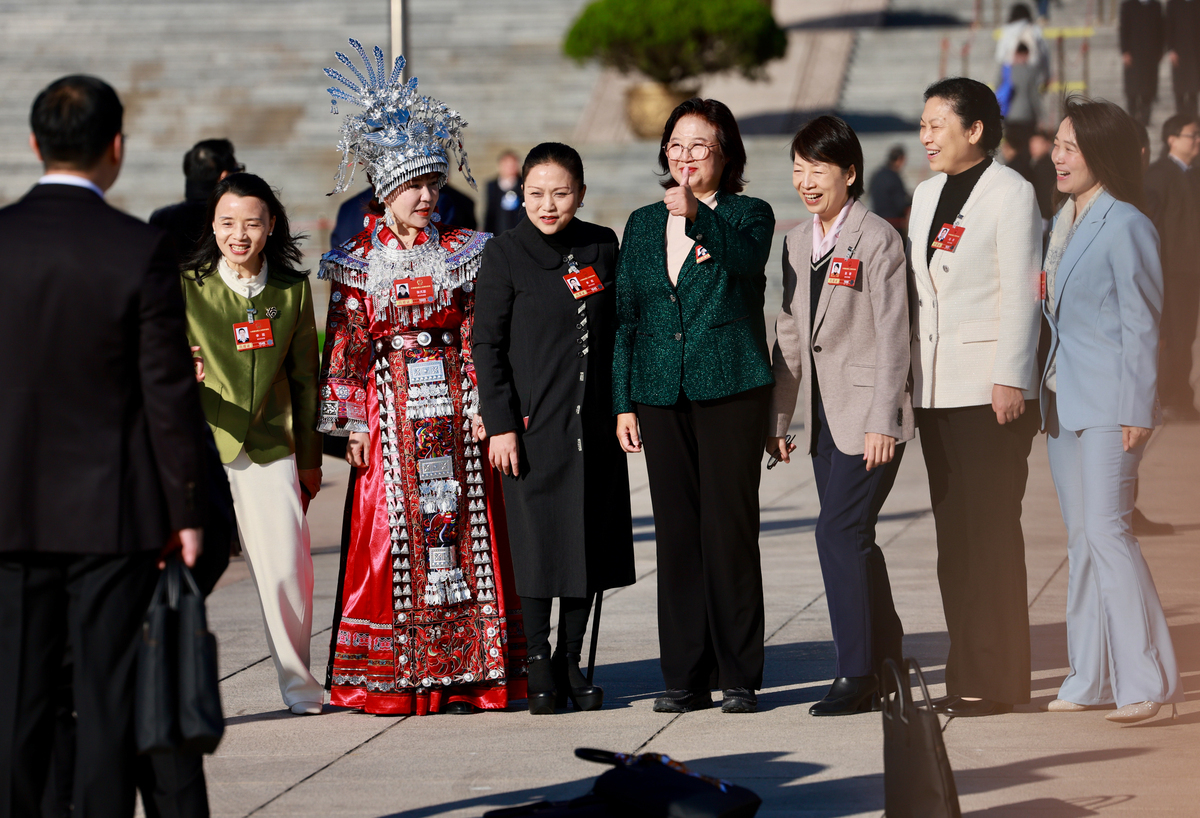
As China's top legislature deliberates a draft law on promoting ethnic unity and progress at its annual session, a familiar pattern of criticism has once again surfaced in certain Western media outlets. Predictably, it has drifted away from facts, toward speculation, prejudice and political bias.
The draft law aims to strengthen the legal foundation for advancing high-quality development and common prosperity among China's 56 ethnic groups, seeking to transform the concept of fostering "a strong sense of community for the Chinese nation" into a legal framework that protects unity while respecting diversity.
Yet instead of engaging with the content of the draft law or China's national situation, some critics have chosen to recycle long-standing stereotypes about the country. Such reactions reveal less about China's legislature than about the persistence of ideological filters through which some observers view China-related issues.
READ MORE: National law to boost ethnic progress, unity
As a unified multiethnic nation, China's ethnic policies emphasize equality, regional autonomy, cultural preservation and shared development. Over the past decades, areas with ethnic minority populations have experienced remarkable progress in almost all fields.
For instance, all 420 impoverished counties located in ethnic autonomous regions have been lifted out of poverty, including those remote, hard to get to rural areas in which the 28 ethnic groups with relatively small populations reside.
From 2020 to 2024, the combined GDP of the five autonomous regions in the country increased from 6.01 trillion yuan ($875.3 billion) to 8.38 trillion yuan.
These achievements are ignored by those who insist on viewing China through a narrow and preconceived lens. This pattern is evident in the current smearing of the draft law.
More troubling is the role played by a well-established "ecosystem" dedicated to mudslinging toward China on ethnic and human rights issues.
Over the years, certain advocacy groups, media platforms and think tanks in the West have received financial support from organizations and political actors with explicit agendas aimed at smearing China. Within this ecosystem, a number of activists who present themselves as "victims" of China's ethnic policies have become frequent voices in media reports and policy debates. This is part of a cognitive warfare scheme against China.
At the same time, these forces remain conspicuously silent about ethnic tensions, racial discrimination and human rights issues within the countries and institutions that sponsor their activities.
The draft law has followed a rigorous legislative process. Initiated in 2023, the bill has undergone multiple readings and extensive consultations with lawmakers, scholars and representatives from ethnic minority communities. Its provisions emphasize balanced development, environmental protection, infrastructure construction and public services in ethnic regions.
Equally important, the law stresses the protection of cultural traditions and lifestyles of all ethnic groups. China has devoted significant effort to safeguarding the cultural heritage of its ethnic groups, including the preservation of languages, traditional festivals, arts and crafts.
Against this background, it is misleading to claim that ethnic minorities in China must choose between economic development and cultural preservation. In reality, China's experience demonstrates that the two can advance together. Economic progress provides resources for cultural preservation, while cultural diversity enriches the broader national identity.
ALSO READ: Practical blueprint for growth and stability amid headwinds
China's effective governance in multiethnic regions also highlights the historical continuity of China's ethnic governance, rooted in centuries of coexistence among diverse communities. It has evolved through practice and experience rather than ideological abstraction.
The China-bashers' lies cannot undermine the growing recognition that unity, equality and shared prosperity are central to the well-being of all ethnic groups in the country.
The most persuasive response to their misinformation campaign is the visible progress of China's ethnic regions and the improved wellbeing of the people who call them home.
