

China condemns killing of Khamenei, urges swift de-escalation and peace
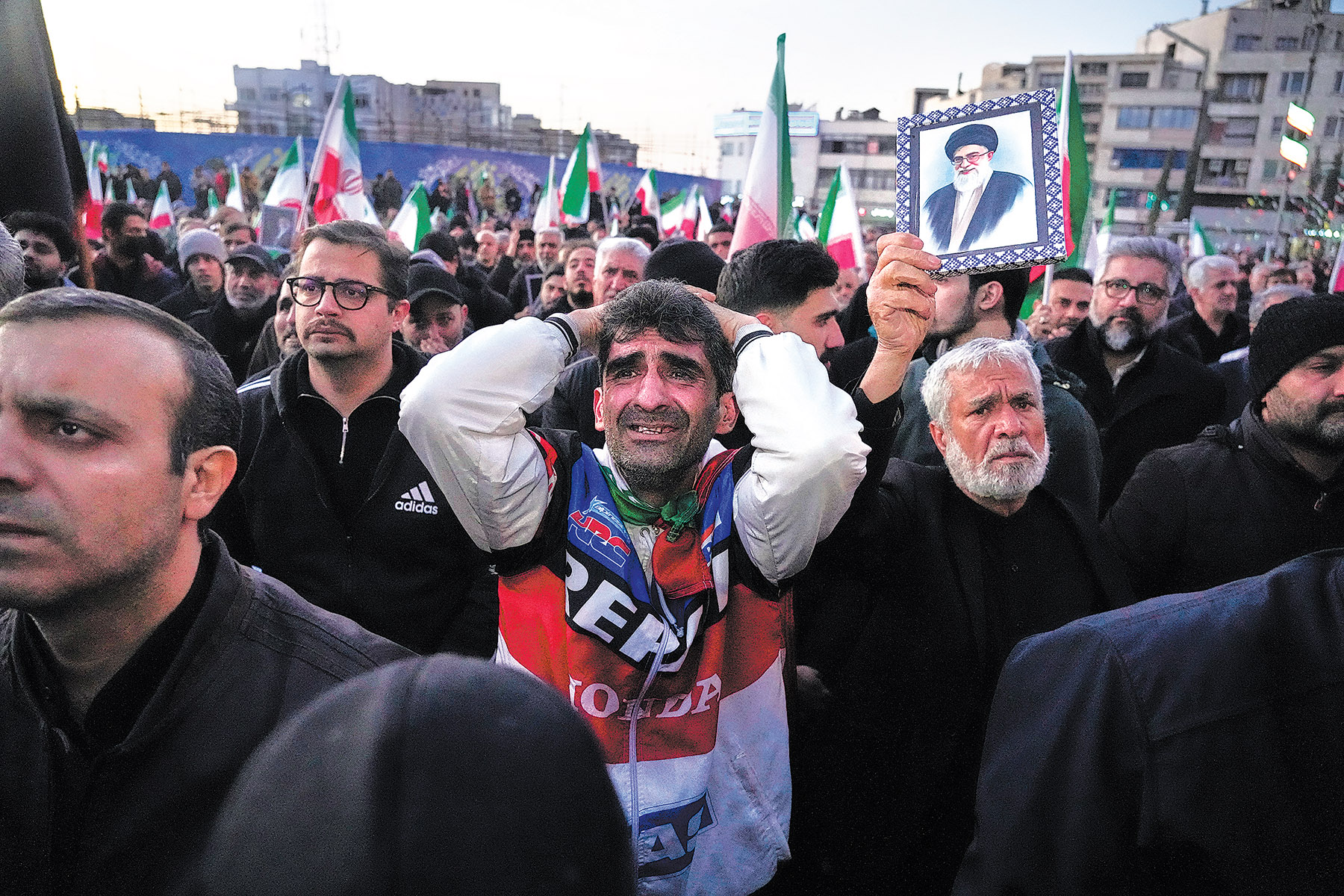
China firmly opposes and strongly condemns the attack on Iran and the killing of its Supreme Leader Ayatollah Ali Khamenei by the United States and Israel, a Foreign Ministry spokesperson said on March 1, while experts warned that the joint military strikes will have far-reaching repercussions in the region and the world.
Calling the attack a grave violation of Iran’s sovereignty and security, the spokesperson said it also tramples on the purposes and principles of the United Nations Charter and basic norms governing international relations.
“We urge an immediate stop to the military operations, no further escalation of the tense situation, and joint effort to maintain peace and stability in the Middle East and the world at large,” the spokesperson added.
The US-Israeli airstrikes, which entered the fifth day on March 4, have killed several hundred people in Iran, including Khamenei, 86, and dozens of children at a girls’ primary school in the southern part of the country, according to Iranian authorities.
The joint strikes have drawn the Middle East into unknown territory, as Iran has retaliated by firing missiles targeting Israel and 27 US military bases in the region.
The attack has opened a dangerous new chapter in terms of US intervention in Iran, marking the second time in eight months that the US and Israel have attacked Iran amid negotiations over its nuclear program.
On March 1, Chinese Foreign Minister Wang Yi sharply criticized the strikes in a telephone conversation with Russian Foreign Minister Sergey Lavrov, calling for an immediate cessation of US-Israeli military operations in Iran, a prompt return to dialogue and negotiations, and joint opposition to such unilateral actions.
Wang said that China has consistently advocated adherence to the principles and purposes of the UN Charter and is opposed to the use of force in international relations.
The blatant killing of a leader of a sovereign state and the incitement of regime change are “unacceptable”, he said, adding that these actions “violate international law and the basic norms governing international relations”.
Wang said the situation may be pushed into a dangerous abyss, and China is highly concerned about this, calling on the international community to clearly and unequivocally voice opposition to the world regressing to the law of the jungle.
Iranian President Masoud Pezeshkian said the killing of Khamenei was a “declaration of war against Muslims”. Iran issued a statement vowing that this “great crime will never go unanswered”, its official news agency IRNA reported.
Iranian Foreign Minister Abbas Araghchi told Al Jazeera network on March 1 that a new supreme leader will be chosen in “one or two days”. Iran’s semi-official Tasnim News Agency reported that leadership duties would temporarily be assumed by the Iranian president, the judiciary chief, and a jurist from the nation’s Constitutional Council.
Jasim Al-Azzawi, an analyst in Iraq, said the conflict already looked broader and deeper than the 12-day Israel-Iran war in June last year.
The recent strikes came despite “mediators’ announcement of a significant ‘breakthrough’ in negotiations”, Al-Azzawi told Al Jazeera, adding: “Clearly, diplomacy was never meant to succeed and was merely used to mask war plans.”
“From the timing of the attack, it is apparent that Washington and Tel Aviv had already made up their minds weeks ago. Iran’s readiness to retaliate across the region suggests it is willing to wage a long war rather than compromise,” he added.
Sun Degang, director of Fudan University’s Center for Middle Eastern Studies in Shanghai, said the previous rounds of talks between the US and Iran appear to have been a mere delaying tactic.
“The US and Israel, seeking a pretext for military action against Iran, used the talks to enable the deployment of two US aircraft carriers to the Middle East,” he said.
Sun added that the recent strikes in Iran may be the beginning of a full-scale conflict, as this time, Iran’s determination to retaliate is significantly greater, potentially leading to the mobilization of its full capabilities to counter US-Israeli actions.
Yan Wei, deputy director of the Institute of Middle Eastern Studies at China’s Northwest University, said Iran’s retaliatory actions may spur further US-Israeli escalation.
“In addition to intensifying military strikes and potentially expanding the range of targets, the US and Israel may further tighten economic sanctions on Iran, and step up information campaigns aimed at weakening the Iranian government’s domestic and international standing,” he said.
Contact the writers at cuihaipei@chinadaily.com.cn
