

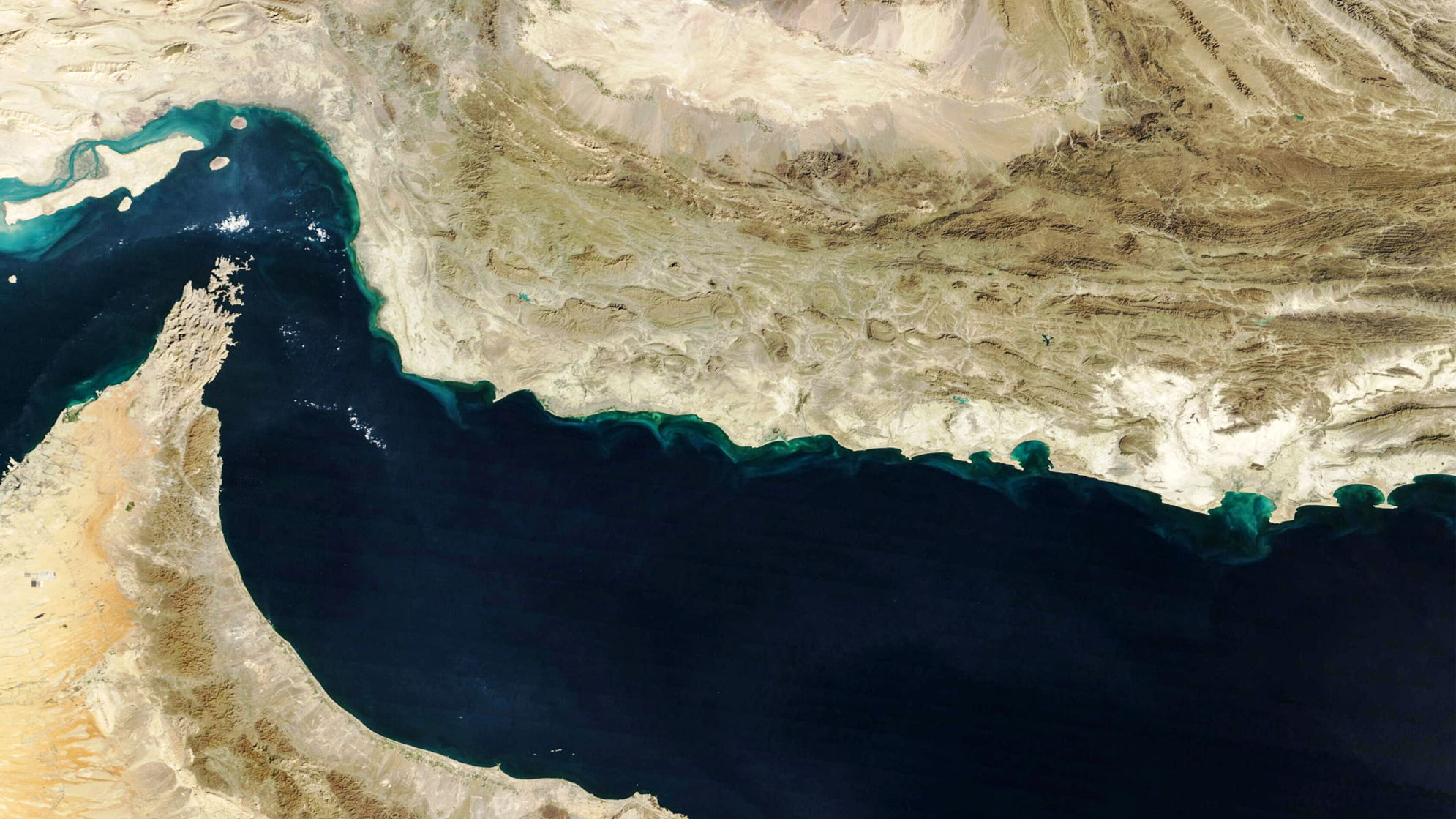
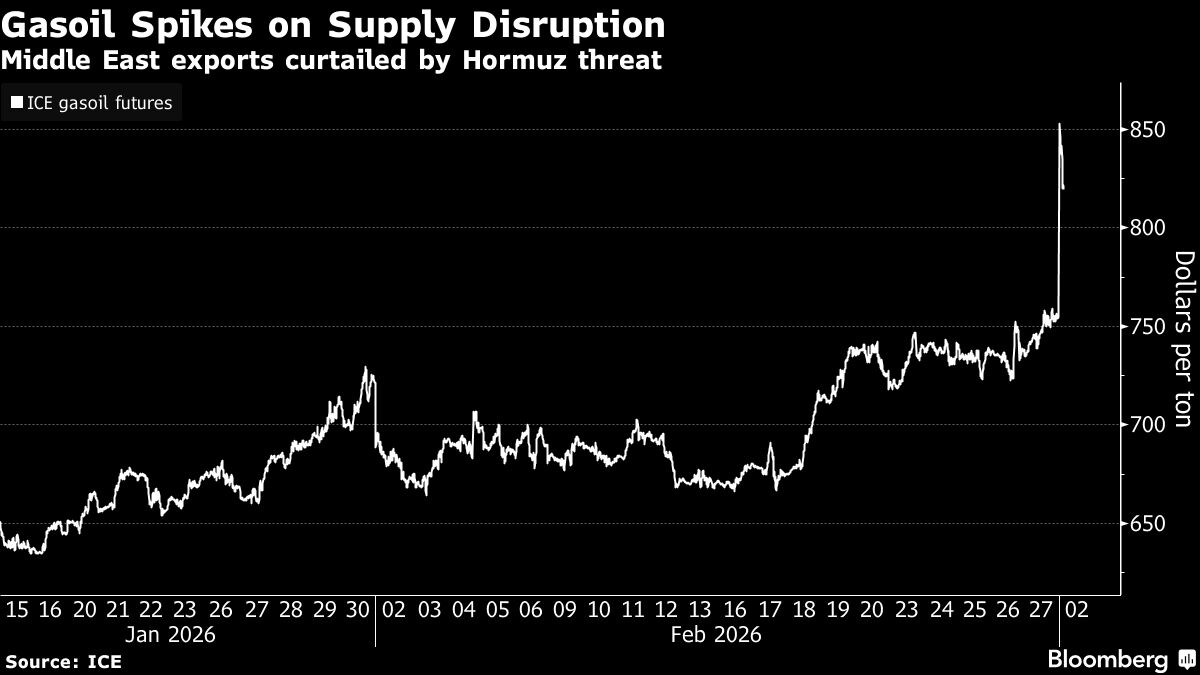
Fuel prices jumped on Monday — with diesel surging more than crude oil — as the widening war in the Middle East threatened to disrupt exports from Persian Gulf refineries.
Gasoil, or diesel futures, on the Intercontinental Exchange spiked as much as 17 percent to a two-year high at the open, before paring some gains. That beat a jump of as much 13 percent in Brent oil. Prices for jet fuel and fuel oil also advanced.
Tanker traffic through the Strait of Hormuz remains effectively halted following the US and Israel’s bombardment of Iran and the Islamic Republic’s retaliatory attacks on multiple countries. President Donald Trump told the New York Times the assault could last “four or five weeks.”
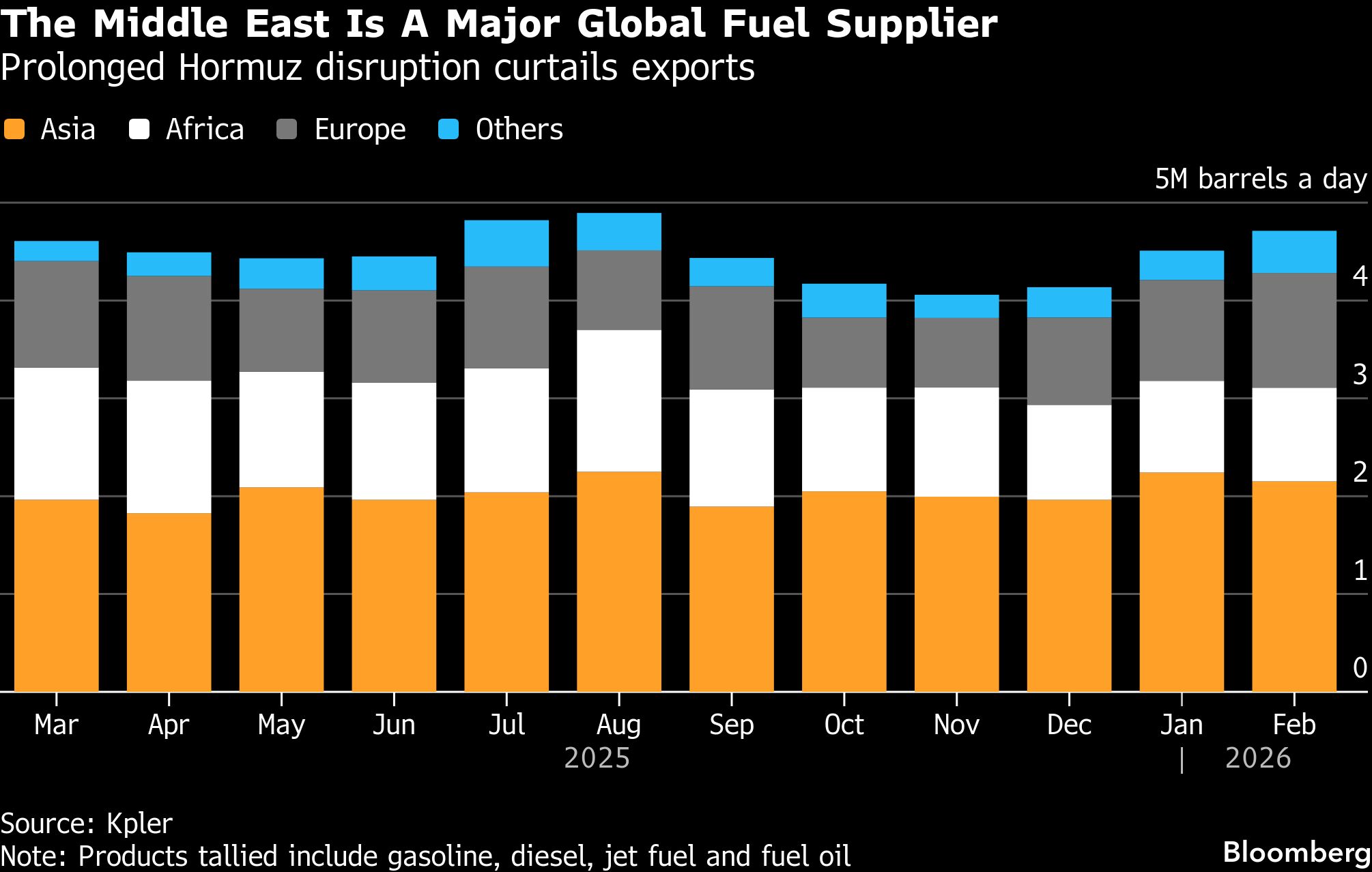
As well as being major crude exporters, countries like Saudi Arabia, the United Arab Emirates and Kuwait are home to state-of-the-art refineries that produce diesel, jet fuel and petrochemicals. Iran, meanwhile, is one of the world’s biggest sources of fuel oil. About 10 percent of the world’s gasoil trade and 20 percent of jet fuel, or kerosene, flows through Hormuz, according to ship-tracking and analytics firm Kpler.
Jet fuel moved deeper into backwardation, a bullish market structure where cargoes for prompt delivery are more expensive than later-dated ones, following the attacks over the weekend. The spread almost doubled from $1.57 a barrel on Friday to $3.
Timespreads for fuel oil also became more backwardated on Monday. Iran is a major producer and exporter of high-sulfur fuel oil, while Kuwait’s Al-Zour refinery is an important source of very low-sulfur fuel oil. Prices for liquefied petroleum gas, methanol and bitumen also rose sharply.
Exports of refined products through the Strait of Hormuz averaged 3.5 million barrels a day last year, Goldman Sachs Group Inc. said in a note. So far, there have been no reports of major damage at any Middle Eastern refineries.
