

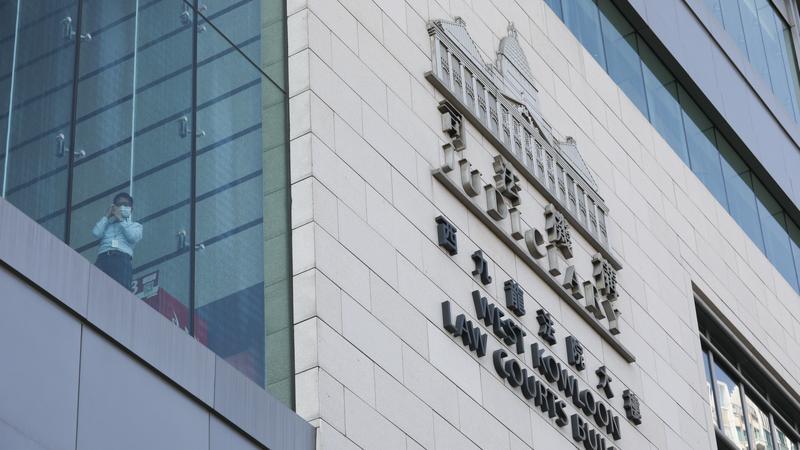
The Court of Appeal of the Hong Kong Special Administrative Region on Monday dismissed appeals by 12 people who were convicted of conspiracy to subvert State power through their involvement in the “primary election” scheme of 2020.
The court also upheld the acquittal of barrister Lawrence Lau Wai-chung, who was also a defendant in the subversion case, dismissing an appeal made by the SAR government.
The 12 appellants and Lau were among the 47 people accused of roles in the “primary election” — an illegal poll orchestrated by the opposition camp in 2020 to win a majority in the legislative election with the aim of paralyzing the city’s administration and undermining the “one country, two systems” principle.
All 47 defendants were arrested in 2021 on suspicion of subversive activities — an offense under the Hong Kong SAR National Security Law (NSL). Thirty-one of them, including legal scholar Benny Tai Yiu-ting, pleaded guilty before trial, while the other 16 contested the charges in a 118-day trial. In May 2024, three judges of the Court of First Instance convicted 14 of them, acquitting Lau and former district councilor Lee Yue-shun.
The sentences handed down to those convicted, including those who had pleaded guilty, range from four years and two months to 10 years in prison.
The 12 appellants are Helena Wong Pik-wan, Lam Cheuk-ting, Raymond Chan Chi-chuen, Leung Kwok-hung, Clarisse Yeung Suet-ying, Kalvin Ho Kai-ming, Tat Cheng Tat-hung, Gwyneth Ho Kwai-lam, Owen Chow Ka-shing, Winnie Yu Wai-ming, Gordon Ng Ching-hang, and Prince Wong Ji-yuet.
ALSO READ: HK High Court convicts 14 in subversion trial
Announcing the verdict on Monday, the appellate court said that when the Legislative Council exercises its powers, it must comply with the provisions of the Basic Law and cannot be in conflict with it. The members of the Legislative Council must not violate their constitutional responsibility of swearing to uphold the constitutional order of the Hong Kong SAR.
The appellate court upheld that the “primary election” — a scheme aimed at forcing out the city’s chief executive, paralyzing the government and bringing an end to the “one country, two systems” principle — constitutes an illegal means to undermine the constitutional order of the Hong Kong SAR.
The defendants agreed to participate in the scheme and carry out a series of related actions, with the intention of triggering the disruptive consequences. Therefore, they violated the offense of conspiracy to subvert State power — an offense under Article 22 of the NSL, the appellate court said.
Regarding the appeal against the prison term, the appellate court affirmed the original ruling, agreeing that the defense’s argument — that the plan was impossible to succeed — could not justify a lighter sentence. Moreover, the original court’s decision to uniformly set the sentencing benchmark for the defendants at seven years was not obviously excessive, the appellate court said.
A SAR government spokesperson said in a statement that the appeal dismissals demonstrated that anyone attempting to subvert State power and endanger national security will eventually face legal punishment.
The spokesperson said the original trial judgment had already made clear that by early 2020, the unlawful “primary election” scheme had been touted publicly as a way to “undermine, destroy or overthrow” the SAR’s established political system — one that enshrined in the Basic Law of Hong Kong and founded on the principle of “one country, two systems”.
“The evidence in this case is ironclad, the crimes committed are grave, and the convicts have got what they deserved,” the spokesperson said.
The spokesperson added that the SAR government would, “as always”, continue to “firmly, comprehensively and accurately” enforce the NSL, the Safeguarding National Security Ordinance and other legislation to “prevent, stop and punish” acts that threaten national security, safeguarding residents’ rights and freedoms while keeping the implementation of the “one country, two systems” framework on a steady, far-reaching course.
The court also said that the appeal made against Lau by the Department of Justice (DoJ) had failed to convince the court that the ruling made by the original court was unreasonable.
In the same statement, the government said that the DoJ will “carefully peruse” the judgment that keeps Lau’s acquittal and would study the possibility of filing another appeal.
